The Jigawa State Government is collaborating with the Islamic Development Bank (IsDB) on a proposed $110 million education project aimed at improving school infrastructure, strengthening teacher capacity and enhancing learning outcomes…
The Jigawa State Government is collaborating with the Islamic Development Bank (IsDB) on a proposed $110 million education project aimed at improving school infrastructure, strengthening teacher capacity and enhancing learning outcomes.
The proposed intervention, known as the SMART Project, will also cover two other participating states and is expected to support the construction of new schools, rehabilitation of existing facilities and provision of water and sanitation infrastructure.
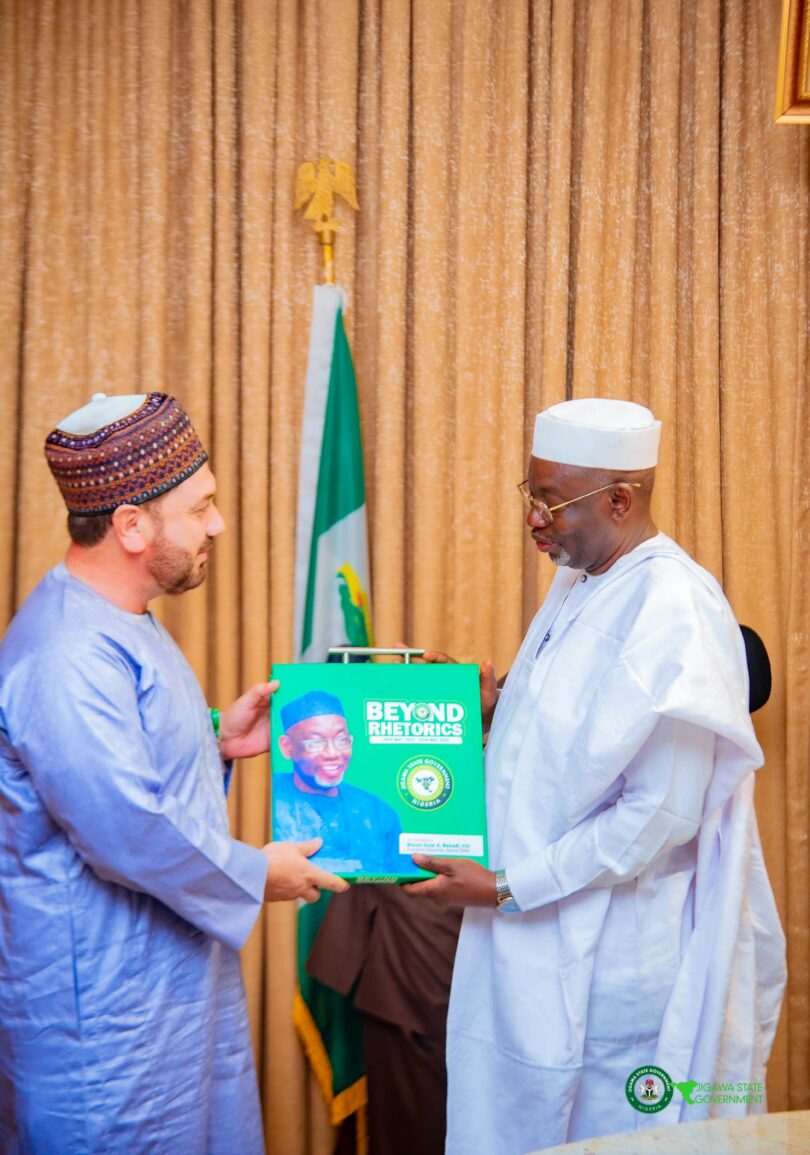
Governor Umar Namadi disclosed the partnership on Friday when he received an IsDB delegation led by its Operations Team Leader for Social Infrastructure, Imtiaz Alam, at the Government House in Dutse.
The delegation, accompanied by officials of the Federal Ministry of Finance, was in the state to assess its education priorities and gather information for the preparation of the project proposal.
Alam said the mission was aimed at consulting participating states, documenting their needs and incorporating their priorities into a comprehensive proposal for submission to the IsDB Board of Executive Directors for consideration and approval.
He explained that the project would also provide teacher training and capacity-building opportunities, alongside interventions to improve the teaching and learning environment.
According to him, the participating states were selected based on their readiness, responsiveness, submitted concept notes and the feasibility of their proposals, as well as indicators such as teacher-to-student ratios and the number of schools.
On funding, Alam said the proposed $110 million intervention would combine IsDB development financing with grant support from the Global Partnership for Education (GPE).
He added that the bank was exploring opportunities to mobilise additional resources from other development partners.
Namadi described the proposed partnership as an important opportunity to strengthen his administration’s efforts to address challenges in the education sector.
He said Jigawa approached the IsDB because of its capacity to support development initiatives and mobilise other international partners and donors to invest in priority projects.


The governor highlighted several ongoing education reforms, including the establishment of the Tsangaya Education Board and the strengthening of Tsangaya schools through integrated and model categories.
He said the initiatives were part of efforts to address the challenge of out-of-school children and improve access to education across the state.
Namadi also disclosed that the government had introduced a policy requiring political appointees to mobilise and return a specified number of out-of-school children from their communities to the classroom.
He said the initiative was already yielding positive results.
The governor further revealed that more than 10,000 teachers had been recruited at the basic education level to address staffing gaps and strengthen supervision, monitoring and evaluation in schools.
He said the proposed IsDB-supported project would complement the state’s existing interventions by providing additional resources for infrastructure development and teacher capacity building.
“Our objective is to improve learning outcomes and ensure that our students can compete favourably wherever they find themselves,” Namadi said.
He expressed confidence that the project, if approved and implemented, would accelerate the state’s efforts to tackle longstanding challenges in the education sector.