Lovers of democracy understand that social stability, the provision of opportunities for personal fulfilment, security and the possibility of upward mobility constitute the bedrock of an enduring and continually deepening democratic culture. Unfortunately, in the desperate struggle to retain political power, which provides access to the distribution of public largesse, these fundamental realities are often concealed beneath layers of propaganda and political spin.
However, conventional wisdom is beginning to see through this web of make-believe. In the course of the week, respected voices have stepped forward to redress the balance and redirect public discourse towards the realities confronting the country. Ultimately, confronting these realities requires asking the fundamental question: What is to be done?
In an intervention designed to elevate the national conversation, Atedo Peterside, founder of the highly regarded Investment Banking & Trust Company (IBTC), which later became part of Stanbic IBTC, has once again demonstrated why he has evolved over the decades into one of Nigeria’s most authoritative, respected and non-partisan observers of the economy.
During the week, Peterside observed that the economic reforms of the Tinubu administration had disproportionately benefited wealthy Nigerians while worsening the living conditions of millions of low-income earners.
As reported by Vanguard, Peterside made this observation during an interview on Arise Television on Monday. He argued that while upper-middle-class Nigerians had recorded improvements in their investments and incomes over the past three years, poorer households were struggling to afford basic necessities. According to him, the reforms had not adequately addressed the economic difficulties confronting the majority of Nigerians.
Peterside has correctly identified the fault line. What we are witnessing is not merely the failure of the much-touted trickle-down effect of economic reforms. It is, in effect, a widening income gap in a society already weakened by limited opportunities for self-improvement, economic mobility and social advancement.
This is a dangerous development. If left unaddressed, it will continually replenish the pool of frustration, desperation and social discontent, creating fertile ground for criminality and other forms of social instability. To be forewarned, as Peterside is doing, is to be forearmed.
What we have is a manifestation of economic growth without meaningful development. The figures presented on paper may indicate statistical growth, but this has not translated into commensurate increases in productive output, productivity, employment opportunities and household prosperity. In this regard, statistics derived from questionable methodologies increasingly stand at variance with the lived realities of Nigerians on the streets.
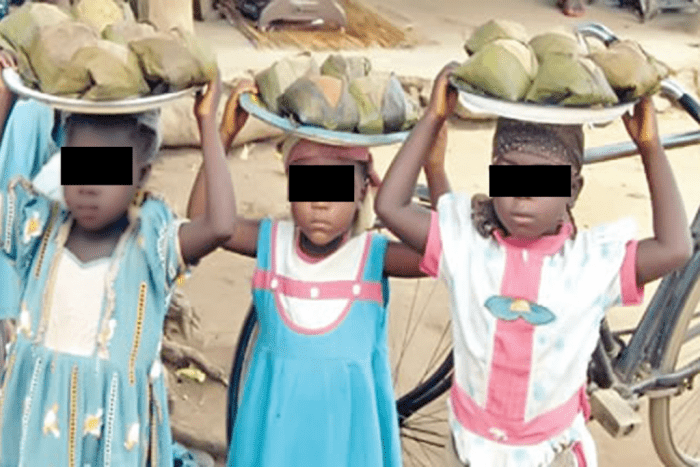
The symptoms of this malaise are everywhere: rising numbers of out-of-school children, increasing crime rates, worsening living standards, widespread unemployment and deteriorating social conditions. The consequences of jobless growth can no longer be ignored or wished away.
Another dangerous consequence of the kind of economic and political arrangement being pursued is the entrenchment of STATE CAPTURE.
State capture refers to the subordination of the institutions and mechanisms of government to the interests of a select and favoured group of individuals and economic actors. It is an outrageous distortion of the very conception of democracy, which is supposed to guarantee equal citizenship, accountability and the equitable distribution of opportunities.
The danger of state capture was brought into sharp focus in the United States of America on Tuesday, when voters demonstrated their disapproval of the enormous financial influence being deployed to shape electoral outcomes. At a time when ordinary Americans are themselves confronting a difficult cost-of-living crisis, the rejection of excessive financial influence in the democratic process carries an important lesson.
The United States has deeper democratic roots, stronger state institutions and a more advanced economy than Nigeria. Yet, while Americans are grappling with their own economic difficulties, Nigeria is confronting an even more desperate existential crisis. Unlike the United States, Nigeria does not possess a sufficiently developed social safety net to cushion the effects of economic shocks on its vulnerable population.
It is against this background that patriotic and thoughtful Nigerians such as Atedo Peterside are right to demand deeper reflection, a more circumspect assessment of government policies and a sincere national conversation about the country’s direction. We would do well to heed their admonition.
In the fourth edition of its much-admired analysis of Nigeria’s subnational fiscal landscape, BudgIT has painted an equally troubling picture of the financial realities confronting the states. This should hardly come as a surprise, given Nigeria’s persistent distortion of the principles of fiscal federalism.
The states have increasingly become dependent on federal allocations, indulging in what can best be described as feeding-bottle federalism. This is the nature of the quasi-federal arrangement produced by the 1999 Constitution, in sharp contrast to the more robust federal principles embodied in the 1963 Republican Constitution, the 1961 Constitution and, particularly, the 1954 Oliver Lyttelton Constitution.
The outcome is a disaster foretold.
In a genuine federal arrangement, the constituent units should possess the capacity and institutional incentives to generate substantial revenue from their respective economic activities, rather than depend almost entirely on financial handouts from the centre. Unfortunately, this dependence has encouraged a culture in which several states devote disproportionate attention to grandiose projects, often conceived more as instruments of political prestige than as responses to the fundamental needs of their people.
For many subnational governments, governance has become an exercise in motion without movement. Monumental projects and grand announcements dominate public conversations, while little serious thought is devoted to human development indices, poverty reduction, educational advancement, healthcare delivery and the achievement of the United Nations Sustainable Development Goals.
The question is not simply how much money governments receive or spend, but what measurable improvements such expenditure brings to the lives of the people.
The country is arguably experiencing one of the most difficult periods in its post-independence history. Evidence emerging from credible civil society organisations, including the Socio-Economic Rights and Accountability Project (SERAP), as well as international institutions, continues to raise questions about the capacity of subnational governments to function as effective agents of development.
This represents a significant departure from the developmental responsibilities exercised by regional governments in the pre-colonial period and during the First and Second Republics.
To paraphrase the Italian Marxist philosopher and political theorist, Antonio Gramsci, Nigeria appears trapped in a system of social and economic relations that has spectacularly failed. In the absence of an equitable social contract and a coherent framework for collective responsibility, all manner of disturbing manifestations are emerging.
Insecurity, kidnapping, insurgency, poverty, social dislocation and other forms of criminality are increasingly becoming defining features of the national experience.
The fundamental question, therefore, is how long a society can continue to operate under an arrangement that produces so much hardship, inequality and disillusionment without confronting the structural causes of its predicament.