From Juliana Taiwo-Obalonye, Abuja
The Kebbi State Government has hailed the Sokoto-Badagry Super Highway as a game changer for social and economic ties between Nigeria’s North-West and South-West, crediting President Bola Tinubu with reviving the project 45 years after its initial conception under late President Shehu Shagari.
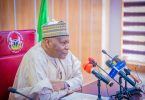
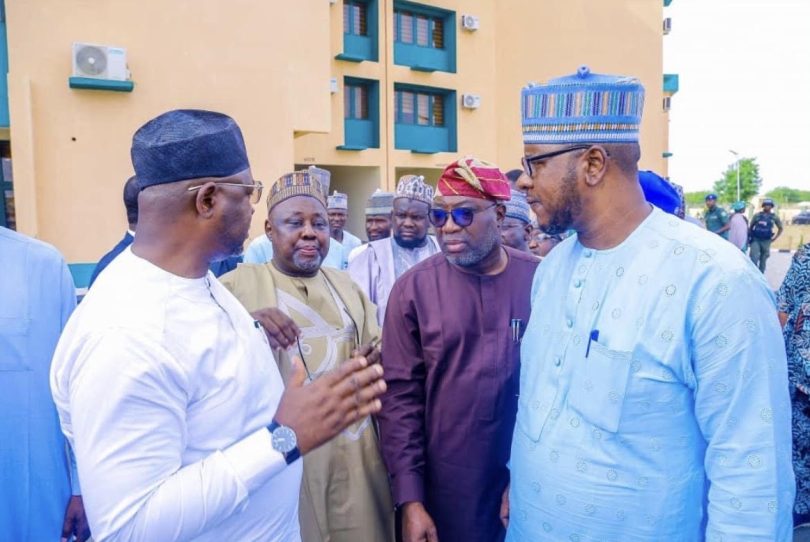
Deputy Governor Umar Abubakar Tafida made the remarks on Wednesday while leading the Presidential Media Team and Renewed Hope Ambassadors on a tour of federal- and state-funded projects in the state capital. He emphasised that Kebbi’s 258-kilometre stretch forms the highway’s longest segment, linking agricultural hubs and unlocking opportunities for farmers, traders and tourists.
The project, spanning 1,068 kilometres across seven states, reflects Tinubu’s “nationalistic view” of development, Tafida said. Agricultural produce such as rice, tomatoes and onions will reach distant markets faster, reducing losses caused by poor roads.
“Transport and development go hand in hand. Farmers will now find it easier to move equipment and transport farm produce to markets quickly,” Tafida stated. “Perishable goods like tomatoes can now reach markets in good time without losses associated with bad roads.”
Tafida noted that Tinubu reviewed the long-dormant design, made adjustments and awarded the contract, with work now progressing steadily. He praised the concrete pavement, solar-powered streetlights and state-security collaborations protecting workers and communities.
Leading the delegation, the Special Adviser to the President on Media and Public Communication, Sunday Dare, said the visible progress silences critics doubting Tinubu’s commitment. “The very essence of our coming is to set the record straight and showcase the achievements of the administration of President Tinubu in this state and the North-West as a region. Seeing is believing. We’ve come, we’ve seen it, and we’re standing on the roads he has done,” Dare declared.
“We’re standing on concrete roads. We’re seeing testimonials from people in these communities who say this project was abandoned for decades and has now been reactivated. There is clear evidence of work being done. We’re seeing progress, completion of roads, commissioning of roads and how they are impacting economic life.”
Dare framed the highway, alongside the Lagos-Calabar Coastal Highway, as key to Tinubu’s $1 trillion economy vision through infrastructure. “When you look at the requirements of the 21st century, it emphasises infrastructure, human capital development and futuristic planning.” He called it one of Nigeria’s most ambitious roads, set to boost inaccessible areas and northern economic activity.
Senior Special Assistant on Community Engagement (North-West), Abdullahi Tanko Yakasai, stressed its role in food security, with added dams enabling year-round farming.
At the site, Federal Ministry of Works Site Engineer Malami Aliyu reported steady progress on Kebbi’s Phases 2A (km 120-385) and 2B, with 40 per cent completion on 2A and 16 per cent on 2B. Site clearance, filling, stone base, sub-surface works, 19 kilometres of concrete pavement and streetlights are advancing without major hurdles.