
By Doris Obinna
Lagos State has intensified efforts to eliminate malaria following a significant drop in the disease prevalence rate to below two per cent, with authorities insisting that residents must embrace testing before treatment, as most fever cases are no longer linked to malaria.
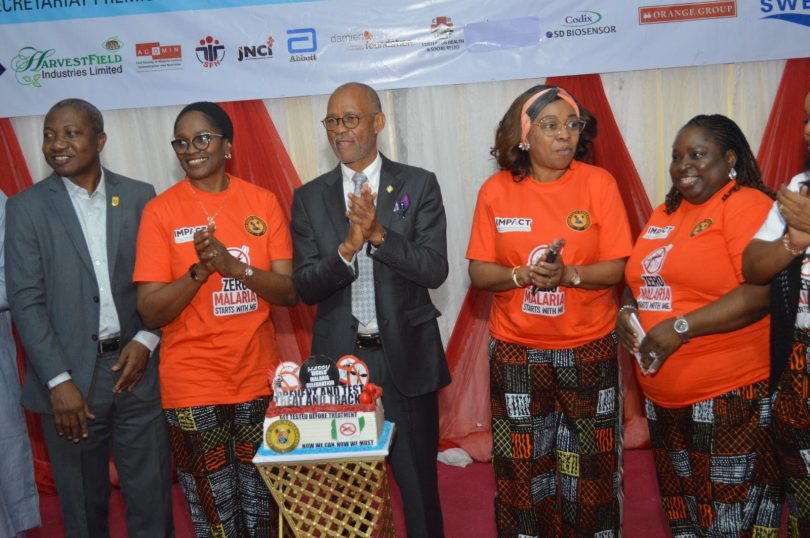
The renewed campaign formed the focus of the 2026 World Malaria Day symposium organised by the Lagos State Ministry of Health at the Adeyemi Bero Auditorium under the theme, “Driven to End Malaria: Now We Can, Now We Must.”
Commissioner for Health, Prof. Akin Abayomi, said Lagos had recorded remarkable progress in reducing malaria transmission despite its coastal environment and numerous water bodies that support mosquito breeding. He disclosed that malaria prevalence in the state had dropped from about 15 per cent 15 years ago to approximately two per cent presently, positioning Lagos on the path to malaria pre-elimination.
Abayomi noted that while Africa accounts for about 95 per cent of global malaria cases, Nigeria contributes roughly 27 per cent of the global burden, making the country one of the highest malaria-burden nations worldwide.
He explained that concerns arose when health facilities in Lagos continued diagnosing large numbers of malaria cases despite declining prevalence data. This, he said, prompted the state government to embark on an extensive malaria study in partnership with the National Malaria Elimination Programme, the Pharmacy Council of Nigeria and Patent and Proprietary Medicine Vendors.
According to the commissioner, over 78,000 residents presenting fever symptoms were tested across 514 facilities, including pharmacies, medicine vendors and primary healthcare centres, using rapid diagnostic tests with about 98 per cent accuracy.
The findings revealed that only five per cent of the individuals tested positive for malaria, indicating that about 95 per cent of fever cases in Lagos were caused by illnesses other than malaria.
“This finding changed everything. We realised that most people being treated for malaria did not actually have malaria. That is why Lagos introduced a strict policy of ‘No Treatment Without Testing,’” Abayomi said.
He stressed that antimalarial drugs remained highly effective when administered to confirmed cases, warning that indiscriminate treatment without proper diagnosis contributed to the false belief that malaria drugs no longer work.
The commissioner added that the state had adopted a “Prevent, Test, Treat and Track” strategy, which includes mandatory testing of suspected cases, treatment of only confirmed cases and digital tracking of positive cases to identify hotspots and eliminate mosquito breeding sites through environmental interventions.
Special Adviser to the Governor on Health, Dr Kemi Ogunyemi, described the symposium as an opportunity to renew commitment towards ending malaria, noting that although prevalence had dropped significantly, the disease still contributed to illness due to environmental conditions, population density and behavioural practices.
She reaffirmed the government’s commitment under the THEMES+ Agenda to evidence-based interventions focusing on vector control, environmental sanitation, access to diagnosis and treatment, surveillance strengthening and community engagement.
Permanent Secretary, Ministry of Health, Dr Dayo Lajide, said Lagos had moved beyond malaria control to deliberate elimination efforts through innovation, digital systems and strategic partnerships.
She disclosed that over 978,000 malaria cases were treated across public and private facilities in 2025, explaining that the figure reflected improved surveillance and reporting systems. She added that collaboration with the World Health Organisation had enabled the digitisation of 514 private healthcare providers while confirming only five per cent malaria positivity within the network.
State Malaria Elimination Programme Manager, Dr Abimbola Osinowo, said the IMPACT Project introduced in 2024 had transformed malaria response in Lagos through free rapid diagnostic testing, access to Artemisinin-based Combination Therapies in public facilities and strengthened accountability systems.
She added that pregnant women now receive insecticide-treated nets during antenatal visits, while awareness campaigns and women-led advocacy initiatives were helping to improve preventive practices.
Representatives of development partners and healthcare associations commended the state government for expanding diagnostic testing, strengthening healthcare worker capacity and improving access to quality malaria services.
The World Health Organisation (WHO) also pledged continued support for Lagos in scaling up interventions and strengthening resilient health systems as the state advances towards malaria elimination.