
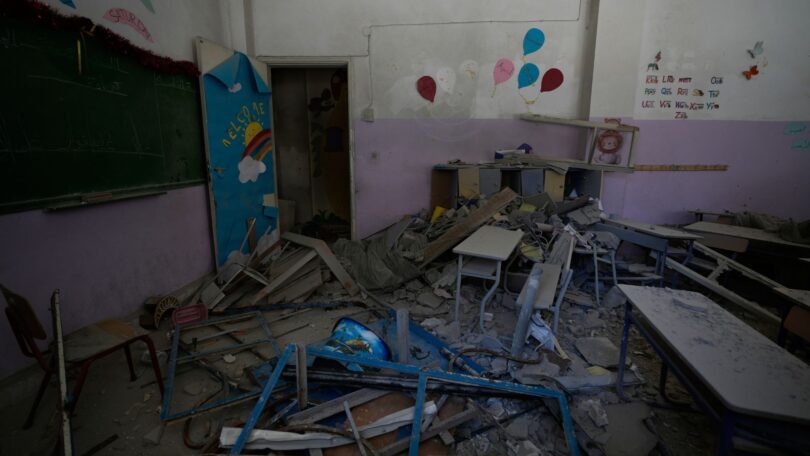
Iran has warned it will launch “long and painful strikes” against United States positions if Washington renews military action, as tensions persist over the closure of the Strait of Hormuz and stalled efforts to end the conflict.
The warning comes nearly two months into the US-Israeli war with Iran, with a ceasefire formally in place since April 8 but key disputes unresolved.
Iran has continued to block the Strait of Hormuz a critical global shipping route in response to a US naval blockade targeting its oil exports. The closure has disrupted around a fifth of the world’s oil and gas supplies, pushing up energy prices and raising concerns about wider economic fallout.
A senior official in Iran’s Revolutionary Guards said any renewed US attack, even if limited, would trigger sustained retaliation.
“Any new aggression will be met with long and painful strikes,” the official said. Aerospace Force Commander Majid Mousavi also warned US naval assets could be targeted.
Story continues below this ad
“We’ve seen what happened to your regional bases; the same can happen to your warships,” he said.
Air defence systems were reportedly activated in parts of Tehran late on Thursday, with Iranian media saying they engaged drones and surveillance aircraft.
Why it matters
The Strait of Hormuz remains central to the standoff. Iran has indicated it intends to maintain control over the waterway under what it described as “new management”.
Supreme Leader Ayatollah Mojtaba Khamenei said foreign forces had no place in the region.
Story continues below this ad
“Foreigners who come from thousands of kilometres away have no place there except at the bottom of its waters,” he said.
The disruption has already affected global markets. Benchmark Brent crude briefly rose above $126 a barrel before easing to around $114.
UN Secretary-General Antonio Guterres warned prolonged disruption could have serious global consequences.
“The longer this vital artery is choked, the harder it will be to reverse the damage,” he said, adding that extended disruption could slow growth, raise inflation and push millions into poverty.
Story continues below this ad
US response and options
US President Donald Trump is expected to be briefed on potential new military strikes aimed at forcing Iran to negotiate an end to the conflict, according to a US official.
Possible options include targeted strikes, extending the naval blockade, or deploying ground forces to secure parts of the strait and reopen it to commercial shipping, Axios reported.
Washington is also urging allies to support a proposed maritime coalition the “Maritime Freedom Construct” to safeguard navigation through the waterway.
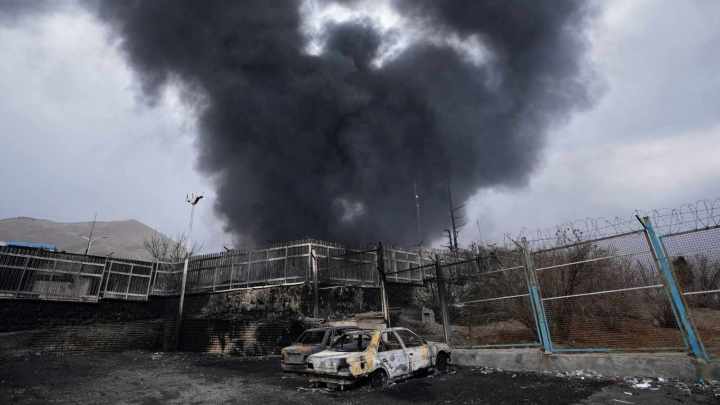
However, European countries including France and Britain have indicated they would only consider such involvement once hostilities have ended.
Story continues below this ad
Trump reiterated that Iran would not be allowed to develop nuclear weapons and said fuel prices would fall once the conflict ends.
Diplomatic efforts stall
Efforts to reach a broader settlement remain limited. Iranian Foreign Ministry spokesman Esmaeil Baghaei said expectations of a quick breakthrough were unrealistic.
“Expecting to reach a result in a short time … is not very realistic,” he said.
Iranian Foreign Minister Abbas Araqchi said any future agreement would also need to address Israeli military actions in Lebanon.
Meanwhile, Pakistan has been acting as a mediator, seeking to prevent further escalation while indirect exchanges continue between Tehran and Washington.
Regional impact
The United Arab Emirates has banned its citizens from travelling to Iran, Lebanon and Iraq, urging those already there to return home due to the security situation.
Despite the tensions, Trump said he had no objection to Iran participating in the upcoming football World Cup in the United States.
Trump faces a deadline under US law to either end the conflict or seek congressional approval to continue military action. Analysts expect the administration may pursue an extension or bypass the deadline.
While Iran’s economy remains under strain from sanctions and conflict, analysts say Tehran may be able to sustain a prolonged standoff, raising the risk of continued instability in the Gulf.