After winning legislative backing for the Hong Kong Jockey Club to offer basketball betting – an initiative aimed at drawing punters away from illegal online bookmakers and capturing additional tax revenue – the government has now paused the roll-out.
In the closing months of the 2024 US presidential race, sums tied to the eventual winner ran into billions of dollars. Prices tracked the news cycle – a strong poll, a weak debate, a court ruling – adjusting within minutes.
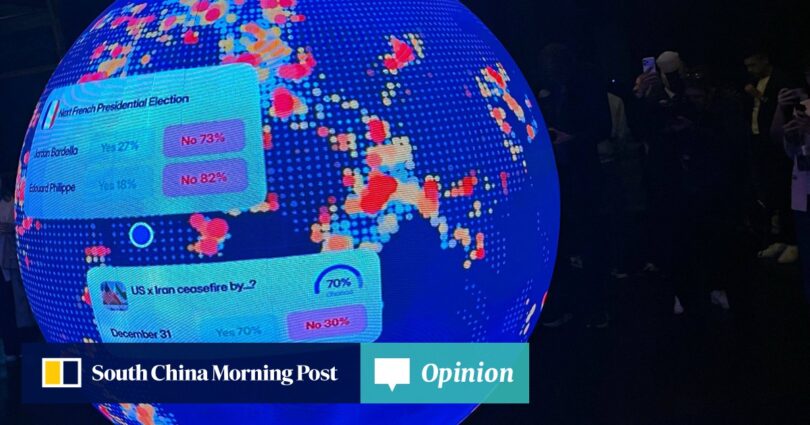
Prediction markets do not work like conventional bookmakers, which calculate and adjust odds using their own models. They resemble exchanges, with prices shifting as the market reacts to new information and changing sentiment. Supporters say the process can yield sharper forecasts than polls.
Whether that promise holds up is another matter – and the implications go well beyond basketball betting in Hong Kong. The list of contracts on these platforms is deeply troubling, not only morally but also politically. Traders can, for example, speculate on the Gaza ceasefire, whether a downed fighter pilot will be rescued, and the likelihood of US ground troops being deployed to Iran. In effect, they turn the trajectory of conflicts – with tangible human consequences – into instruments for financial gain.