
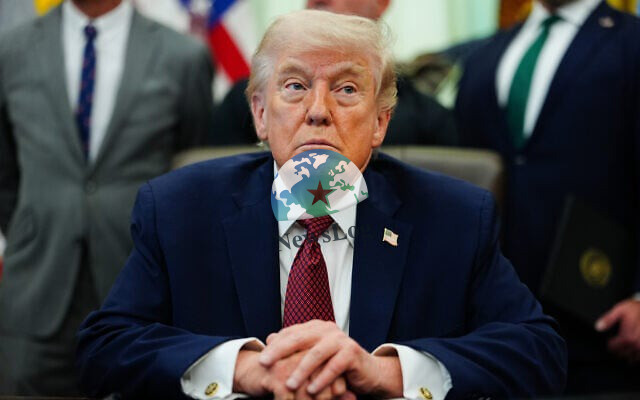
According to a report by Reuters, on Thursday April 30, 2026, United States President Donald Trump is confronting a formal congressional deadline this Friday to either conclude hostilities with Iran or formally justify to lawmakers why military operations should be extended by an additional 30 days — a decision that is increasingly being watched as a barometer of Washington’s long-term strategy toward Tehran.…....
According to analysts and senior congressional aides familiar with the process, Trump is widely expected to either formally notify Congress of a planned extension or sidestep the deadline altogether — a move that would raise its own set of political and legal questions on Capitol Hill.
The deadline arrives at a moment of intensifying economic and military pressure on both sides of the conflict, with the closure of a strategic Gulf waterway threatening to upend global trade flows and amplify humanitarian concerns worldwide.
Trump, speaking publicly on Thursday, reiterated his position that Iran’s economy was in a state of catastrophe, characterizing it as “a disaster.” However, regional economists and independent analysts paint a more nuanced picture. Despite a comprehensive U.S. blockade that has effectively severed Iran’s energy export revenues — a critical lifeline for the country’s budget — Tehran appears capable of weathering the current standoff in the short term.
The assessment challenges the White House’s apparent calculation that sustained economic pressure will force Iranian leadership into concessions. As one analyst framed it, if Trump is banking on Iran blinking first in what amounts to a high-stakes game of economic brinkmanship, he may be waiting considerably longer than anticipated.
Iran’s economic situation, while serious, has not yet reached the breaking point its adversaries had hoped for. The country’s leadership has demonstrated an ability, through a combination of domestic resilience and alternative trade networks, to absorb significant financial strain without capitulating to external demands.
Meanwhile, United Nations Secretary-General Antonio Guterres delivered an urgent warning about the wider consequences of a sustained disruption to the vital maritime corridor. Speaking from New York, he cautioned that if the chokepoint remains blocked through mid-year, global economic growth would contract, inflation would climb, and tens of millions of additional people could be pushed into extreme poverty and hunger.
“The longer this vital artery is choked, the harder it will be to reverse the damage,” Guterres told reporters.