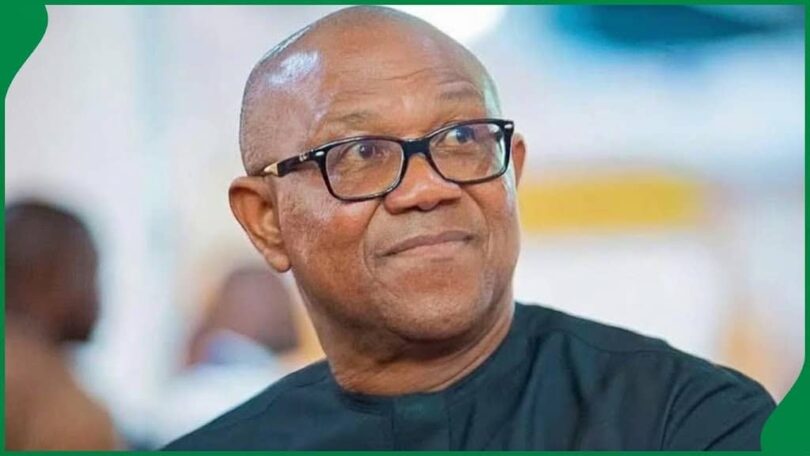
The Media Office of the presidential candidate of the Nigeria Democratic Congress (NDC), Peter Obi has claimed that some individuals within the ruling All Progressives Congress (APC) are planning to link Obi to the Indigenous People of Biafra (IPOB).
The group claimed that the aim was to discourage northerners, particularly young people, from supporting the emerging Obi-Kwankwaso political alliance.
Herald Sun reports that the allegation was made in a statement issued on Monday, November 23 and signed by Idris Zekeri Jnr.
The office expressed concern that the alleged operation could involve sponsored publications in northern newspapers, interviews on regional radio stations and coordinated social media campaigns.
It cited a recent claim by social media personality Gucci Commando, who reportedly alleged that he visited Nnamdi Kanu in Sokoto and attributed certain political endorsements in support of Obi to the IPOB leader.
Describing the allegation as questionable, the Media Office insisted that claims of such magnitude must be independently verified before being accepted as factual.
“Peter Obi is neither an ethnic nor a religious candidate. He is a Nigerian whose political vision and aspirations extend beyond ethnic, religious, and regional divisions,” the statement declared.
It further argued that Obi’s advocacy for justice, dialogue, national reconciliation and respect for the rule of law should not be deliberately misrepresented as an endorsement of separatist movements.
The Media Office also appealed to Nigerians in the North not to allow political propaganda to undermine relationships built around the common desire for a better country.
It described the Obi-Kwankwaso political engagement as a national initiative rather than an ethnic project, insisting that its objectives extend across Nigeria’s different regions.
The statement warned that the office would not remain silent in the face of what it described as attempts to manipulate public opinion through fabricated reports, sponsored narratives and deliberate misrepresentation.
It challenged those behind the allegations to produce verifiable evidence rather than rely on insinuations and unsubstantiated claims.
The Media Office further urged political stakeholders to redirect public attention towards pressing national issues, including poverty, insecurity, unemployment, education, healthcare and accountable leadership.
It also called on media organisations, particularly newspapers operating in Northern Nigeria, to uphold professional standards by thoroughly investigating politically motivated claims and refusing to become platforms for divisive propaganda.