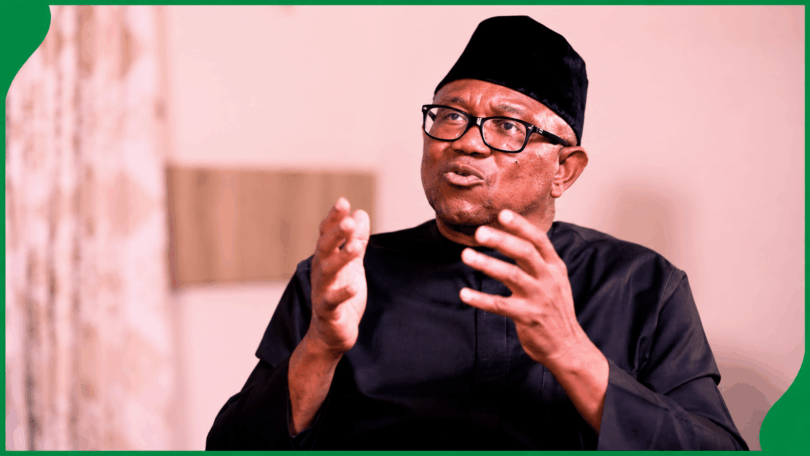
The Presidency has accused the presidential candidate of the Nigeria Democratic Congress (NDC), Peter Obi, of lying after his claim that Nigeria helped South Korea pay workers’ salaries during the administration of former President Shehu Shagari.
President Bola Tinubu’s Special Adviser on Information and Strategy, Bayo Onanuga, made the accusation on Friday, insisting that Obi got the historical account wrong.
Herald Sun reports that Obi had made the claim while discussing how Nigeria could grow its economy by learning from countries that had recorded economic success.
The former Anambra State governor mentioned China, India, Indonesia and South Korea as countries that studied successful economies and adopted policies that helped them develop.
However, Onanuga said Nigeria never helped South Korea pay workers’ salaries under Shagari, adding that the country involved was Grenada and the assistance happened during the administration of former military Head of State, General Yakubu Gowon.
In a post reacting to Obi’s comment, Onanuga accused the former governor of repeatedly making false claims.
“His Excellency Peter Obi has dropped another lie: that under President Shehu Shagari (1979-1983), Nigeria helped to pay the salaries of South Korean workers. I think this man operates from the stratosphere of falsehood. He lies as if his life depends on it. Lies are his oxygen,” Onanuga said.
The presidential aide explained that Nigeria had enjoyed a major increase in oil revenue after the civil war ended in 1970, giving the country enough foreign exchange to support other nations.
He recalled that during a visit to the Caribbean, Gowon had reportedly said Nigeria’s problem was no longer how to make money but how to spend it.
Onanuga said Gowon later assisted Grenada with the payment of workers’ salaries.
He contrasted this with the economic situation under Shagari, saying Nigeria faced serious financial problems after oil prices dropped.
According to him, the country struggled with a shortage of foreign exchange, rising foreign debt and scarcity of essential goods.
He also listed the stoppage of fresh government employment and difficulties in meeting the country’s financial obligations among the challenges Nigeria faced before the military coup of December 31, 1983.