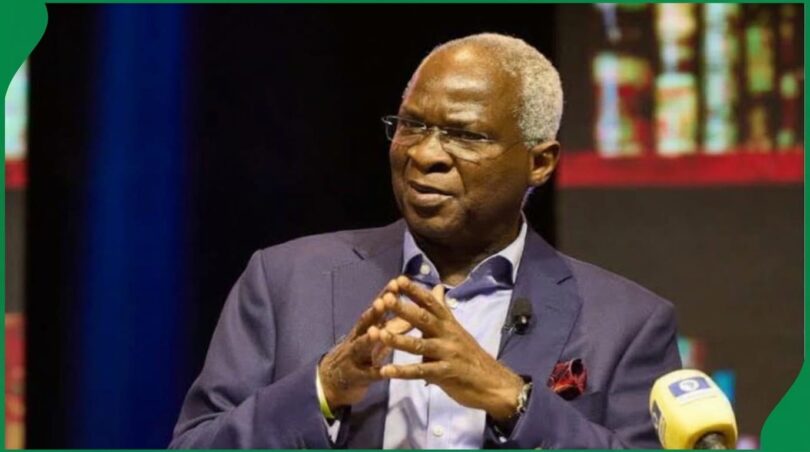
Former Minister of Power, Works and Housing, Babatunde Fashola, has declared that he connected more than 11 million Nigerians to electricity during his tenure.
Herald Sun reports that he made the remark in an interview with Arise News anchor Ojy Okpe, as he reflected on his tenure as power minister between 2015 and 2019.
He urged state governors to take advantage of the decentralisation of Nigeria’s electricity sector to improve power supply, saying the new framework provides them with greater opportunities to address persistent electricity challenges.
“At that time, we connected, I think, 11 million-plus people to electricity supply for the first time in the history of this country.
“That is a record I’m proud of. Eleven million people extra have access to electricity,” he said.
He argued that decentralising electricity regulation had created a more enabling environment for governors to develop solutions tailored to their respective states.
“Well, I think that decentralisation has already happened,” he said.
He maintained that removing restrictions that previously limited state participation had created greater opportunities for governors to intervene in electricity provision.
“This is a more enabling environment for governors to play an even bigger role,” he said, adding that Lagos was already moving ahead in that direction.
Recalling his tenure as Lagos State governor, Fashola said his administration attempted to provide electricity to streets, communities, schools and other public institutions despite the legal restrictions at the time.
“If, when I was governor, I had this enabling environment, I don’t know what I would have done.
“We were powering streets, we were powering communities, we were powering schools, and we were powering many communal institutions at that time, in spite of the restrictions that we had,” he added.
The ex-Lagos governor acknowledged, however, that expanding electricity access was different from guaranteeing reliable supply, saying stability remained a key challenge.
He said Nigeria’s electricity challenges must also be considered against the backdrop of the sector’s restructuring and privatisation before he assumed office.
Generation and distribution were transferred to private operators in 2013, while the Federal Government retained responsibility for transmission.
According to him, the restructuring fundamentally changed the government’s role in electricity delivery, making it necessary to hold service providers accountable for the power they deliver rather than placing responsibility exclusively on the Federal Government.