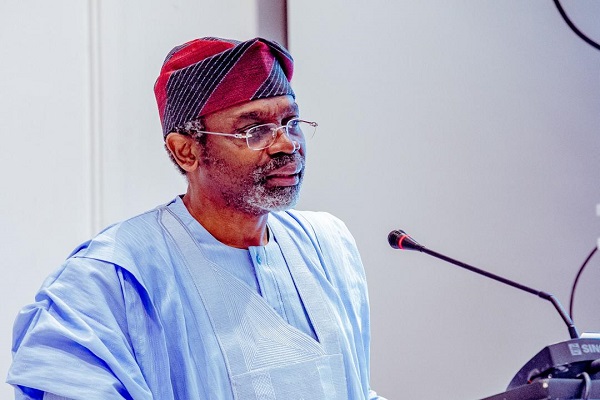
Chief of Staff to President Bola Tinubu, Femi Gbajabiamila, has admitted that Nigerians are going through serious economic hardship under the current administration.
Gbajabiamila said nobody should pretend that life is easy at the moment, following the impact of the Federal Government’s economic reforms.
He spoke on Tuesday in Abuja at the unveiling of the administration’s 2027-2031 electoral roadmap, titled “From Reforms to Prosperity Agenda.”
According to him, Tinubu deliberately chose to govern as a statesman rather than a politician, by taking difficult decisions despite their immediate political cost.
He said the removal of petrol subsidy and the unification of the foreign exchange market were taken to address long-standing structural weaknesses in the economy and secure the country’s long-term future.
Gbajabiamila admitted that those decisions have placed real pressure on households, but argued that avoiding them would have further damaged Nigeria’s economic prospects.
“Now, those decisions have placed real pressure on households. We must speak honestly about that experience because the people living through it deserve to be heard. And nobody should have to pretend that life is easy at the moment,” he said.
He explained that a politician would be concerned mainly with winning the next election, while a statesman takes decisions based on the long-term interest of the country.
“If he came in as a politician and decided to govern as a politician, he would have continued on the cruise, on the path that we were taking.
“But instead, knowing full well the immediate consequences, he decided he would govern as a leader,” Gbajabiamila said.
He added that the reforms would only be justified if they translate into better living conditions for ordinary Nigerians.
The former Speaker described the new electoral roadmap as an ambitious document that reflects Tinubu’s political philosophy and commitment to long-term national development.
He said the main objective is to build an economy where hard work guarantees a decent livelihood, and every Nigerian has a fair opportunity to succeed.
“At the heart of this manifesto is my abiding conviction that every Nigerian should be able to share. Your country should give your best efforts a fair chance.
“A manifesto, in its strictest sense, is simply a contract between the people and the leader,” he said.
Gbajabiamila listed some of the administration’s interventions in human capital development, social protection, taxation and electricity as evidence of efforts to expand economic opportunities.
He mentioned initiatives such as N-Power and the student loan scheme, which he said were designed to improve access to opportunities and ease the financial burden on young Nigerians.
He also highlighted the tax reforms, which he said were designed to promote fiscal fairness by reducing the burden on low-income earners and qualifying small businesses.
He further cited the Electricity Act, which empowers states to establish and regulate their electricity markets, as a major intervention aimed at attracting investment and improving access to power.
Gbajabiamila said the administration is committed to creating an environment where young Nigerians can pursue their ambitions without depending on political connections or patronage.
He called on members and stakeholders of the All Progressives Congress (APC) to defend the administration’s record and engage Nigerians directly on its policies.
He said the ruling party must be prepared to account for its performance and convince voters through its achievements rather than relying on political rhetoric.
“The party asking to continue in government must be prepared to answer the people whose mandate it seeks.
“We must earn support through the quality of work, through the quality of our case and the seriousness of our conduct,” he said.