The Nigeria Customs Service has announced plans to deploy artificial intelligence, advanced scanning equipment and electronic cargo tracking systems to strengthen its fight against smuggling and corruption. The Comptroller-General of Customs, Bashir Adewale Adeniyi, disclosed this on Thursday at the inaugural Customs Police Summit 2026 in Abuja, according to a……
The Nigeria Customs Service has announced plans to deploy artificial intelligence, advanced scanning equipment and electronic cargo tracking systems to strengthen its fight against smuggling and corruption.
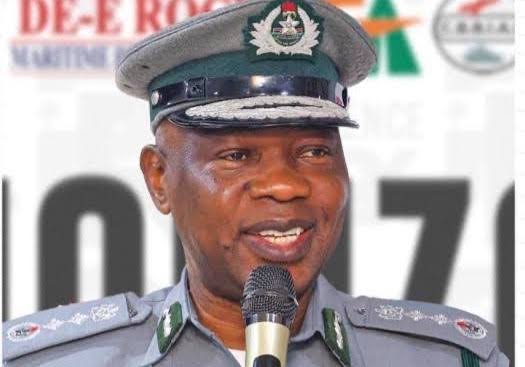
The Comptroller-General of Customs, Bashir Adewale Adeniyi, disclosed this on Thursday at the inaugural Customs Police Summit 2026 in Abuja, according to a report published by the Service.
He said the measures would help the agency detect smuggling, monitor suspicious shipments and address corrupt practices among its officers.
Adeniyi explained that criminal networks were increasingly exploiting legitimate trade routes and digital platforms to move firearms, narcotics, counterfeit medicines and illicit funds.
Read Also: Customs, WCO Seek Stronger EFCC Collaboration Against Money Laundering
He said the growing sophistication of criminal activities meant the Service could no longer rely solely on conventional enforcement methods.
The Customs chief stressed that technology, intelligence sharing and professional policing must become central to the agency’s operations.
He also cautioned officers against abusing their enforcement powers, emphasising that the authority to conduct searches, make arrests and detain suspects must be exercised within the limits of the law.
“The NCS Act 2023 gives us police powers, but every search, arrest and detention must rest on lawful grounds and withstand public and judicial scrutiny,” he said.
Adeniyi maintained that the service must demonstrate integrity internally before demanding compliance from traders and members of the public.
“Our history teaches three lessons. First, charity begins at home. Before we demand integrity from traders and the public, we must show it ourselves,” he said.
He identified the service’s B’Odogwu digital platform, which integrates cargo declarations, valuation and risk management, as well as the INTERPOL Data Centre at Customs headquarters, as key tools for strengthening intelligence-led enforcement.
However, he cautioned that artificial intelligence and other digital systems must not replace human judgment or established legal procedures.
“Algorithms may flag risks, but only officers acting within the law can exercise enforcement powers, with audit trails, data protection and human oversight at every step,” Adeniyi stated.
He explained that criminal networks had become more sophisticated, using the same channels as legitimate businesses to move prohibited goods and conceal illicit financial transactions.
“Our answer must be smarter, not harder,” he said, adding that international customs instruments and compliance programmes could help identify high-risk shipments while allowing legitimate businesses to operate with fewer delays.
The Comptroller-General also called for a review of some responsibilities assigned to the Customs Police Unit when it was established in July 2019, particularly the monitoring of containers in transit.
According to him, technological improvements have created more efficient ways of tracking cargo movements, requiring the unit to reconsider some of its traditional operational duties.
He outlined three strategic priorities for repositioning the unit: consolidation, collaboration and innovation.
On consolidation, he called for clearer procedures for arrests, detention and investigations, improved case management and continuous professional training.
He also advocated stronger cooperation with security and regulatory agencies, including the Nigeria Police Force, Armed Forces, National Drug Law Enforcement Agency, National Agency for Food and Drug Administration and Control, Department of State Services, EFCC and ICPC.
“No single institution can defeat illicit trade alone. We must strengthen cooperation, share intelligence and coordinate our operations,” he said.
Earlier, the Deputy Comptroller-General of Customs and Provost Marshal, TS Sanusi, stressed the importance of transparency, professionalism and ethical conduct in the service.
The Assistant Comptroller-General of Customs, Shuaibu, described the Customs Police unit as critical to national security and internal discipline, urging officers to ensure impartial investigations and consistent application of disciplinary standards.
The summit is expected to develop recommendations on joint security operations, intelligence sharing, the responsible use of artificial intelligence, evidence management and specialised training for Customs Police personnel.