A deadly hantavirus outbreak aboard the luxury cruise ship MV Hondius has triggered an international health response, with authorities tracing passengers across multiple countries after three deaths and several confirmed infections linked to the vessel. However, the World Health Organization (WHO) has said the outbreak is not comparable to Covid-19 and the broader public health risk remains low.
At least 29 passengers from 12 countries disembarked from the Dutch-operated vessel on April 24 at the island of Saint Helena before isolation measures were put in place, triggering an international contact-tracing effort.
So far, there have been five confirmed cases. WHO officials warned that more cases could still emerge because the Andes strain of hantavirus has an incubation period of up to six weeks.
In a press briefing, Maria Van Kerkhove, WHO director of epidemic and pandemic management said, “This is not coronavirus, this is a very different virus. This is not the same situation we were in six years ago.” WHO chief Tedros Adhanom Ghebreyesus also confirmed that the global public health risk remained low.
What is hantavirus?
Hantaviruses are primarily carried by rodents but can infect humans through exposure to rodent urine, droppings or saliva. The infection can lead to flu-like symptoms, respiratory distress, pulmonary syndrome and, in severe cases, respiratory failure.
The Andes strain of hantavirus, linked to the outbreak onboard the MV Hondius, is considered rare because it can spread between humans through very close contact.
Passengers traced across countries
The ship initially carried around 149 passengers and crew members from 28 countries. Among them were at least two Indian crew members, according to a BBC report.
Story continues below this ad
The passenger list included 38 people from the Philippines, 31 from the United Kingdom, 23 from the United States, 16 from the Netherlands, 14 from Spain, nine from Germany, six from Canada and two crew members from India.
Authorities in several countries have now begun monitoring or isolating returning passengers.
In the United States, the Centers for Disease Control and Prevention (CDC) is monitoring passengers who travelled to Georgia, California and Arizona. Reports said none of them have shown symptoms so far.
In Britain, two passengers who returned home are self-isolating but remain asymptomatic. UK health officials said some returning passengers could be asked to isolate for up to 45 days.
Story continues below this ad
Singapore authorities said two residents who had travelled on the ship had been isolated and tested, while Denmark confirmed that one of its citizens was in self-quarantine without symptoms.
Swiss authorities also confirmed that a passenger who tested positive for the virus was being treated in Zurich, though officials said there was no threat to the wider public.
How the outbreak unfolded?
The first suspected victim was a 70-year-old Dutch passenger who developed symptoms on April 6 and died five days later. His death was initially believed to be from natural causes and did not raise any concern.
While his body was removed from the vessel at Saint Helena on April 24, his 69-year-old wife later travelled to South Africa and briefly boarded a KLM flight in Johannesburg before she was hospitalised. She later died from the infection.
Story continues below this ad
A German national who developed fever symptoms on April 28, died on May 2.
Investigators are examining whether the outbreak may have originated during a birdwatching trip in Argentina undertaken by the Dutch couple before they boarded the cruise ship.
KLM crew member tests negative
The WHO confirmed on Friday that a Dutch KLM flight attendant who had come into contact with the infected Dutch woman during her journey from South Africa had tested negative for hantavirus.
Ship heads to Canary Islands
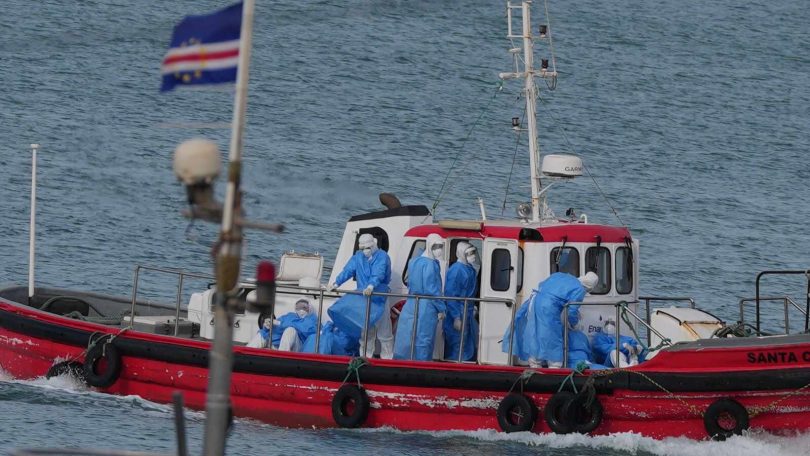
The MV Hondius, with 149 passengers and crew still onboard, is now heading towards Tenerife in Spain’s Canary Islands after being denied permission to dock near Cape Verde.
Story continues below this ad
Spanish health authorities said the ship would remain offshore and passengers would be medically evaluated onboard before any transfer or repatriation takes place under strict protective measures.