
By Uche Usim
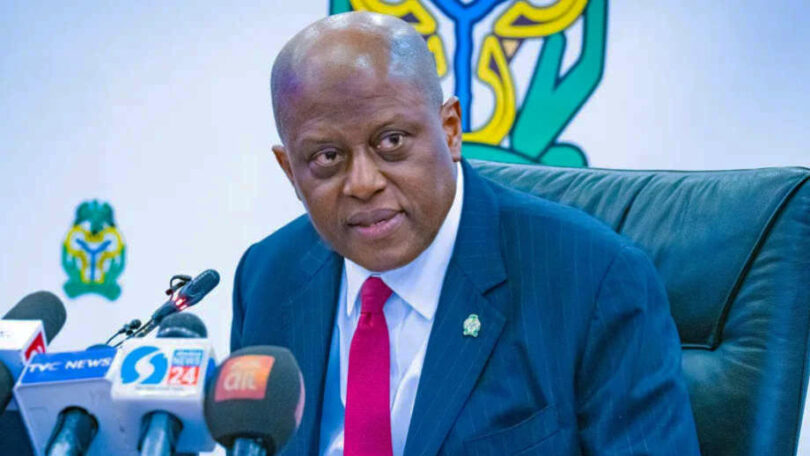
Governor, Central Bank of Nigeria (CBN), Olayemi Cardoso, on Thursday, advised to bank directors and corporate leaders to live aboard board in all their dealings, declaring that governance failures in Nigeria’s financial system will no longer be tolerated as the country enters the post-recapitalisation era.
Speaking at the Chartered Institute of Directors Nigeria (CIoD) New Members’ Induction Ceremony in Lagos, Cardoso said the recent banking recapitalisation exercise was more than a regulatory process, describing it as a strategic move to build stronger institutions, restore investor confidence and support long-term economic growth.
He said the next phase of reforms would focus on three pillars; consolidation, confidence and stability.
According to him, directors now carry greater responsibility to ensure that banks and financial institutions are not only profitable, but well-governed, transparent and resilient.
“Nigeria’s financial sector has just completed a historic recapitalisation exercise. This reform was not simply a regulatory requirement, it was a strategic imperative to strengthen resilience, enhance investor confidence, and ensure that our institutions are positioned to support sustainable economic growth,” Cardoso said.
He noted that stewardship in the new era requires directors to move beyond ceremonial oversight and become active guardians of institutional health.
The CBN governor said boards must guide institutions through economic cycles, support recapitalisation and restructuring when necessary, maintain transparency and embed strong risk management systems capable of withstanding shocks.
“This era calls for directors who are not passive overseers but active stewards, leaders who balance profitability with sustainability, and compliance with innovation,” he said.
Cardoso recalled that Nigeria’s banking system had repeatedly suffered from poor corporate governance, weak oversight and insider abuses, forcing regulators to intervene.
He cited the January 2024 dissolution of the boards and management of three banks over serious governance lapses and regulatory breaches.
He also referenced a 2025 succession planning directive requiring systemically important banks to obtain approval for new chief executives six months before the departure of incumbents, while successors must be publicly announced three months in advance.
According to him, the measures were designed to prevent leadership vacuums and preserve market confidence.
“These recent actions echo earlier interventions, including those of 2009, when insider lending and weak board oversight led to collapse. The lesson is clear: strong governance is the foundation of trust and stability in the financial system,” he said.
Cardoso said the apex bank had backed recapitalisation with a broad range of governance reforms aimed at strengthening boards and improving accountability.
These include stricter compliance with insider-related credit limits, revised corporate governance guidelines, fit-and-proper tests for directors, enhanced disclosure requirements, annual board evaluations and structured succession planning.
He said the end of regulatory forbearance and introduction of Risk-Based Capital Requirements marked a major shift in supervisory philosophy.
Under the new regime, banks would no longer be judged by balance sheet size alone, but by whether their capital adequately reflects the risks they carry.
“Capital adequacy is no longer about size alone; it is about risk alignment,” Cardoso said.
He explained that the new framework requires directors to ensure proper capital planning, stronger governance around credit and operational risks, and accountability without reliance on regulatory leniency.
He added that reckless lending, overexposure and weak risk controls would have no place under the new system.
According to him, the reforms are expected to ripple beyond banking and raise governance standards across the wider Nigerian corporate sector.
Cardoso urged the over 300 newly inducted CIoD members to see their appointment not as a ceremonial honour, but as a call to national service.
“The choices you make in boardrooms will shape the future of Nigeria’s economy,” he said.
He assured directors that the Central Bank remained ready to engage stakeholders and provide clarity where needed, stressing that collaboration between regulators and boards is critical to building a resilient, inclusive and globally competitive financial system.
“As we move forward in this new era, let us remember that stewardship is not optional, it is the essence of leadership,” Cardoso said.
He added that consolidation, confidence and stability must now guide every major corporate decision if Nigeria’s financial sector is to remain a pillar of economic strength for generations to come.