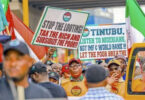
Today Friday 1st of May marks 2026 Workers’ Day. A day globally sets aside to celebrate the dignity of labour as a critical factor of development. This year’s May Day in Nigeria assumes triple importance of history, relevance (workers’ welfare) and democratic context (2027 presidential and state elections!).
Going down the memory lane
First the history. 2026 May Day marks the 46th anniversary of workers’ Day as a public holiday in Nigeria. That if we (date) count from 1980. There were once radical two progressive Governors Abubakar Rimi and Alhaji Balarabe Musa of Kano and Kaduna States respectively under the platform of Mallam Aminu Kano led-Peoples Redemption Party (PRP). The duo audaciously declared May 1st a public holiday in show of solidarity with the demand of NLC led by its founding president, Alhaji Hassan Sunmonu. There was once a democratic second Republic with competitive ideological politics led by popular parties and politicians. A year later, the ruling National Party of Nigeria (NPN) refused to be outperformed by the radical progressive left PRP, the conservative President Shehu Shagari declared May 1 a national public holiday in appreciation of the dignity of labour. Of course globally the observance of May Day is long dated; almost a century and half. In 1886, Chicago police opened fire killing several demonstrating workers demanding for 8-hr working day. Subsequent workers’ protest, led to the death of some seven policemen. Police without evidence accused eight leaders of the Chicago workers’ movement of killing the police convicting all. Four of the workers’ leaders were executed, three were given life imprisonment! And that was a ‘democratic’ America which had proclaimed a libertarian constitution but without due respect for workers’ rights. May 1, 1889, the International Workers’ Congress in Paris declared in memory of the historic struggle of the Chicago workers! With the exception of the global lock down occasioned by COVID in 2020, a century long May Day celebrations had offered open global platforms for working men and women to demand for fairer distribution of global wealth between labour and owners of means of production. In 2020, there was a “virtual celebration” of dignity of labour, damning the virus. Not even military dictatorships which trampled on freedom of association and assembly during decades long misrule deter open May Day manifestations in Nigeria. I recall that both IBB and Abacha military regimes dissolved the Executive Councils of the NLC in 1988 and 1995 respectively. But industrial affiliate unions nonetheless observed labour day despite the intimidation and harassment. Which then explains the democratic context of May Day celebrations over the years.
It was a democratic dispensation that proclaimed May Day in Nigeria in the 80s. It is democracy that constitutionally allows for freedom of association, rights to unfettered organizing, the trade marks of trade union movement. The point cannot be overstated: organized labour must join democratic forces to deepen democracy which with all its dramatized challenges, in the past 27 years, constitutionally guarantees uninterrupted trade and human rights.
2026 May Day is undoubtedly a celebration of 27 years of uninterrupted democratic dispensation in Nigeria since 1999.
This year’s May Day is the third since the inauguration of President Bola Ahmed Tinubu.
Globally Labour -government relations is characterized by contestation and accommodation. More so in recent times of global economic crisis worsened by barrage of unnecessary drones and missiles from Ukraine to Persian Gulf. With “four strikes in 9 months” just after inauguration, Nigeria is certainly not short of policy contestations since President Bola Tinubu initiated twin policy of inevitable fuel subsidy removal and foreign exchange market reforms which once fueled inflation, currency devaluation, high cost of living and challenged industrial relations more than ever before. However there is also a remarkable and commendable policy accommodation and cooperation under Ashiwaju led administration which has fostered relative industrial peace in the wake of daunting current economic challenges. Indeed there is a consensus among the stakeholders in the labour market that notwithstanding the impact of inevitable economic reforms on employment relations, organized labour, employers and governments had commendably taken the advantage of the country’s social dialogue and dispute resolution mechanism to minimize disputes and maintain relative harmony.
With effect from January 1 this year, this administration commendably signed a historic important agreement which put an end to a 17- year dispute between the federal government and the Academic Staff Union of Universities (ASUU). ASUU/ FG persistent disagreement is a legacy of avoidable crisis of collective bargaining dating back to military administration. Since Nigeria 1999, ASUU has embarked on strikes for more than 50 months, (almost five years). ASUU strikes lasted 18 months under former President Obasanjo. The strikes truncated the legitimate aspirations of students in public universities to complete their studies in record time. The new agreement with the Academic Staff Union of Universities (ASUU), which shift from crisis management to dialogue-driven labour relations within the Renewed Hope Agenda is singular positive step toward industrial harmony and stability in Nigeria’s education sector. Of course, agreements are to be respected by all parties. However budget allocations must be matched by budget releases. The hope is that Minister Taiwo Oyedele the new Minister of Finance and Coordinating Minister of the Economy of Nigeria will restore budget implementation discipline. At the root of labour agitation is the crisis of compensation the manifestations of which are non-payment of salaries, and allowances, low pay, non-remittance of pension deductions among others.
Beyond, legitimate protests and strikes, trade unions, private employers of labour organized in Nigeria by Nigeria Employers Consultative Association (NECA) and government officials have signed scores of agreements after worthy negotiations, compromises, workplace dispute prevention and dispute resolutions. The Minister of Labour and Employment in Dr. Muhammad Maigari Dingyadi has facilitated a number negotiations that have promoted relative industrial peace and industrial harmony. After open policy contestation as we have seen on subsidy removal, there has been policy accommodation between labour and government. Which means that trade unions’ struggles invariably compliment reforms for better inclusive outcomes .
The 2023 October 2nd 15-point Memorandum of Understanding (MOU) between organized Labour and government following the removal of fuel subsidy, there has been wage award for all the Federal employees, new minimum wage Act due for review next year. There are enough quotable quotes on minimum and living pay attributable to President Bola Ahmed Tinubu more than any President. Every labour market observer agrees that improved pay will promote ease of work and living among Nigeria’s working poor. Remarkably too, is the good news that the Federal Government has increased peculiar allowances, welfare benefits and exit packages for civil servants.
The Head of the Civil Service, Didi Walson-Jack, disclosed that the move is expected to increase the take-home pay of civil servants and boost the morale of the government’s workforce under the Consolidated Public Service Salary Structure (CONPSS), and the Consolidated Research and Allied Institutions Salary Structure (CONRAISS). One key reform is the approval of 100 percent DTA, which is for civil servants attending approved training programmes irrespective of whether travel is involved or not. Apart from salary-related adjustments, the Federal Government has also introduced an exit benefit scheme for retiring civil servants under the Contributory Pension Scheme. The scheme, which provides 100 percent of a retiree’s full emoluments as an exit package, in addition to their pension, takes effect from January 1, 2026. The Federal Government equally confirmed the operationalisation of the Employee Compensation Scheme, aimed at financially protecting workers who suffer job-related injuries or death.
Nigeria’s latest reforms followed an increase in calls from labour unions for improved welfare for civil servants as the cost of living continues to soar, putting more pressure on workers. The point cannot be overstated that labour issues will shape 2027 polls. Labour issues deal with job creation, job security, wage income improvement, pension, occupational health and safety and of course physical security. The recently approved N758 billion bond to settle long standing pension liabilities by President Bola Ahmed Tinubu remains a timely welcome act of, statesmanship and good governance in the country’s pension market. If we add non-retrenchment and even more public sector job creation, regular payment of salaries by this administration, it is clear that critical labour market issues will influence how organised labour and millions of informal workers vote in the 2027 general elections.
Happy 2026 May Day.
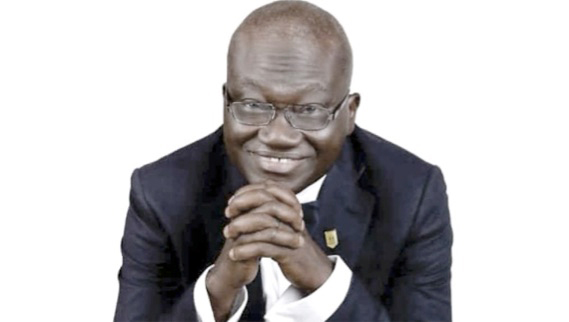
Comrade Issa Aremu mni
Director General, Micheal Imoudu National Institute for Labour Studies ( MINILS) Ilorin.