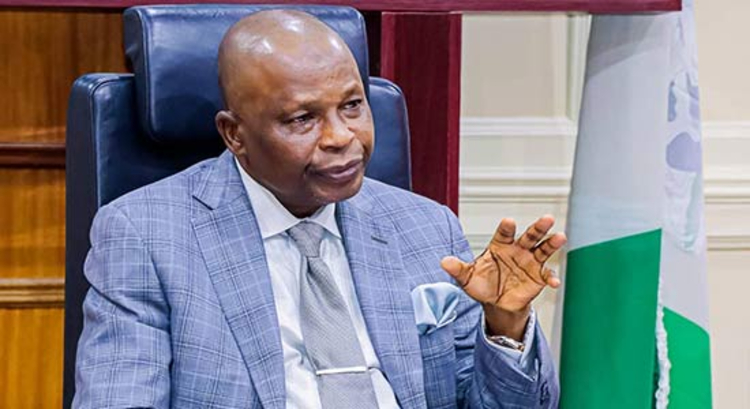
Attorney General of the Federation and Minister of Justice (AGF), Lateef Fagbemi (SAN)
From Godwin Tsa, Abuja
The Attorney General of the Federation and Minister of Justice Lateef Fagbemi (SAN) has solicited the cooperation of State Governors and Houses of Assembly in the full implementation of the Child’s Rights Act 2003, to curb the emerging threats to the safety and dignity of Nigerian child.
While urging the state executives to key into the ongoing review process of the Act, the Minister expressed the need to domesticate same in the interest of creating a uniform national framework for the protection of the Nigerian child.
The Minister spoke at the inauguration of the Committee on the Review of the Child Rights Act (CRA), 2003, which was attended by high profile dignitaries including the Minister of the Federal Capital Territory (FCT), Nyesom Wike, President of the Court of Appeal, Justice Monica Dongban-Mensem and her colleagues Justices of the appellate court.
The Child’s Rights Act, enacted in 2023, was designed to domesticate Nigeria’s obligations under the United Nations Convention on the Rights of the Child (UNCRC, which entered into force on September 2, 1990) and the African Charter on the Rights and Welfare of the Child 1990 (ACRWC, that entered into force in 1990).
The enactment of the Child Rights Act in 2003 marked a historic milestone in our nation’s legal development, as it domesticated key international and regional instruments to safeguard the rights and welfare of Nigerian children firmly.
However, Fagbemi observed that over the past two decades of it’s existence, “new realities demand urgent reform.”
He pointed to emerging threats such as child involvement with terrorist groups, grooming, sextortion, child pornography, cyberbullying, and cyberstalking, which he noted, were not anticipated when the Act was first promulgated.
He said for Nigeria to achieve meaningful and lasting progress, “we must be deliberate in protecting the dignity of every Nigerian child, safeguarding their welfare, and securing their future.”
Fagbemi said; “One accepted feature of a good law is that it must be dynamic and evolve with society. This review is not a routine amendment; it is an opportunity to implement far-reaching reform, potentially requiring the repeal and re-enactment of the 2003 Act to deliver a more robust, coherent, and responsive framework for child protection in Nigeria.
He explained that several critical issues must guide our review work and these include: Right to life and dignity; protection of the Girl-Child;
adoption Framework; sexual and Gender-Based Violence; Child Justice Administration; uniform standards and constitutional backing, among others.
He explained that the selection of Justice Eberechi Suzzette Nyesom- Wike as the Chairperson of this Committee, “is a product of careful and deliberate consideration, reflecting a rare breadth of experience at both the national and sub-national levels.
Fagbemi thanked Justice Nyesom-Wike “for graciously accepting this responsibility, as well as for Your Lordship’s tireless advocacy and distinguished service in promoting family values and advancing the welfare of children across Nigeria.”
He charged member of the committee cut across various stakeholders in the justice sectors to be guided by the urgent need to move beyond statutory provisions in safeguarding the interests of Nigerian children.
In her inaugural address, the chairperson of the review committee, Justice Eberechi Suzzette Nyesom- Wike, noted that some gaps created by the Child’s Rights Act 2003, are adversely affecting the well-being and justice for children.
The Justice of the Court of Appeal, lamented that inconsistent enforcement of the Act in the autonomous States, means that many children still lack real protection.
She specifically noted that section 29 (4)(b) of the 1999 Constitution, which deems any marriage woman to be of full age, “has allowed harmful practices like child marriage to persist under the cover of legislation that conflicts with the Child’s Rights Act.
Justice Nyesom-Wike disclosed that reported child abuse cases have risen from 3,943 in 2021 to 9, 279 in 2024, “yet only few perpetrators were convicted in these cases, across the entire five-year period.
In another sordid revelation, the jurist disclosed that an approximate population of 20 million Nigerian children are out of school even as the country continue to grapple with physical, emotional, and sexual abuse, as well as genital mutilation.
Other dignitaries at the event who presented their goodwill messages were the President of the Court of Appeal, Justice Monica Dongban-Mensem; Chairman of the Nigerian Law Reform Commission; Prof. Dakas C.J. Dakas (SAN), who was represented by Dr. U.E. Okorocha; the UNICEF Child Protection Officer, Mona Alika, the Estu Kwali, HRH Luka Ayodoo among others.