From Godwin Tsa, Abuja
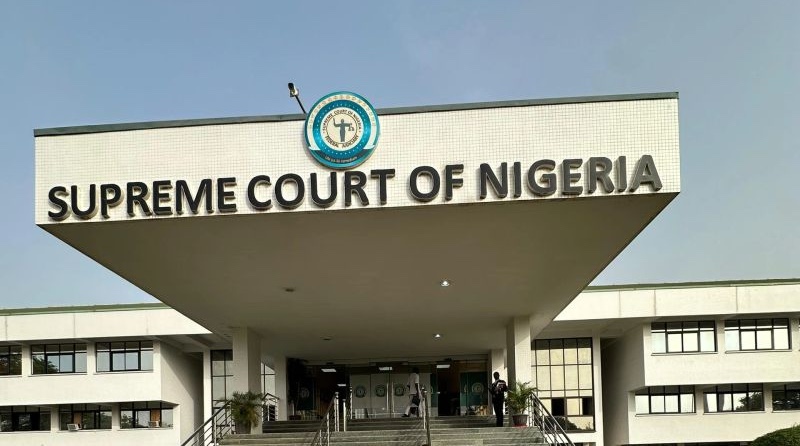
In a split decision of two-three, the Supreme Court has voided the Senator Tanimu Turaki-led national convention of the Peoples Democratic Party (PDP) held in Ibadan, Oyo State, on November 15 and 16, 2025.
The apex court gave the judgment yesterday in a ruling that is expected to shape the 2027 general election.
Justice Stephen Jona Adah who read the lead majority judgment held the disobedience to lawful order of court by the Seyi Makinde-backed faction of the PDP was an unpardonable act that must not be allowed in the interest of the rule of law and democracy.
However, Justices Haruna Tsanami and Abubakar Sadiq Umar, in the minority judgment, held that the issue in dispute was an internal affairs of a political party that ought not to have been adjudicated upon by any court.
A former governor of Jigawa State Sule Lamido had asked the court to stop the national convention on the grounds that he was denied nomination forms to participate in the exercise.
Justice Peter Lifu of the Abuja division of the Federal High Court had stopped the convention, citing breaches of the party’s constitution and failure to comply with due process.
Despite the order, the convention went ahead, prompting further litigation.
The high court had specifically barred the Independent National Electoral Commission (INEC) from supervising, monitoring, or recognising any convention held without including former Jigawa State Governor Sule Lamido as a contestant.
The restraining order followed a suit filed by Lamido, a foundation member of the PDP, alleging he had been arbitrarily denied the chance to contest for National Chairman.
He cited the PDP and INEC as the first and second defendants, respectively.
The trial court found that Lamido had been unjustly denied a nomination form, contrary to the PDP Constitution and guidelines.
It declared that the party must create opportunities for members to aspire to positions.
As a consequential order, Justice Lifu halted the convention to allow Lamido to obtain the form, mobilise supporters, and campaign.
Dissatisfied with the decision, the Turaki-led PDP filed an appeal to set it aside.
The appeal was dismissed by the appellate court which held that the appellants resorted to self-help and contemptuous conduct by proceeding with the convention despite the restraining order.
It ruled that the party should have sought suspension of the judgment from a higher court, rather than obtaining a favourable order from another court of coordinate jurisdiction.
The appellate court described the PDP’s action as a direct affront to judicial authority and a gross abuse of court process.
The appellate court had berated the Turaki-led PDP for defying the November 14, 2025, judgment of Justice Peter Lifu of the high court, which stopped the Ibadan convention.
Meanwhile, the second appeal which was also filed by the Turaki-led group, is seeking to void the court order that barred INEC from monitoring the contentious Ibadan convention.
The appellants in the matter—PDP, its National Working Committee (NWC), and National Executive Committee (NEC)—had, in a motion filed on April 8 through their team of lawyers led by Chief Chris Uche, SAN, prayed for a departure from the Supreme Court Rules and the abridgement of time for all respondents to file their briefs of argument.
They challenged the judgment of the Court of Appeal, which upheld judgments barring the PDP from proceeding with the Ibadan convention.
The appellate court had held that the convention, which produced the Turaki, SAN-led factional leadership, lacked legal backing as it disobeyed two Federal High Court judgments in Abuja delivered on October 31 and November 14, 2025.
The Justice Mohammed Danjuma-led panel dismissed the appeal marked CA/ABJ/CV/1613/2025, filed by the PDP faction aligned with Governors Seyi Makinde of Oyo State and Bala Mohammed of Bauchi State.
It found no reason to overturn Justice James Omotosho’s verdict of the high court, which had barred INEC from validating the Ibadan convention outcome.
According to the appellate court, evidence showed that statutory conditions precedent were not met before the convention.