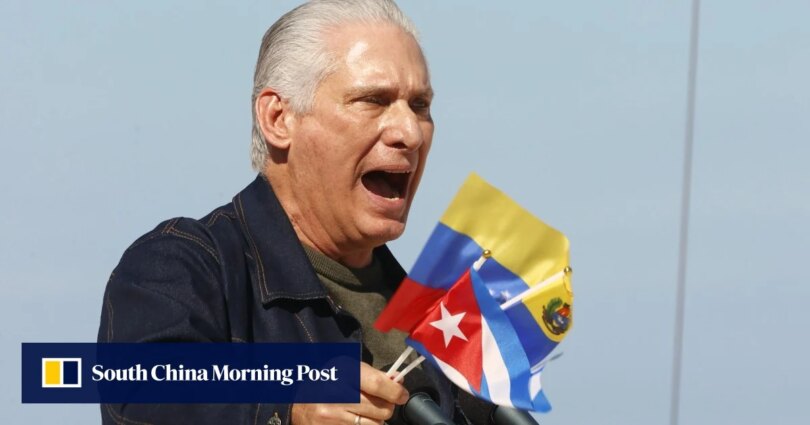
With Congress again failing to curb US President Donald Trump’s authority over Cuba, the centre of gravity in US policy towards the island is shifting decisively back to the White House – and to a narrower, more consequential question: what comes next?
Tuesday’s 51-47 Senate vote to block a Democratic-led war powers resolution on Cuba does not change policy on its own. It was widely expected, reflecting a long-standing pattern in which Congress has struggled to assert its war powers authority since the Vietnam war.
But the outcome reinforces a clear reality: Trump retains wide latitude to escalate economic or military pressure on Havana, with little immediate risk of congressional constraint.
Yet the administration’s Cuba strategy seems to be entering a more complex phase, with most tools of pressure already in play but no clear path to an outcome.
“The signals over the past few weeks have been uneven, to put it mildly. At this point, it’s very hard to tell where this is going,” said Michael Bustamante, director of Cuban Studies at the University of Miami. “I feel like we’re in a kind of stalemate.”
00:58
Trump vows to ‘take’ Cuba as island reels from total power cut linked to oil embargo
Trump vows to ‘take’ Cuba as island reels from total power cut linked to oil embargo
Over the past several months, Washington has steadily tightened its campaign against Cuba, combining an energy blockade with broader sanctions and stepped-up maritime enforcement. The measures have disrupted oil flows – particularly from Venezuela – and contributed to worsening power outages, rising food prices and strain on basic services across the island.