
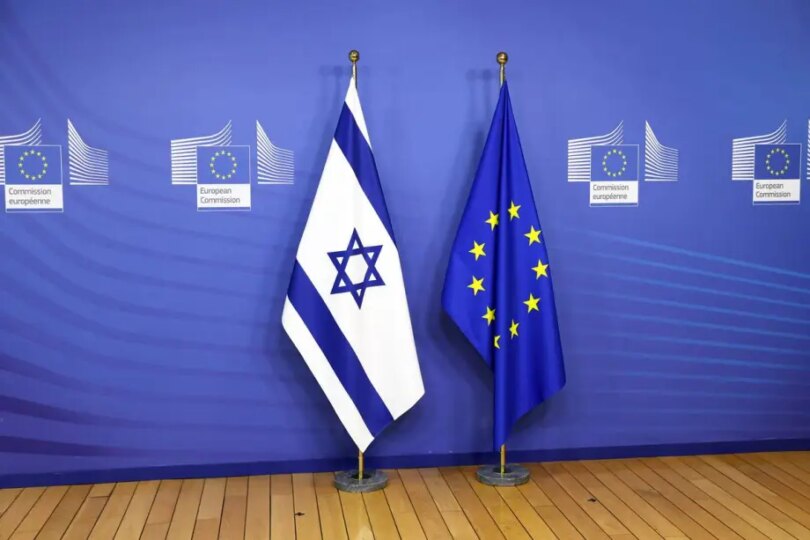
Israel has been slammed as not being a “normal country” for importing wheat stolen from Russian-occupied Ukrainian territory, prompting the European Union to consider sanctions against Israeli individuals and entities linked to the trade.
The criticism came from Ukrainian President Volodymyr Zelenskyy, who said: “In any normal country, purchasing stolen goods is an act that entails legal liability.” He added that a vessel carrying looted grain had arrived in Israel and was preparing to unload, stressing that such activity “cannot be legitimate business” and warning that Israeli authorities could not plausibly be unaware of the cargo entering their ports.
In any normal country, purchasing stolen goods is an act that entails legal liability. This applies, in particular, to grain stolen by Russia. Another vessel carrying such grain has arrived at a port in Israel and is preparing to unload. This is not – and cannot be – legitimate…
— Volodymyr Zelenskyy / Володимир Зеленський (@ZelenskyyUa) April 28, 2026
The EU said it is now mulling sanctions against Israeli actors accused of helping Russia circumvent international restrictions. EU foreign affairs spokesman Anouar El Anouni said the bloc “condemns all actions that help fund Russia’s illegal war effort and circumvent EU sanctions,” adding that Brussels is prepared to target individuals and entities in third countries if necessary. The EU has also requested clarification from Israel following reports that a Russian “shadow fleet” vessel carrying stolen grain was allowed to dock in Haifa Bay.
READ: Israel founders were ‘thieves’, Israeli historian says
The move follows an investigation by Haaretz, which exposed how Ukrainian wheat seized by Russian forces is smuggled through a sophisticated maritime network before reaching international markets, including Israel. According to the report, grain taken from occupied Ukrainian territories is transported to sea via smaller feeder vessels or rail, then transferred to larger ships through clandestine ship-to-ship operations. These transfers often occur with tracking systems disabled to conceal the origin of the cargo.
Satellite imagery, shipping data and internal Russian documents reviewed by Haaretz indicate that this is not an isolated incident but part of a sustained operation. Since 2023, multiple ships carrying stolen grain have reached Israeli ports, with at least four shipments recorded this year alone. Russian records reportedly list over 30 consignments of looted Ukrainian wheat destined for Israel.
Ukraine estimates that at least 15 million tonnes of grain have been seized by Russia since the 2022 invasion, with profits from its sale helping to finance Moscow’s war effort. Ukrainian officials say they had warned Israel in advance about specific vessels, including the Abinsk, which was nevertheless permitted to unload its cargo.
Despite the EU’s threat of sanctions, the move has drawn criticism over what observers describe as a double standard. The bloc has long failed to impose sanctions on Israel over the import of goods produced in illegal settlements on occupied Palestinian land.
READ: Political labelling: The EU’s legal stance on goods from Israel’s illegal settlements
“The EU today: ‘A genocide is ok but we draw the line at buying grain from Russia,’” said a commentator referring to Israel’s genocide on Gaza and EU’s refusal to impose sanctions.
The EU today: “A genocide is ok but we draw the line at buying grain from Russia” https://t.co/fmxxT1JXIL
— Arnaud Bertrand (@RnaudBertrand) April 29, 2026