
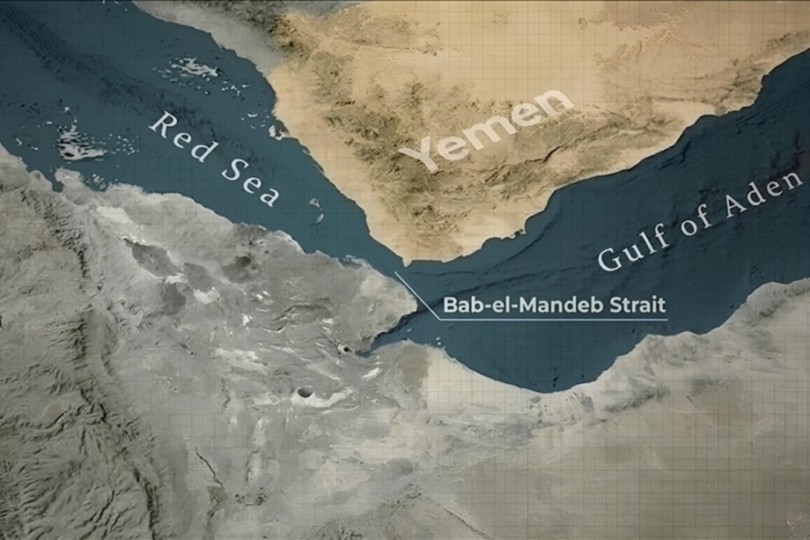
The Bab el-Mandeb Strait has always carried an ominous name — the ‘Gate of Tears’. Today, it feels painfully literal. This narrow maritime corridor linking the Red Sea to the Gulf of Aden carries not only more than 10 per cent of global seaborne trade, but also the accumulated tensions of the Middle East, the Horn of Africa, and an increasingly fractured international order.
What happens in Gaza no longer stays in Gaza. What is decided in Tel Aviv reverberates in Mogadishu. And what appears, at first glance, to be a diplomatic gesture — Israel’s recognition of Somaliland in December 2025 — risks becoming a strategic accelerant across one of the world’s most fragile regions.
Israel became the first country to formally recognise Somaliland’s independence, directly challenging Somalia’s sovereignty and provoking fury in Mogadishu.
Somalia’s federal government denounced the move as ‘illegal aggression’, while the African Union, Egypt, Djibouti, Turkey, and even the European Union sided with Somalia’s long-standing position: Africa’s colonial borders, however imperfect, cannot be casually rewritten without opening the door to dangerous fragmentation.
This was not merely a symbolic dispute over maps. It was interpreted in Somalia as something older and darker; another instance of external powers deciding African political futures without African consent.
The emotional response was immediate. Somali officials hinted at ‘severe repercussions’, including potential restrictions on Israeli-linked access through Bab el-Mandeb. While Somalia lacks the naval capacity to enforce a formal blockade, it has virtually no blue-water navy and limited expeditionary capability; the threat itself matters. In geopolitics, symbolism often moves faster than ships.
READ: Israeli foreign minister acknowledges differences with Trump over Iran
The precedent already exists. Yemen’s Houthi movement demonstrated in late 2023 how low-cost asymmetric warfare can choke a global artery. By targeting Israeli-linked shipping in solidarity with Gaza, Red Sea transit fell by roughly 60 per cent, forcing vessels to reroute around the Cape of Good Hope. Israel’s port of Eilat reportedly lost more than 90 per cent of its normal traffic, with shipping times increasing by two to four weeks and costs surging across supply chains.
A poor militia in Yemen managed to disrupt global commerce more effectively than many conventional navies. That lesson has not been lost in the Horn of Africa.
Somalia’s rhetoric is often dismissed in Western capitals as empty theatre. Realists point out — correctly — that Mogadishu cannot physically close Bab el-Mandeb. But that misses the deeper issue. Chokepoints are force multipliers. As Horn Review observed, they allow ‘asymmetric actors, operating at low cost, to transmit pain to distant capitals’. This is not only about military capability. It is about moral legitimacy.
Across much of Africa and the Global South, the Gaza war has intensified an already profound distrust of Western diplomacy. Governments that speak endlessly of a ‘rules-based order’ appear selective when those rules involve Palestinian civilian suffering or Israeli territorial ambition. In Somalia, which has historically never recognised Israel, public sentiment is shaped not by abstract strategic doctrines but by a sense of civilisational solidarity with Palestine and a memory of colonial intrusion.
Recognition of Somaliland in this context was never going to be read as neutral statecraft. It was interpreted as geopolitical opportunism.
Israel may view Somaliland as a strategic foothold near the Gulf of Aden, a valuable listening post overlooking one of the world’s busiest maritime corridors. Security planners in Tel Aviv understand geography. Bab el-Mandeb is not simply a shipping lane; it is leverage. Access to it shapes trade, deterrence, and regional influence.
But Africa also understands geography — and memory. Somaliland’s aspirations are real and deserve serious political engagement. Yet unilateral recognition by an external power with its own strategic agenda does not look like principled diplomacy; it looks like instrumentalisation. It risks turning Somaliland from a question of self-determination into a proxy theatre of Middle Eastern rivalry.
Middle powers across the world must now look far beyond their immediate neighbourhoods and recognise that the Indian Ocean and the Horn of Africa are no longer distant peripheries, but the exposed nerve centre of a deeply interconnected global order.
From Southeast Asia to the Gulf, from Africa to Latin America, from Europe to the Pacific, no economy insulated by oceans or alliances can afford to treat the Red Sea merely as a question of freight costs, insurance premiums, or delayed cargo. Bab el-Mandeb is not simply a maritime passage; it is a political pressure point where sovereignty disputes, war in Gaza, great-power rivalry, and African statehood collide with devastating global consequences.
A missile launched near Yemen can raise food prices in Nairobi, disrupt energy security in Berlin, delay medical supplies in Mumbai, and reshape diplomatic calculations in Brasília. This is not a shipping problem; it is a legitimacy crisis unfolding at sea. When fragile states feel unheard, when international law appears selectively applied, and when strategic chokepoints become theatres of moral protest, the consequences do not remain regional; they spill across continents.
For middle powers seeking stability in an age of fragmentation, the lesson is urgent: ignoring the Horn of Africa is no longer a strategic distance; it is strategic negligence.
READ: Iran’s missile, drone stockpiles ‘sufficient for years of war,’ lawmaker says
Turkey’s growing military footprint in Somalia — including the delivery of Bayraktar Akinci combat drones and expanded defence cooperation — shows how quickly strategic vacuums are filled. Gulf powers, Iran, Israel, Ethiopia, and Egypt all have competing interests layered across the same narrow geography. One diplomatic miscalculation can ripple into naval insecurity, a resurgence of piracy, and broader regional destabilisation.
Already, incidents off Puntland and renewed piracy warnings reveal how fragile the waters remain. Even if Somali authorities deny any formal blockade policy, the perception of escalation is enough to alter insurer calculations and shipping decisions.
For global strategists, the lesson is blunt: sovereignty disputes in Africa are no longer local matters. They are global economic risks. The international response should begin with consistency. If territorial integrity matters in Ukraine, it must also matter in Somalia. If freedom of navigation is sacred in the South China Sea, it must remain sacred in Bab el-Mandeb. Selective principles breed strategic resentment.
The African Union’s insistence on dialogue over Somaliland should be backed, not bypassed. Mediation must replace recognition theatrics. At the same time, the humanitarian catastrophe in Gaza cannot remain diplomatically quarantined from these discussions. Many states in the Horn see their stance not as anti-Israel, but as a protest against impunity.
Ignoring that moral dimension is not strategic realism. It is strategic blindness.
Bab el-Mandeb means the Gate of Tears because sailors once feared its storms. Today, the storm is political.
If recognition politics continue to override regional stability, if powerful states keep treating African sovereignty as negotiable while demanding respect for their own, the Gate of Tears may become something worse: a gateway to a wider international rupture.
And the world will discover, too late, that even the narrowest straits can carry the heaviest consequences.
OPINION: What if the West has been misreading Iran for 40 years?
The views expressed in this article belong to the author and do not necessarily reflect the editorial policy of Middle East Monitor.