For Malam Idris Yusuf, a 43-year-old petty trader at the bustling Zone 4 Suya Spot in Nigeria’s capital, the promise of a modern city is something he sees but rarely feels.
Behind his kiosk in Abuja, a clogged drainage channel has formed what he describes as a “black river.” When the rains come, it overflows, creating a perfect breeding ground for mosquitoes.
In February 2026, his youngest son fell ill. Within days, three neighbours followed.
“They tell us malaria is reducing in Abuja, but here, the mosquitoes are increasing,” he said.
His reality reflects a deeper truth: even where progress is reported, malaria remains dangerously close to home.
Malaria transmission in Nigeria is widespread and persistent. An estimated 97 percent of the population is at risk, making exposure almost universal.
Nigeria also carries the heaviest malaria burden globally. It accounts for about 24.3 percent of global cases and 30.3 percent of global deaths—the highest for any country.
The Director-General of WAHO, Dr Melchior Aïssi, said that across West Africa, Nigeria contributes more than half of all malaria cases, placing it at the centre of the region’s elimination efforts.
According to the World Health Organisation, five countries, including Nigeria, account for over half of global malaria deaths, with children under five most affected.
In 2022 alone, more than 180,000 Nigerian children under five died from malaria, underscoring the disease’s devastating human toll.
However, weak surveillance systems and underreporting in some regions suggest that the true burden may be even higher than official figures indicate.
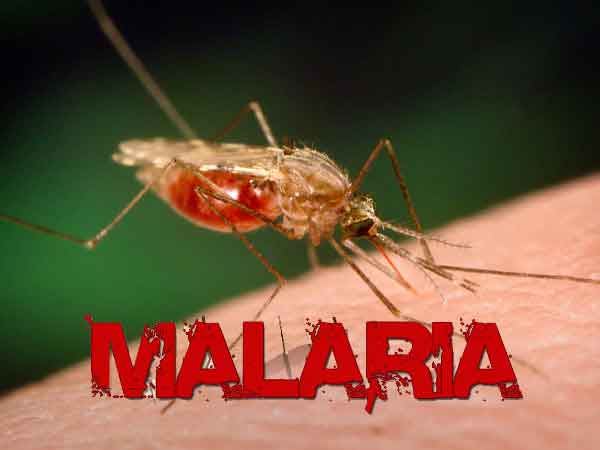
Malaria is caused by parasites transmitted through the bite of an infected female Anopheles mosquito. Symptoms do not appear immediately.
According to the Africa Centres for Disease Control and Prevention, the incubation period typically ranges from seven to 30 days, though it may vary depending on the parasite species. This delay often complicates early diagnosis and treatment, especially in communities with limited access to healthcare.
In Abuja, Dr Dolapo Fasawe, Mandate Secretary for Health Services and Environment, Federal Capital Territory (FCT), said data suggest a decline in malaria prevalence; yet, lived experiences tell a different story.
At Wuse District Hospital, a significant proportion of patients still test positive for malaria, highlighting what experts describe as urban malaria—driven by poor sanitation, blocked drainage, and rapid population growth.
Meanwhile, in Abaji, malaria prevalence remains as high as 40.9 percent, where transmission is nearly constant. The contrast reveals a country where geography still determines health outcomes.
According to the Situation Analysis of Children and Adolescents in Nigeria, 2024—a comprehensive report produced by UNICEF Nigeria in collaboration with the Nigerian government and other partners—malaria in Nigeria is not evenly distributed.
Prevalence is about 31 per cent in rural areas compared to 13 per cent in urban areas. The report indicates that children in the poorest households are up to seven times more likely to be infected than those in wealthier homes, reflecting uneven access to prevention and treatment.
These disparities show that malaria is as much a development and equity issue as it is a health challenge.
Beyond its health impact, malaria continues to drain Nigeria’s economy.
According to Prof. Muhammed Pate, Coordinating Minister of Health and Social Welfare, the disease costs the country an estimated 1.1 billion dollars annually through treatment expenses, lost productivity, and absenteeism.
The burden is worsened by high out-of-pocket spending, which accounts for 66 to 76 percent of healthcare costs, pushing many households deeper into poverty.
Policy analysts say Nigeria is shifting from malaria control to elimination, aligning with the Sustainable Development Goals target of ending malaria by 2030.
However, responsibility for delivering malaria services lies largely at the primary healthcare level, which local governments manage. This decentralised structure continues to raise questions about accountability, coordination, and last-mile delivery.
Despite increased commitments, Nigeria’s malaria response remains heavily dependent on donor funding, raising concerns about sustainability at a time when global financing is tightening.
A major breakthrough is the rollout of the R21/Matrix-M malaria vaccine, now integrated into Nigeria’s immunisation programme.
The Executive Director of the National Primary Health Care Development Agency (NPHCDA), Dr Muyi Aina, said that following pilot successes in Kebbi and Bayelsa—where child malaria cases dropped significantly—the vaccine is being expanded to more states, including the FCT.
The ENHANCE Project, unveiled in 2026, aims to ensure vaccines reach underserved populations, particularly in rural and hard-to-reach communities.
Experts say climate change is altering malaria transmission patterns. In urban centres, flooding and poor drainage create year-round breeding sites, while in rural areas, shifting rainfall patterns are extending transmission seasons.
Observers note that what was once seasonal is becoming continuous, complicating control efforts.
Notwithstanding decades of interventions, prevention remains inconsistent.
Only about 40 percent of Nigerians have access to insecticide-treated nets. Just 31 percent use them regularly, and usage among children and pregnant women has declined in recent years. At the same time, growing resistance of mosquitoes to insecticides threatens the effectiveness of these tools.
Malaria in pregnancy remains a critical concern. Available records indicate that only about one in three pregnant women receive adequate preventive treatment, leaving many vulnerable to complications such as anaemia and low birth weight.
Children under five continue to bear the highest burden of illness and death.
Nigeria’s health system includes more than 30,000 primary healthcare facilities, nearly 4,000 secondary facilities, and 83 tertiary hospitals. However, malaria control relies heavily on primary healthcare, where access and quality remain uneven—particularly in rural and conflict-affected areas.
Experts say a significant proportion of malaria treatment also occurs outside formal health facilities, often through private medicine vendors, raising concerns about misdiagnosis, delayed care, and inappropriate treatment.
For Mr Odinaka Obeta, Executive Director of the Block Malaria Africa Initiative, the fight against malaria began in Jos after witnessing preventable deaths.
Through grassroots initiatives, Obeta worked with communities to improve sanitation, promote preventive practices, and encourage early treatment. His experience underscores a key lesson: malaria elimination requires community ownership, not just awareness.
At the continental level, the burden remains overwhelming.
According to Dr Jean Kaseya, Director-General of the Africa Centres for Disease Control and Prevention, Africa accounts for 96 per cent of global malaria cases and 97 per cent of deaths.
He noted that emerging threats—including resistance to antimalarial drugs and insecticides, climate change, and weak health systems—are making elimination more complex.
Aïssi added that West Africa carries about 40 per cent of the global malaria burden, warning that funding gaps, weak systems, and climate pressures threaten progress. He called for stronger domestic investment and regional coordination.
“Now we can. Now we must. Ending malaria: now it is possible,” he said during the 27th Ordinary Session of the Assembly of Health Ministers of the Economic Community of West African States (ECOWAS) in Freetown, Sierra Leone.
Global financing is tightening at a critical time.
The Global Fund to Fight AIDS, Tuberculosis and Malaria has allocated 10.78 billion dollars for 2026–2028, its lowest level in years. By early 2025, more than 40 percent of planned mosquito net distributions were delayed or at risk.
Experts warn that reduced funding, combined with climate change and rising resistance, could lead to a resurgence of malaria cases and deaths.
For Yusuf, until the stagnant water behind kiosks like his disappears, malaria will remain not just a statistic but a daily reality.
For Nigeria, stakeholders say the path to elimination will not be defined by policies alone, but by whether change is felt where it matters most—in communities still living with the disease. (NAN Feature)