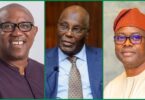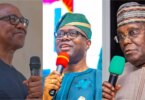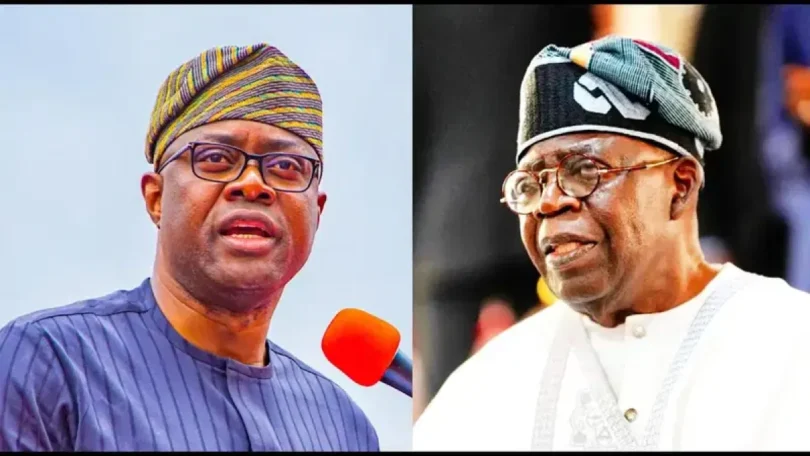
Oyo State Governor and presidential candidate of the Action Peoples Movement (APM), Seyi Makinde, has explained why he would not consider appointing President Bola Tinubu into his government if he wins the 2027 presidential election.
Makinde said his decision was informed by what he described as Tinubu’s failure to honour an agreement they reached before the 2023 general election.
He alleged that the agreement was based on the formation of a government of national unity that would accommodate competent Nigerians from different political parties and regions.
The governor, however, maintained that his position against Tinubu would not extend to other members of the All Progressives Congress (APC).
He said there were still capable and decent individuals within the ruling party who could be considered for government appointments based on their ability to contribute to national development.
Makinde made the remarks during an interview on The Rooftop Podcast, where he discussed his political plans, the 2027 presidential election and the possibility of bringing prominent opposition figures into his proposed administration.
During the conversation, he was asked whether he would be willing to accommodate former Vice-President Atiku Abubakar, Labour Party’s Peter Obi and President Tinubu in a government of national unity if he eventually emerged as Nigeria’s president.
Responding, the governor indicated that Tinubu would not be part of his consideration, although he remained open to working with qualified individuals from the president’s political party.
“Perhaps not President Tinubu, but there are still decent people in APC as well. I’ll tap them and they are Nigerians,” Makinde said.
When the interviewer pressed him on whether he considered Tinubu unsuitable for such an appointment, the governor explained that his position was connected to their political dealings before the 2023 general election.
Makinde recalled that he had supported Tinubu during the last presidential election based on an understanding that an inclusive government would be established if the former Lagos State governor won.
According to him, the agreement was not fulfilled after Tinubu assumed office, despite the role played by the PDP G5 governors in the political arrangement that preceded the election.
“Well, not in that context. I mean, I worked for him in 2023. We agreed on a government of national unity. He did not fulfil it,” he said.
The governor further explained that the arrangement was connected to the position adopted by the G5 governors, who disagreed with the leadership of the Peoples Democratic Party (PDP) ahead of the 2023 presidential election.
The G5 consisted of five PDP governors who openly challenged the party’s national leadership over the decision to retain Iyorchia Ayu as national chairman after Atiku Abubakar emerged as the party’s presidential candidate.
Apart from Makinde, the group included former Rivers State Governor Nyesom Wike, former Benue State Governor Samuel Ortom, former Enugu State Governor Ifeanyi Ugwuanyi and former Abia State Governor Okezie Ikpeazu.
The governors insisted that the PDP needed to address what they described as an imbalance in its leadership structure before the presidential election.
Makinde said their political position was also based on the expectation that the next administration would not be restricted to members of the party that produced the president.
He explained that the idea was to identify individuals with the necessary experience and competence from different parts of the country, regardless of their political affiliations.
“We came from the PDP as G5 and we said, ‘Look, this is not going to be a government of APC. It should be a government where you tap people from all across the country. Go to every corner of the country, pick and choose people that can help you know to sort some of this out,’” he said.
Makinde argued that Nigeria needed an administration capable of bringing together people with different political backgrounds to address the country’s challenges.
He also referred to previous Nigerian governments where individuals from different political and professional backgrounds were appointed to important positions, despite disagreements and tensions within the country.
To support his argument, the governor cited the administration of former military Head of State, General Sani Abacha, following the annulment of the June 12, 1993 presidential election.
The annulment of the election, widely believed to have been won by the late Chief Moshood Abiola, generated widespread political tension and opposition across the country.
Following Abacha’s emergence as Head of State in November 1993, several prominent Nigerians were brought into his administration.
Among them were former Lagos State Governor Lateef Jakande and businessman Alex Ibru, who served as Minister of Internal Affairs.
Makinde said the appointments were part of efforts to bring influential individuals into government and reduce political tensions at the time.
He maintained that the approach demonstrated how people from different backgrounds could be brought together to address national disagreements and promote political inclusion.
“And it’s been done before. After the annulment of the June 12, 1993 elections, and General Abacha came into government, they went and tapped Alhaji Jakande, Alex Ibru, all of those were geared towards bringing down the temperature in the country and ensuring that where there are angry people, they are being pacified,” he said.
However, the Oyo governor accused Tinubu of failing to adopt a similar approach after becoming president in 2023.
He alleged that the president’s appointments were largely influenced by his political associates rather than a deliberate effort to assemble a broad national team.
“Tinubu didn’t do that at all. All his appointees are from Bourdillon,” Makinde said.