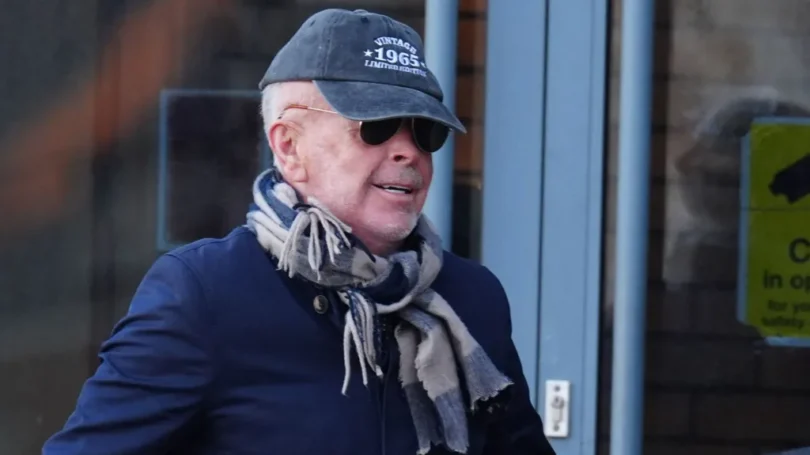
A councillor in the United Kingdom has been sentenced to 150 hours of unpaid work after a court found him guilty of posting a grossly offensive message about Nigerians on Facebook. According to The Guardian, Glenn Gibbins, 66, a Reform UK councillor elected to Sunderland City Council in May, received……
A councillor in the United Kingdom has been sentenced to 150 hours of unpaid work after a court found him guilty of posting a grossly offensive message about Nigerians on Facebook.
According to The Guardian, Glenn Gibbins, 66, a Reform UK councillor elected to Sunderland City Council in May, received a 12-month community order after District Judge Zoe Passfield ruled that his social media post breached the Malicious Communications Act.
The post, published in March 2024, called for Nigerians in the city to be melted down and used to fill potholes.
Gibbins had defended the comment during his trial at South Tyneside Magistrates’ Court in South Shields on Monday, describing it as “cheeky”, “naughty” and “tongue in cheek”.
“It was just a bit of fun,” he told the court, insisting that the message was not intended to be taken literally.
However, Judge Passfield ruled that the post was grossly offensive, saying Gibbins’ “intention was to be grossly offensive to Nigerians as a result of his displeasure at the number of them in the city.”
Prosecutor Emma Dowling argued that the message amounted to a call for the extermination of a group of people.
“To say that it’s not to be taken seriously is to disregard history,” she said.
READ ALSO: Osun Partners UK To Expand Internet Access, Digitise Public Services
“The comment about melting them down conjures up despicable images.”
The court heard that the post triggered concern within the Nigerian community in Sunderland, prompting its leader, Godwin Ejeh, to convene an emergency meeting.
Ejeh, who testified during the trial, described the meeting as “chaotic” because of the “level of distress” among Nigerians, many of whom were worried about their safety and that of their children.
He said members of the community initially sought an apology before deciding to organise a protest outside the city hall.
“We are talking about humans. It’s not something people should play with,” Ejeh told the court.
Gibbins’ defence lawyer, Adam King, argued that the post was not politically motivated and described it as a “stupid, unfunny joke”.
He said his client had made the post after drinking a couple of beers and claimed Gibbins was attempting to repost something he had read online but ended up typing the words himself.
King also argued that the response from about six friends, who reacted with laughter, thumbs-up and heart emojis, showed how the post was received within his immediate circle.
The defence lawyer cited previous controversial jokes by comedians, including Jo Brand’s 2019 BBC comment about throwing battery acid on Nigel Farage and Jimmy Carr’s joke about the Holocaust and Gypsies, in arguing for the protection of free speech.
He also said Reform UK should scrutinise its candidates more carefully.
“Reform would do well to pay more attention to the people they put forward for election,” King said.
During the trial, Gibbins told the court that he had not considered himself politically active before being approached by Reform in March to contest the council election.
He said he believed the party contacted him after seeing a T-shirt bearing the image of its leader, Nigel Farage, displayed on a mannequin at his personalised gifts and T-shirt kiosk in a Sunderland shopping centre.
Gibbins said he accepted the offer partly because he thought the position would provide additional income during the usual summer lull in his business.
“They explained they were looking for a candidate. I didn’t even know councillors got paid. I thought it would tide me over,” he said.
He also told the court that he had been suspended by Reform, reinstated and subsequently suspended again.
King said the defence would appeal the ruling at the Crown Court.