Minister of Information and National Orientation, Mohammed Idris, says the economic reforms introduced by President Bola Tinubu are beginning to benefit Nigerians through improved security, access to education and infrastructure development. Idris said the administration’s next priority was to ensure that more citizens felt the impact of the reforms, which……
Minister of Information and National Orientation, Mohammed Idris, says the economic reforms introduced by President Bola Tinubu are beginning to benefit Nigerians through improved security, access to education and infrastructure development.
Idris said the administration’s next priority was to ensure that more citizens felt the impact of the reforms, which he described as laying the foundation for national prosperity.
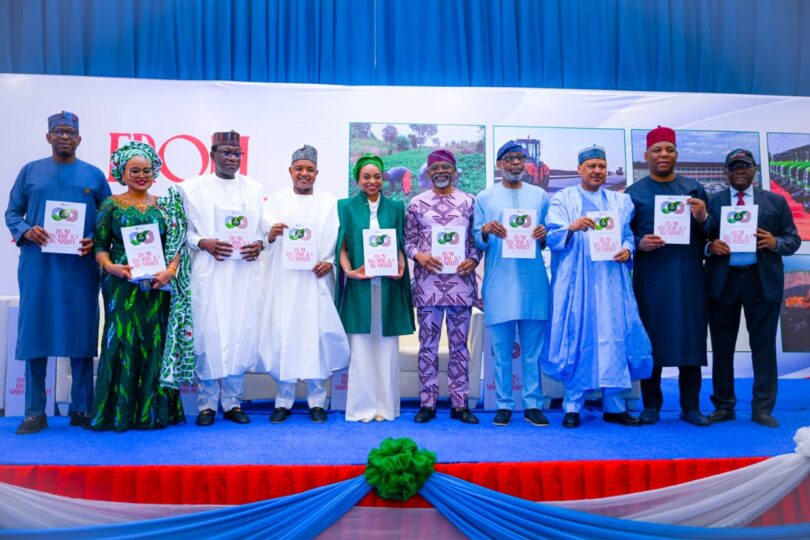
He spoke on Tuesday in Abuja at the media presentation of the All Progressives Congress (APC) 2027 Presidential Election Manifesto, according to a statement by the Special Adviser (Media) to the Honourable Minister of Information and National Orientation, Rabiu Ibrahim, on Tuesday, November 10.
The minister cited the Federal Government’s student loan scheme, improvements in security and Nigeria’s removal from the Financial Action Task Force (FATF) grey list as evidence of progress under the Tinubu administration.
He also listed upgrades by international credit rating agencies, declining inflation and improving economic growth among the developments recorded by the government.
Addressing concerns about who benefits from the reforms, Idris said public infrastructure and government programmes were designed to serve Nigerians regardless of their political affiliations.
READ ALSO: Tinubu Urges Nigerian Youths To Secure Future Through Votes, Defends Economic Reforms
“People often ask who is benefiting from the reforms. But when roads are built, everyone can use them. When security improves, everyone benefits. The 1.6 million Nigerian students supported through NELFUND are ordinary Nigerians, and they do not have to belong to any political party to benefit. These reforms are for all Nigerians,” he said.
Idris urged journalists to continue scrutinising government policies but also report developments they consider positive, saying responsible journalism should provide a balanced account of the country’s progress and challenges.
“Journalists have an important duty to criticise government and point out areas that need improvement. But good journalism is not only about being adversarial. When you see something good, please report it. We may have different views about the government, but we must all care about Nigeria and work for the good of our country,” he said.
Also speaking, the Chief of Staff to the President, Femi Gbajabiamila, described the manifesto as a commitment between the APC and Nigerians, saying it outlines the party’s record and targets for another term in office.
He said the document contains measurable commitments, including plans to halve the number of out-of-school children by 2031 and provide seven million additional electricity meters.
Gbajabiamila urged Nigerians to examine the commitments and hold the party accountable for their implementation.
“A manifesto is a contract between the people and their leaders. Nigerians should read these commitments, discuss them, and hold us accountable for delivering them. We are asking for the mandate to make hard work pay better and ensure that opportunity reaches more people,” he said.
The Minister of Solid Minerals Development, Dele Alake, said the APC had a clear programme for national development, arguing that the Tinubu administration had undertaken extensive structural reforms across different sectors.
“No other civilian administration in Nigeria has undertaken reforms as comprehensive and far-reaching as those being implemented by President Bola Ahmed Tinubu. The reforms address structural problems across different sectors and are designed to put the country on a path to lasting prosperity,” Alake said.
Similarly, the Minister of Budget and Economic Planning, Atiku Bagudu, said the administration’s reform agenda was driven by a long-term vision to address economic challenges inherited from previous governments.
Bagudu said the private sector had acknowledged progress under the administration but added that more needed to be done to ensure ordinary Nigerians benefited from economic growth.
“President Tinubu believes Nigeria can become a two-trillion-dollar economy. He has taken difficult decisions to give the country a stronger foundation. However, he also recognises that more must be done to ensure that every Nigerian, especially hardworking families and vulnerable citizens, shares in the benefits of growth,” he said.
Presenting an overview of the manifesto, the Minister of Industry, Trade and Investment, Jumoke Oduwole, said the document was built around four pillars: a secure and resilient nation; a better and more affordable quality of life; energy, infrastructure and economic growth; and effective and accountable government.
She listed the priorities as improved food security, reduced living costs, increased local production, expanded exports and job creation, including a target of one million export-linked jobs for young Nigerians by 2030.
“By 2031, we want Nigerians to see, feel and share the benefits of structural progress and economic growth. Our priorities include stronger protection against insecurity, increased domestic food production, more goods made in Nigeria, and wider opportunities for young people through trade, investment and exports,” Oduwole said.