Surgeons in Groningen, the Netherlands, have successfully removed a tumor weighing more than 10kilograms from a 68-year-old man in what has been described as a groundbreaking medical procedure.
The benign tumor, which was reportedly the size of a large basketball, had been growing inside Ronaldvan de Kimmenade’s abdomen for approximately 25 years, eventually occupying almost the entire stomach cavity.
The condition was discovered accidentally when Vande Kimmenade was admitted to hospital witha lunginfection. Further examinations revealed that he had been steadily gaining weight since 2000 without realizing that a massive tumor was responsible.
According to surgeon Sijbrand Hofker, the patient showed no obvious symptoms indicating the presence of such an enormous growth.
Initially, doctors decided against surgery because the tumor was non-cancerous.However, they’re considered their decision year later after its continued growth created a serious risk of massive blood loss.
The complex operation lasted 10 hours and involved temporarily removing the patient’s intestines together with the tumor, preserving them under refrigeration before reconnecting them to his body.
The procedure marked the first successful operation of its kind in Europe, using a technique known asanauto transplant, in which a patient’s own organs are temporarily removed and subsequently rein planted.
Innovative surgery avoided lifelong tube feeding
Hofker explained that Van de Kimmenadewas not eligible for a conventional transplantinvolving adonor organ. A standard surgical approach would also have left him dependent on tube feeding for the remainder of his life.
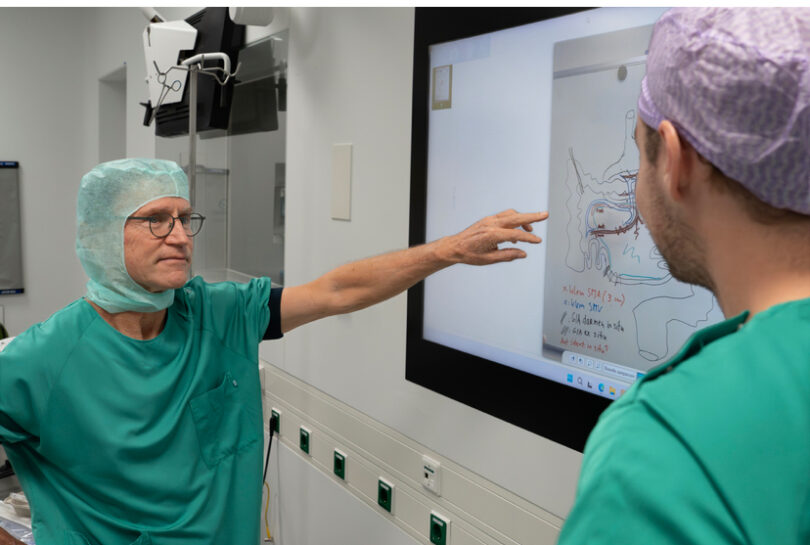
The surgeon said he spent considerable time studying medical images of the patient’s intestines and the tumor to plan the complicated procedure, particularly how to remove the growth while reconnecting the major blood vessels.
He acknowledged that the biggest challenge was determining whether the operation would be technically possible once the surgeons could see the actual condition of the organs.
The medical team’s primary objective was to remove the tumor without sacrificing the patient’s intestines, allowing him to retain normal digestive functions and return to everyday life.
Patient returns to work after lifesaving operation
Van de Kimmenade, who underwent the operation a year earlier, described the procedure as lifesaving.
He revealed that his condition had become increasingly difficult before surgery, requiring an extraordinary number of blood transfusions.
“Before the operation, I had to undergo ahuge number of blood transfusions. I had35 bags of blood in a year,” he said.
He also experienced frequent exhaustion, low energy levels and vomiting whenever temperatures changed.
However, his health has improved significantly sincethe operation. He now requires only occasionalmedicalcheck-ups and has returned to work.
Reflecting on his recovery, Van de Kim menaces aid the experience had changed his outlook on retirement and aging.
Before the surgery, he had been looking forwardto retirement. Now, however, he is eager tore main active and continue working.
The successful operation represents a significant medical achievement, demonstrating how innovative surgical techniques can offer new possibilities to patients facing otherwise life-altering conditions.