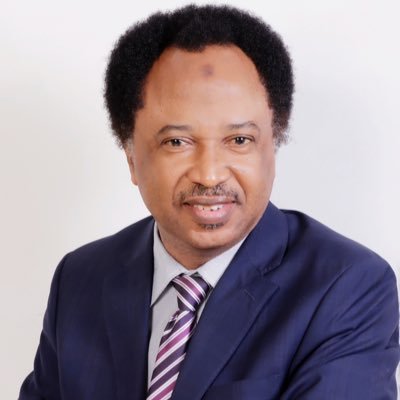
Former Kaduna Central Senator, Shehu Sani, has questioned the ideological differences between Nigeria’s ruling political class and the opposition, describing both camps as factions of the same capitalist political elite….
Former Kaduna Central Senator, Shehu Sani, has questioned the ideological differences between Nigeria’s ruling political class and the opposition, describing both camps as factions of the same capitalist political elite.
Sani argued that many politicians currently occupying opposing sides of the political divide were once political allies and associates who worked together, shared interests and participated in the country’s political calculations.
In a political commentary, the former lawmaker observed that several opposition leaders and members of the ruling establishment had previously maintained close relationships, adding that their understanding of one another’s political strategies was shaped by years of working together.
According to him, politicians who once belonged to the same political circle are familiar with both the legitimate and questionable dimensions of political competition.
He suggested that ordinary Nigerians often perceive politicians through the prism of political loyalty, regarding those they support as good leaders and their opponents as villains, whereas the political actors themselves understand the realities of the game.
“As a spectator, you view them as saints and sinners, while they know that as players who once played for same club, there are no saints in the game,” he said.
Sani further described the choices facing Nigerians as a contest between two groups of capitalist political elites, one controlling political power and the other occupying the opposition.
“The choices before you are: Team A of the capitalist political elites in power and Team B of the capitalist political elites in the opposition,” he stated.
He also described both groups as disciples of the Bretton Woods system, suggesting that the ruling party and opposition share similar economic ideological foundations despite their political differences.
The Bretton Woods institutions, particularly the International Monetary Fund (IMF) and the World Bank, are associated with the international economic and financial framework established after the Second World War.
Sani’s remarks raise questions about the ideological differences between Nigeria’s major political parties and whether the country’s political competition offers voters genuinely different economic and governance alternatives.
His comments also challenge Nigerians to look beyond party affiliations, political alliances and campaign rhetoric when assessing those seeking to govern the country.