The Nigerian Meteorological Agency (NiMet) and Morocco’s General Directorate of Meteorology (DGM) have signed an agreement to strengthen weather forecasting, climate research and early warning systems through technology and expertise sharing.
According to NiMet on Thursday, the agreement is also expected to boost Africa’s capacity to tackle climate challenges and improve the delivery of reliable weather information across the continent.
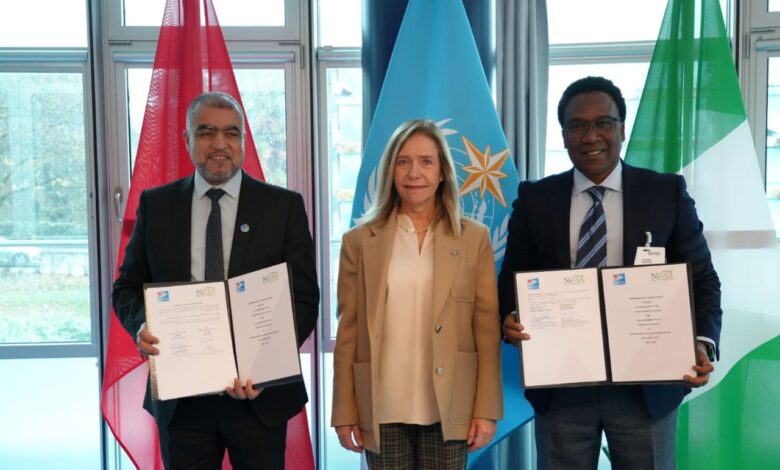
The Director-General of NiMet, Prof. Charles Anosike, and his Moroccan counterpart, Mohammed Dkhissi, signed the Memorandum of Understanding (MoU) on the sidelines of the ongoing World Meteorological Organisation’s (WMO) Commission for Observation, Infrastructure and Information Systems (INFCOM) session in Geneva, Switzerland.
Anosike said the partnership would demonstrate Africa’s capacity in meteorology and climate science while creating opportunities for both institutions to extend technical assistance to other meteorological agencies across the region.
He said the collaboration would strengthen regional capacity and ensure that no country was left behind in accessing improved weather and climate services.
“This partnership signifies what the WMO has been doing, and together we can do better,” he said.
Dkhissi described the agreement as a mutually beneficial arrangement that would promote the exchange of knowledge, expertise and technological advances between the two countries.
He stressed that both institutions were committed to translating the agreement into concrete results.
“This MoU is not for the shelf but for immediate implementation,” he said.
The WMO Secretary-General, Prof. Celeste Saulo, who witnessed the signing, welcomed the partnership, describing cooperation as central to the organisation’s mission.
She congratulated both countries and said the WMO also stood to learn from the bilateral relationship.
The agreement covers weather forecasting, seasonal climate prediction, early warning systems, meteorological observations, climate research and the development of climate services for socio-economic sectors.
It also provides for capacity-building, technical support, technology transfer, meteorological equipment calibration, data management and the development of digital services, including the use of artificial intelligence in weather and climate forecasting.
Both agencies are expected to leverage their technical expertise and institutional strengths to develop innovative solutions and improve meteorological services across Africa.