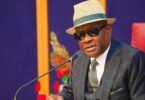
Nigerians have expressed mixed reactions to the Osun State Government’s warning to the Oluwo of Iwoland, Oba Abdulrasheed Akanbi, over alleged inflammatory statements capable of triggering religious and inter-town conflicts.
While some commended the government for cautioning the monarch, arguing that his alleged utterances could threaten religious tolerance and peaceful coexistence, others accused the administration of attempting to intimidate a traditional ruler, insisting that dialogue and due process should take precedence.
HERALDSUN reported that the Osun State Government, through the Ministry of Local Government and Chieftaincy Affairs, issued a formal caution to the monarch in a letter dated November 2026.
The letter, signed by Wale Alliyu on behalf of the Permanent Secretary, accused the Oluwo of making public statements capable of creating communal and religious discord and discrediting traditional values.
The government directed him to stop further attacks on people of other faiths and fellow traditional rulers, warning that the traditional institution must not be used to incite religious conflict.
It also said the Ministry would monitor his compliance, while the State Council of Obas had been directed to watch developments in Iwoland.
Reacting to the development on Facebook, Sodiq Olawale, who identified himself as an indigene of Iwo, described the government’s action as long overdue.
He said, “This is long over due. Kudos to the osun state Government on this action they took. I am an indigene of iwo let’s tell ourselves the truth. Oluwo ultrancess towards other religions is bad especially towards traditional religion and towards oni of ife is unacceptable. No matter how we attack each other none of the three religions can die we will just cause religion fight if care is not taking.”
Similarly, Prince Brutus Bamiteko suggested that the government’s warning could be the beginning of steps that might eventually lead to the monarch’s removal.
He said, “That’s how it begins. I foresee Oluwo being removed in the months ahead. Once the government issues a warning of this nature, it often signals the beginning of steps that could eventually lead to removal. And, to be fair, are the reasons behind the warning valid? Yes. No individual, religious group or ethnic community should conduct itself in a manner that threatens the peace, security or coexistence of others within the Nigerian context. No one is above the law, regardless of religion, tribe or status.”
Olamide Abdullahi questioned the monarch’s alleged conduct, saying, “I’m sorry to say this, but you can never be a good leader if you genuinely believe Oluwo has done nothing wrong. And if Oluwo himself believes he has done nothing wrong, then he should keep doing what he’s doing and let’s see where it eventually gets him.”
However, other Facebook users criticised the government’s approach, arguing that the warning could amount to intimidation if not backed by established legal violations.
Sodiq Akinyele said, “I support religious tolerance, but I don’t support the government using its powers to intimidate traditional rulers. If the Oluwo has committed an offence, let the government establish it and follow due process. A monarch is also a citizen with constitutional rights. The government must be careful not to turn legitimate concerns about religious harmony into an excuse to silence people or interfere in traditional institutions. The law must apply equally to everyone, not selective.”
Yusuf Lawal similarly cautioned the government against turning its disagreement with the monarch into an attempt to intimidate him.
He said, “The government should be careful not to turn a disagreement with a traditional ruler into an attempt to intimidate him. If he has broken any law, let the law take its course.”
Tokunbo Daniel questioned the decision to issue a public warning rather than first engaging the monarch.
He said, “Why is the government so quick to issue warnings instead of inviting the monarch for dialogue? Peace is better achieved through engagement than threats.”
Another Facebook user, Funmilayo Balogun said, “Religious tolerance must be reciprocal. Nobody should be allowed to attack another person’s beliefs, but nobody should also be denied the right to express concerns about religious practices.”