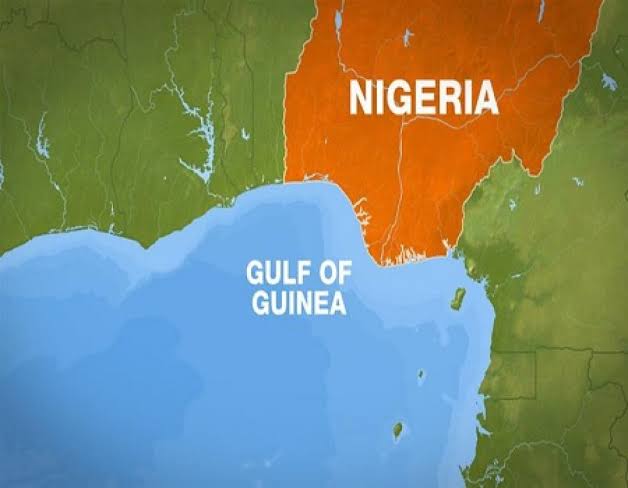
Nigeria has called for a shared regional maritime surveillance network and predictable financing for joint operations to strengthen security across the Gulf of Guinea and tackle piracy, kidnapping for ransom and other maritime crimes….
Nigeria has called for a shared regional maritime surveillance network and predictable financing for joint operations to strengthen security across the Gulf of Guinea and tackle piracy, kidnapping for ransom and other maritime crimes.
The Permanent Secretary of the Ministry of Foreign Affairs, Ambassador Dunoma Umar Ahmed, made the call while presenting Nigeria’s statement at a United Nations Security Council (UNSC) High-Level Open Debate on October 29, 2026, at the UN Headquarters in New York.
The debate, themed “Emerging Technologies and Maritime Security: Implications for Peace and Security”, examined the growing role of technology in addressing threats to international maritime security.
Ahmed noted that organised criminal networks were increasingly exploiting emerging technologies, including satellite communications, to facilitate piracy, kidnapping for ransom and other maritime offences.
However, he said governments could deploy similar technologies to strengthen surveillance and reduce maritime crimes.
“While organised criminal networks increasingly exploit technologies, including satellite communications, for piracy, kidnapping for ransom, and other maritime crimes, the effective deployment of similar technologies by States has contributed significantly to strengthening surveillance and reducing these crimes,” he said.
Highlighting Nigeria’s efforts, Ahmed cited the Deep Blue Project, which integrates unmanned aerial vehicles, maritime domain awareness systems and an advanced central command and control centre to improve surveillance, response capabilities and the fight against maritime crimes.
He also underscored the importance of legal frameworks in prosecuting offenders, pointing to Nigeria’s Suppression of Piracy and Other Maritime Offences Act, 2019.
The Permanent Secretary stressed that technological advances alone would not guarantee maritime security without effective information-sharing, regional cooperation and sustained capacity-building.
Against this backdrop, he proposed two measures to strengthen regional maritime operations.
On the first, he called for the development of a shared regional maritime picture, urging the UN Security Council, the International Maritime Organisation (IMO) and other international partners to build on UNSC Resolution 2634 (2022).
He said this should involve supporting the deployment of appropriate technologies and capacity-building initiatives through the Yaoundé Architecture.
According to him, the initiative would allow national surveillance systems to contribute to an interoperable regional maritime picture, supported by regional ownership and appropriate human oversight.
Ahmed also stressed that developing coastal states must have equitable access to the technologies on fair and affordable terms.
He said technological innovation should “narrow rather than widen existing capacity gaps” among countries in the region.
On financing, the Nigerian representative advocated predictable and sustainable funding for regional maritime operations, drawing on the framework established under UNSC Resolution 2719 (2023).
The resolution provides for adequate, sustainable and predictable financing for African Union-led peace support operations.
He urged the Security Council to align its financial framework with the proposed operationalisation of the Combined Maritime Task Force for the Gulf of Guinea.
The task force, recommended to be headquartered in Nigeria, was endorsed by the African Union Peace and Security Council in April 2025.
Concluding his address, Ahmed reaffirmed Nigeria’s commitment to working with Gulf of Guinea countries, Regional Economic Communities, the African Union and the UN Security Council to strengthen collective maritime security.
He stressed the need for concerted regional and international action to ensure emerging technologies become instruments of collective security and make Africa’s maritime domain safer for seafarers, coastal communities and international shipping