•Urges Provision of Tech Facilities in Schools
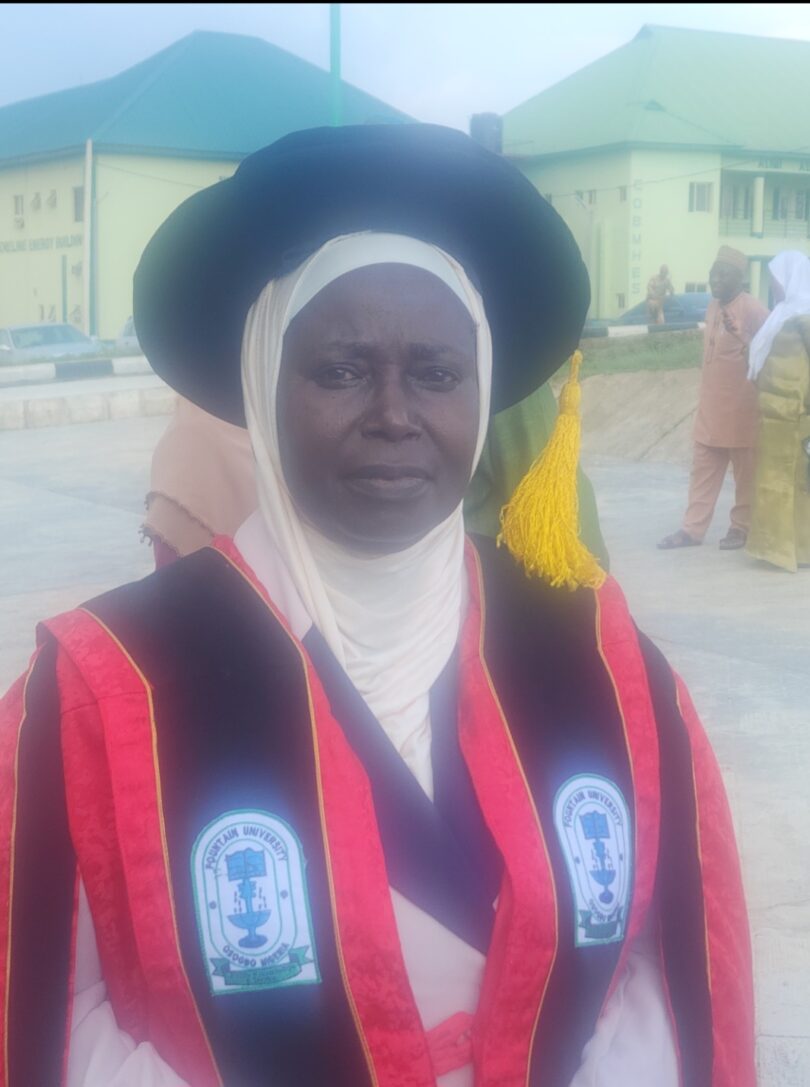
The Dean, College of Arts and Education, Fountain University, Osogbo, Osun State, Professor Serifat Labo-Popoola, has said that mother-tongue-based instruction can help reduce the initial linguistic inequality experienced by young learners.
The Professor of Language Education stated this on Thursday while delivering the 9th Inaugural Lecture of the university titled: “Inside The English Learning Ecosystem: The Combined Power of Schools, Teachers, Learners Behaviours and Digital Tools.”
Labo-Popoola explained that when the language of instruction is poorly matched to the learner’s linguistic background, physical presence in school may result in limited intellectual access to the lesson.
She noted that quality education can only be achieved when learners have meaningful opportunities to understand, participate and acquire knowledge, adding that an increase in school population or participation can only be meaningful when the language of instruction helps the learner in receiving meaningful education.
Prof. Labo-Popoola said, “Recognising the importance of the child’s first language, the Nigerian National Policy on Education (NPE) (FGN, 2013) provides that the language of the immediate environment should be used as the medium of instruction during the first three years of primary education, while English is taught as a subject.
“In Nigeria, the English Language teacher operates within a multilingual environment. The more we understand this relationship, the more effectively we can teach English as a second language. In fact, the Ife Six-Year Project has shown that children taught in their home language during the first three years of primary school subsequently performed better in English tests than children who were taught in English from the first year.
“Mother-tongue-based instruction can help to reduce this initial linguistic inequality experienced by young learners. Strengthening the learner’s mother tongue does not necessarily weaken English but creates a stronger foundation for learning English.”
The university don recommended stronger enforcement of the language policy, parental enlightenment, closer monitoring by Ministry of Education officials, the development of science textbooks in Nigerian languages and appropriate teacher training in mother-tongue instruction.
She admonished English language teachers to develop themselves technologically, urging governments to provide good technological facilities in schools so that the teachers will be comfortable and enthusiastic in the classroom.
Labo-Popoola also recommended “strengthening purposeful learner engagement and independent learning, promoting responsible and evidence-based use of technology and AI in education, and strengthening research-policy-practice linkages in English Language Education.”