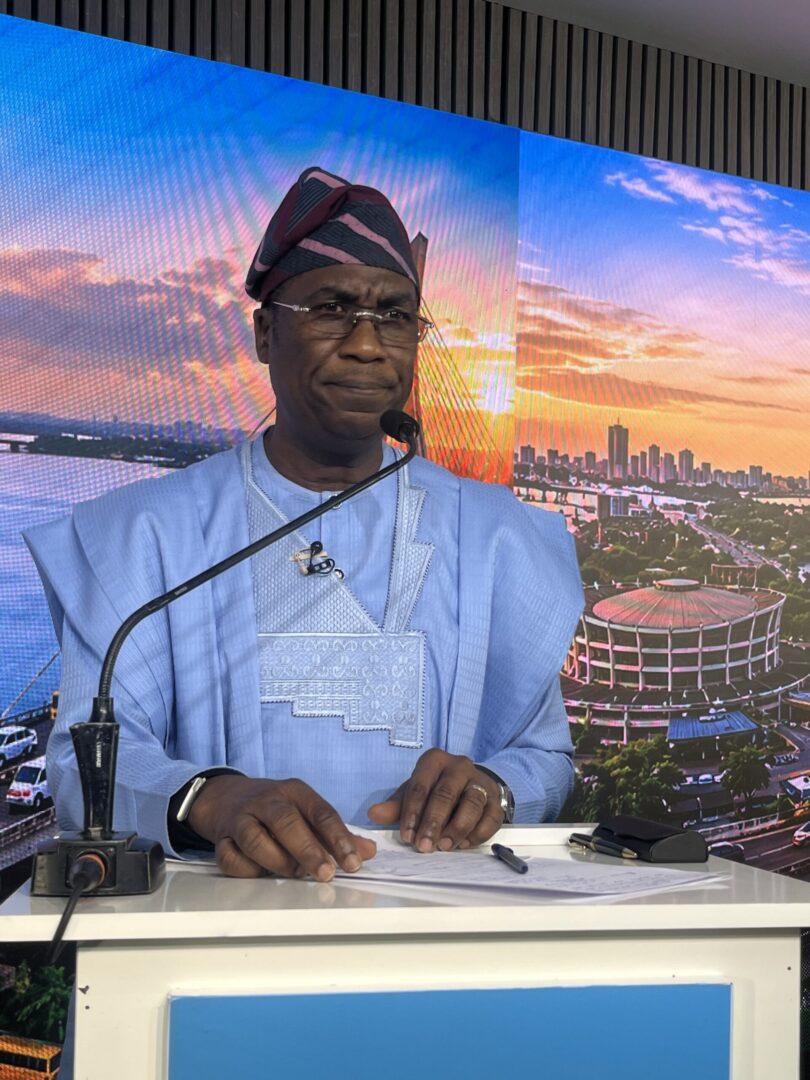
Lagos State Deputy Governor and All Progressives Congress (APC) governorship candidate, Obafemi Hamzat, has outlined plans to reduce the volume of waste sent to landfills through material recovery facilities and transfer loading stations. Hamzat spoke during the Lagos governorship debate organised by TVC in partnership with Channels Television, Punch, Vanguard……
Lagos State Deputy Governor and All Progressives Congress (APC) governorship candidate, Obafemi Hamzat, has outlined plans to reduce the volume of waste sent to landfills through material recovery facilities and transfer loading stations.
Hamzat spoke during the Lagos governorship debate organised by TVC in partnership with Channels Television, Punch, Vanguard and TheCable newspapers, while responding to complaints about the smell and poor sanitation in parts of the state.
He acknowledged that Lagos faced significant waste management challenges, partly because of the volume of refuse generated by its population and the state’s limited land space.
“Lagos generates a lot of waste. Enormous amount of people coming to Lagos, of course, they generate waste. What is happening is Lagos is a small land. It’s difficult to expand waste,” he said.
The APC candidate said the state was moving away from the traditional system of collecting refuse and dumping it at landfills to a process that involves recovering and processing reusable materials.
“What is happening right now is that we are converting from collection and dump to collection and material recovery,” he said.
Hamzat disclosed that the government was developing transfer loading stations at Olusosun and Solous 3 in Alimosho, each with a stated capacity of 5,000 metric tonnes.
“If you go to Olusosun and Alimosho today, we are building a transfer loading station there that has the capacity to take 5,000 metric tons each,” he said.
He also identified facilities planned for Erekiti and Agbowa, where waste would be processed and converted into reusable materials.
According to him, the approach would reduce the quantity of refuse eventually taken to landfills.
“So the strategy is to convert, collect waste, transfer loading station, material recovery, and then so that what goes to the landfill is smaller than what it is today, significantly,” Hamzat said.
He added that the government intended to extend the material recovery strategy to Ikorodu after achieving its target of processing about 10,000 metric tonnes of waste.
Asked whether Lagos was indeed smelling, Hamzat said he found it difficult to accept the description as a general characterisation of the state.
He, however, admitted that waste management remained a challenge that required continued attention.