
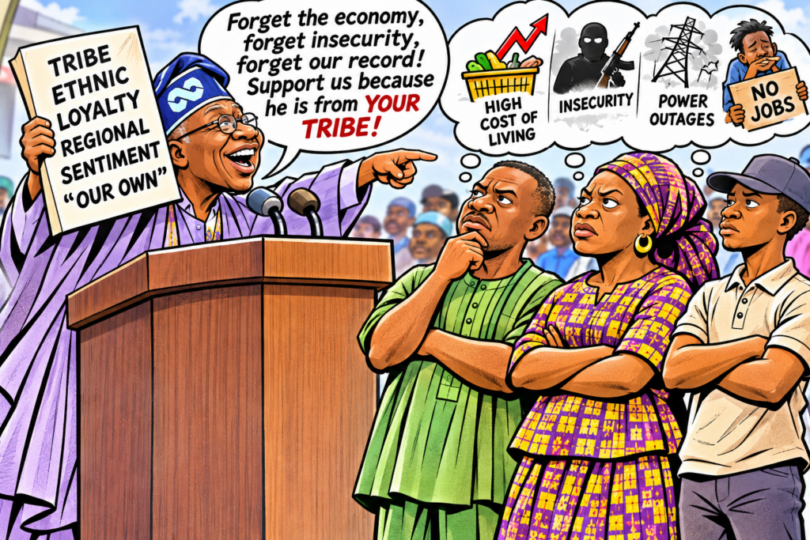
Nigeria is entering the final stretch of what has been a largely uninspiring election campaign. This is regrettable, particularly at a time when the country faces serious economic and security challenges. For millions of Nigerians, the question is no longer simply about the rising cost of living but about the increasing difficulty of survival.
The campaign should therefore be centred on one fundamental question: Are Nigerians better off today than they were three years ago?
This question goes to the heart of democratic accountability. Purchasing power has continued to decline, household incomes are under pressure, and many citizens struggle to meet their basic needs. Official economic statistics, however encouraging they may appear, cannot replace the everyday experiences of Nigerians in markets, homes, workplaces and communities.
As the campaign approaches its conclusion, there are growing concerns about attempts to shift public attention from these realities to questions of ethnic identity and political loyalty. This brings into focus the concept of cultural hegemony, which, in the present Nigerian political context, can be illustrated by the Yoruba saying: “Ọmọ ẹni ò kì í ṣe ìdí bẹ̀rẹ̀bẹ̀rẹ̀, ká fi ìlẹ̀kẹ̀ sí ìdí ọmọ ẹlòmíràn.”
The proverb warns against overlooking one’s own shortcomings while celebrating or promoting another person. Applied to the present political situation, it raises an important question about the use of ethnic solidarity to defend political leaders whose performance ought to be subjected to public scrutiny.
Cultural hegemony, in its broader meaning, refers to the ability of dominant groups to shape public beliefs, values and perceptions in ways that sustain their influence. In Nigerian electoral politics, one manifestation is the mobilisation of ethnic and regional sentiments to secure political support, sometimes at the expense of discussions about governance and performance.
It is a political scam to use tribal identity to divert public attention from a government’s failure to deliver. Ethnic affiliation does not reduce food prices, create employment, improve electricity supply or guarantee security. Nor should citizens be expected to overlook poor governance simply because those in power share their language, ancestry or geographical origin.
This approach is particularly dangerous in a country with Nigeria’s ethnic and religious diversity. When political competition becomes a contest of identities rather than ideas, the consequences extend beyond the ballot box. It deepens divisions, weakens national cohesion and makes it more difficult to hold elected officials accountable.
The experience of other democracies also demonstrates that appeals to cultural identity are not always sufficient to overcome public dissatisfaction. Economic conditions, perceptions of leadership and the credibility of political alternatives remain important factors in electoral decisions.
For Nigeria, the central issues are clear. The cost of food, transportation, housing and essential services continues to place enormous pressure on households. Insecurity has also disrupted livelihoods and left many communities fearful. In several parts of the country, citizens can no longer sleep with both eyes closed.
These conditions demand practical solutions rather than political distractions. The government must be assessed on its record, while opposition parties must present credible and workable alternatives. Criticism of the prevailing economic situation will carry greater weight when accompanied by clear proposals for improving productivity, restoring purchasing power, creating jobs and addressing insecurity.
Equally troubling are concerns about hostility towards non-indigenes and the possible use of ethnic divisions to discourage political participation. Such developments, where they occur, must be confronted because every eligible Nigerian has the constitutional right to participate in elections without intimidation or discrimination.
Voter suppression, whether through threats, violence, discriminatory practices or administrative obstacles, undermines the legitimacy of the electoral process. Electoral authorities and security agencies must therefore ensure that citizens can exercise their franchise freely, irrespective of ethnic origin or political preference.
Ultimately, the approaching election should be a referendum on governance, not ethnicity. Nigerians deserve a campaign that addresses their material conditions and offers a convincing path towards economic recovery, improved security and national development.
The opposition must intensify its engagement with these issues and resist attempts to redirect the debate towards primordial loyalties. At the same time, those seeking another mandate must explain what they have achieved, where they have fallen short and how they intend to improve the lives of citizens.
The decisive question remains whether Nigerians are better off than they were three years ago. That question cannot be answered by tribal slogans, manipulated narratives or appeals to ethnic solidarity. It can only be answered through the measurable impact of governance on the lives of ordinary people.
As the country enters the home stretch, the electorate must insist that performance, accountability and credible alternatives remain at the centre of the political contest.