Africa has a rich history of formal education, with several institutions of higher learning established centuries before many universities that later became prominent in Europe. The continent’s academic heritage stretches from ancient Islamic centres of scholarship in North Africa to historic educational institutions in West Africa. These centres played important……
Africa has a rich history of formal education, with several institutions of higher learning established centuries before many universities that later became prominent in Europe.
The continent’s academic heritage stretches from ancient Islamic centres of scholarship in North Africa to historic educational institutions in West Africa. These centres played important roles in preserving knowledge, training scholars and advancing intellectual activities across generations.
While some began as mosques and religious schools before developing into universities, others were established as colleges during the 19th century.
Here are six African countries with some of the continent’s oldest universities and higher-learning institutions.
1. Tunisia – Ez-Zitouna University (737 AD)
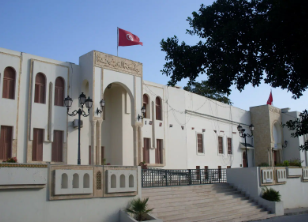
Tunisia is home to Ez-Zitouna University, an institution whose educational history dates back to the eighth century and the development of Islamic scholarship in North Africa.
Located in Tunis, its origins are linked to the Great Mosque of Ez-Zitouna, founded in 734 AD by Oubeidullah Ibn al-Habhab. According to the university’s official historical account, the mosque began teaching Islamic sciences in 737 AD.
The university’s account describes Ez-Zitouna as one of the oldest centres of Arab-Islamic education, with a long tradition of teaching religious and intellectual disciplines. Its curriculum included Islamic studies, philosophy, mathematics, medicine and astronomy.
Read Also: JAMB Warns Universities Against Issuing Admission Letters
The institution was also associated with notable scholars, including Ibn Khaldun, the celebrated North African historian and philosopher, who studied at the mosque.
Although its modern university status dates to 1995, according to the International Association of Universities, Ez-Zitouna retains its historic significance in Islamic education.
2. Morocco – University of Al-Qarawiyyin (859 AD)
Morocco is home to the University of Al-Qarawiyyin in Fez, an institution widely recognised for its place in the history of organised higher education.
Founded in 859 AD, Al-Qarawiyyin began as a mosque and learning centre established by Fatima al-Fihri, a Muslim woman who reportedly financed its construction with her inheritance.
According to the historical account published by World History Encyclopedia, Fatima al-Fihri founded the mosque in 859, and it gradually developed into an influential centre of Islamic scholarship. The institution attracted students and academics from different parts of Africa and beyond.
Its traditional curriculum covered areas such as Islamic theology, jurisprudence, Arabic grammar, mathematics and astronomy.
Al-Qarawiyyin’s history also highlights the contribution of African women to the establishment and development of educational institutions centuries ago.
The institution later became part of Morocco’s state higher-education system and continues to focus on Islamic studies and scholarship.
3. Egypt – Al-Azhar University (970 AD)
Egypt is home to Al-Azhar University in Cairo, one of the world’s most recognised institutions of Islamic education, with a history spanning more than a millennium.
Its origins date to the Fatimid era, when construction of the Al-Azhar Mosque began under the direction of Jawhar al-Siqilli. Al-Azhar’s official historical account dates the laying of its foundation stone to 971 AD and says the mosque was inaugurated in 972 AD.
The mosque gradually developed into a major centre of religious instruction and scholarship, attracting students from different parts of the Muslim world.
According to Al-Azhar University, the institution’s academic structure underwent several reforms over the centuries. A major change came in 1961, when Egypt introduced Law No. 103 to reorganise Al-Azhar and establish scientific faculties.
The reforms expanded its academic offerings beyond traditional religious disciplines to include fields such as medicine, engineering, commerce and agriculture.
Today, Al-Azhar retains its influence in Islamic scholarship while offering programmes across several academic disciplines.
4. Mali – University of Sankore (14th century)
Mali occupies an important place in Africa’s educational history through the University of Sankore in Timbuktu, a historic centre of Islamic learning.
Sankore formed part of Timbuktu’s wider scholarly tradition, which flourished particularly during the 15th and 16th centuries. The city developed into a major destination for scholars and students, supported by its position along important trans-Saharan trade routes.
The UNESCO World Heritage Centre identifies the University of Sankore as one of the institutions that made Timbuktu an intellectual and spiritual centre during this period.
UNESCO also records that the city had approximately 180 Koranic schools and 25,000 students at the height of its scholarly activities.
A historical account published by South African History Online explains that Sankore evolved from a mosque into a university where subjects such as Islamic jurisprudence, theology, astronomy, mathematics, history, medicine and geography were taught.
The city also became widely known for its extensive collections of manuscripts and libraries, reflecting the depth of its intellectual activities.
Although Sankore no longer functions as a conventional modern university, its legacy demonstrates the scale of organised scholarship and intellectual exchange in pre-colonial West Africa.
5. Sierra Leone – Fourah Bay College (1827)
Sierra Leone is home to Fourah Bay College, one of the earliest Western-style institutions of higher learning established in sub-Saharan Africa.
Founded in Freetown in 1827 by the Church Missionary Society, the college was established to train teachers, schoolmasters, catechists and members of the clergy.
According to the University of Durham’s historical records, Fourah Bay College became affiliated with the British university in 1876, allowing its students to pursue qualifications through Durham.
The college attracted students from different parts of West Africa and contributed to the growth of formal education in the region.
The UNESCO World Heritage Centre describes Fourah Bay College as the first institution of higher learning in modern sub-Saharan Africa after the decline of the scholarly tradition in Timbuktu.
One of its notable early students was Samuel Ajayi Crowther, who went on to become the first Black Anglican bishop, according to the Dictionary of African Christian Biography.
Fourah Bay College later became part of the University of Sierra Leone following its merger with Njala University College in 1967, as documented in Durham University’s historical records.
6. South Africa – University of Cape Town (1829)
South Africa is home to the University of Cape Town (UCT), the country’s oldest university and one of Africa’s leading higher-education institutions.
UCT traces its beginnings to 1829, when it was established as the South African College, initially operating mainly as a school for boys with a small component devoted to higher education.
According to the university’s official historical account, its academic activities expanded substantially after 1880, as growing demand for skilled professionals encouraged the development of new departments and scientific facilities.
The institution also made an early contribution to women’s access to higher education. UCT records that four women were admitted to Professor Paul Daniel Hahn’s chemistry class in 1886 on a trial basis. The college subsequently approved women’s admission to its general courses in 1887.
The institution developed into a fully fledged university between 1880 and 1900 and was formally established as the University of Cape Town in 1918.
Today, UCT has an international reputation for research and teaching across disciplines such as medicine, engineering, business, law and the sciences.
Its development from a 19th-century college into a major research institution makes it one of the significant landmarks in Africa’s higher-education history.