The Federal Government has reaffirmed its commitment to improving access, quality and learning outcomes through investments in infrastructure, teachers, student financing, TVET, digital learning and inclusive education.
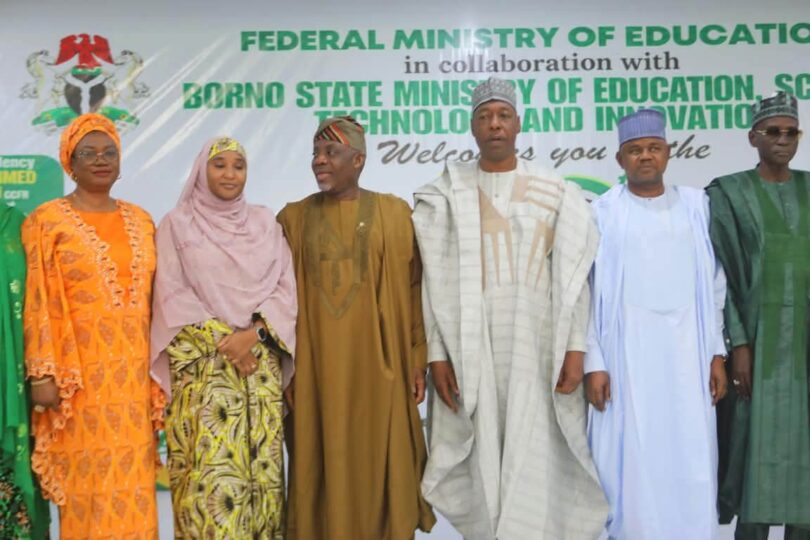
The Minister of Education, Dr. Maruf Tunji Alausa, said this at the 70th National Council on Education (NCE) Meeting, held in Maiduguri, Borno State, November 23–26, 2026, themed “Infrastructure Development and Teacher Motivation: Panacea for Improved Learning Outcomes.”
According to a press release by the Federal Ministry of Education, signed by the Director, Press and Public Relations, Boriowo Folasade, Dr. Alausa at the Ministerial Session outlined Renewed Hope Agenda interventions, including ₦38.93 billion released to 166 public tertiary institutions — 79 universities, 46 polytechnics and 41 colleges of education — under the Needs Assessment Intervention Programme to address infrastructure gaps.
He cited the $552 million HOPE for Basic Education Programme; AGILE’s expansion from 18 to 21 states; and support for foundational literacy and numeracy, Almajiri education, alternative learning, and reintegration of pregnant and married adolescent girls into formal education.
On student financing, the statement said the Nigerian Education Loan Fund (NELFUND) has received over 2.65 million applications and approximately ₦379 billion disbursed for fees and student upkeep.
The Federal Government’s Technical and Vocational Education and Training (TVET) programme has attracted over 2.8 million applications, including ₦65.7 billion in stipends to over 160,000 trainees and ₦30.2 billion to strengthen centres for practical, industry-relevant skills and employability, the release stated.
For teacher development, over 80,000 teachers are undergoing certification and licensing through the Teachers Registration Council of Nigeria (TRCN), targeting 75 per cent certification by end-2027 and all senior secondary teachers by 2028.
Other investments include ₦150 billion for tertiary institution revitalisation, over ₦32 billion for needs-assessment projects in public Colleges of Education and ₦55 billion for medical education infrastructure, according to the Ministry.
On digital transformation, he cited over ₦11 billion for digital skills, AI training for 6,000 teachers, zero-rated approved educational platforms and integration of over 40,000 geo-located schools into digital management systems.
He reported 34 solar mini-grids in tertiary institutions, plans for independent solar power across all federal tertiary institutions by 2028, with specialisation in STEMM institutions, and ₦2.2 billion in grants to 45 student ventures.
Dr. Alausa said infrastructure must go hand in hand with teacher motivation, professional development and accountability. He commended Governor Babagana Umara Zulum for increasing Borno’s school enrolment from approximately 770,000 in 2018 to 1.8 million learners, thanking the State Government and people for hosting the Council.
Governor Zulum praised Federal interventions in student financing, TVET and teacher development, stressing the need to link education with industry to tackle skills gaps and unemployment.
He disclosed that Borno was establishing 27 high-skilled colleges, 15 completed, with the rest expected by year-end. He cited investments in school infrastructure, teacher recruitment and welfare, and links between non-formal and formal education. The State has 5,792 usable classrooms and 129 functional senior secondary schools, compared with 34 in 2019, the statement added.
The Honourable Minister of State for Education, Professor Suwaiba Sa’id Ahmad, praised Governor Zulum’s expansion of modern infrastructure, particularly in conflict-affected communities, saying it restores hope and learning opportunities for children whose education was disrupted.
She cited NESRI achievements: rehabilitation of 38 technical colleges; AGILE’s reach to over seven million girls; registration of more than 53,000 teachers through EduRevamp; expanded NELFUND financing; and reforms in Almajiri education, STEMM and the National Education Data Infrastructure (NEDI).
She urged effective implementation, monitoring and evaluation of Council resolutions, stressing that infrastructure must be complemented by teacher motivation, welfare and professional development.
In her closing remarks, the Director Overseeing the Office of the Permanent Secretary, Federal Ministry of Education, Dr. (Mrs.) Folake Olatunji-David, commended delegates’ contributions and commitment, saying the resolutions provide a roadmap for strengthening education under President Tinubu’s Renewed Hope Agenda.
She thanked the Borno State Government, University of Maiduguri, stakeholders, development partners, committees and JCCE Secretariat. She stressed that quality infrastructure and motivated, supported teachers are essential for better outcomes, and pledged the Ministry’s collaboration with stakeholders to implement the resolutions and ensure every Nigerian child has equitable access to quality, inclusive education.
Earlier, Borno State Commissioner for Education, Science, Technology and Innovation, Engr. Lawan Abba Wakilbe, welcomed delegates, describing the meeting as historic for the State. He reaffirmed Borno’s commitment to infrastructure, teacher recruitment and capacity building.
The Ministry reaffirmed its commitment to working with state governments, agencies, development partners and stakeholders to build an inclusive, resilient and responsive education system.