Rising energy costs, poverty and the struggle to provide affordable electricity have made it difficult for Nigeria and other countries to keep their promises on climate change.
For many governments, keeping food prices under control, providing electricity and creating jobs have become more pressing concerns than reducing the use of oil, gas and coal.
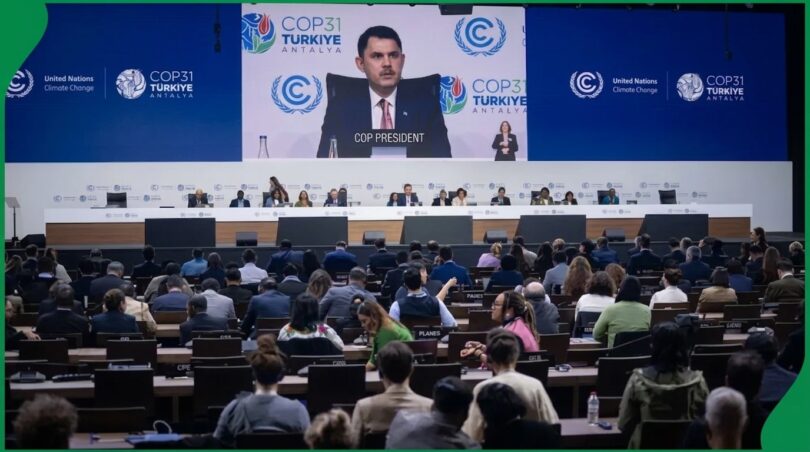
Herald Sun reports that this challenge was clearly reflected at the 2026 United Nations Climate Change Conference (COP31) in Antalya, Türkiye, where nearly 200 countries failed to agree on measures to speed up global climate action.
The disagreement exposed the growing gap between countries pushing for a faster shift away from fossil fuels and those insisting that economic development and energy security must come first.
The pressure is particularly high in developing countries, where millions of people still lack reliable electricity, affordable cooking fuel and basic infrastructure.
For such countries, a sudden move away from fossil fuels could increase the cost of electricity, transport and production if cheaper and reliable alternatives are not available.
The climate conference, which was initially expected to end on November 20, continued beyond its scheduled closing date as countries struggled to agree on a final document.
COP31 President Murat Kurum presented a revised proposal early Sunday in an attempt to resolve disagreements between the co-hosts, Türkiye and Australia, and other participating countries.
Earlier drafts had faced objections from Europe, Africa, Latin America and Pacific countries after direct references to phasing out fossil fuels were removed.
The revised document referred to the 2023 Dubai agreement on moving away from fossil fuels and mentioned carbon capture and storage. However, it did not specifically name fossil fuels.
One of the major proposals was to increase electricity’s share of global final energy consumption from about 23 per cent to 35 per cent by 2035.
Other proposals focused on reducing methane emissions, promoting zero waste and making buildings more energy-efficient.
Developing countries and those most exposed to climate change also demanded reliable funding to help them adapt to rising temperatures, floods, droughts and other environmental problems.
They called for climate decisions to follow scientific evidence, a fair transition away from fossil fuels, more funding from major polluters and faster investment in renewable energy.
However, the disagreements remained unresolved.
At the end of the negotiations, Kurum admitted that countries had failed to reach an agreement on the proposed text.
“I understand that there is no agreement on this text. For that reason, these decisions have not been adopted,” he said.
The failure reflected the differences between countries that want stronger action against global warming and those worried about the effect of abandoning oil, gas and coal on their economies.
Some compromise proposals acknowledged that the world was on course to exceed the 1.5°C warming limit and called for greater investment in technologies that remove carbon from the atmosphere.
However, critics argued that the proposals weakened earlier commitments and did not go far enough to address the climate crisis.
United Nations Secretary-General António Guterres expressed disappointment over the outcome.
He said the failure to reach an agreement did not change the scientific evidence showing that the world needed to take urgent action.
“There may be no consensus in the negotiating room, but there is no ambiguity in the science. The take-home message from COP31 is clear: The world must do much more to confront the climate crisis. And it must do it now,” Guterres said.
The growing energy crisis has also made it harder for governments to commit to reducing their dependence on fossil fuels.
The International Energy Agency’s World Energy Outlook 2026 highlighted how disruptions in global energy supplies could affect efforts to move towards cleaner energy.