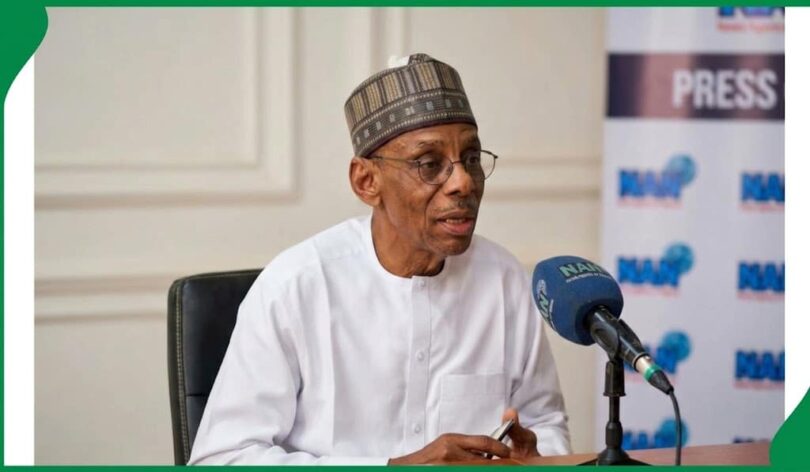
The National Chairman of the Peoples Redemption Party (PRP), Hakeem Baba-Ahmed, has claimed that the administration of former President Goodluck Jonathan had an opportunity to stop the Boko Haram insurgency.
He said the government failed to act on four conditions the group presented during negotiations with a committee he served on.
Herald Sun reports that Baba-Ahmed disclosed this during an interview on Trust TV.
He alleged that the failure to respond to the demands escalated the crisis into a prolonged security challenge that has devastated communities across Nigeria’s North-East for more than a decade.
Speaking about his involvement in the negotiations, the PRP chairman recalled that the committee spent approximately two years engaging Boko Haram members and individuals he identified as close associates and lieutenants of the group’s founder, Mohammed Yusuf.
He said the committee held meetings with the insurgents in Abuja, the Sambisa Forest, Maiduguri and outside Nigeria, insisting that its engagements provided an opportunity to understand the grievances driving the conflict and potentially prevent the insurgency from developing into the devastating crisis it later became.
“We worked for two years, and we did excellent work. We engaged with both the real Boko Haram, the lieutenants of Mohammed Yusuf, and it allowed us to see just how easily we could have nipped this in the bud,” he said.
Baba-Ahmed identified four major demands consistently presented by the group’s representatives during the negotiations.
The first, according to him, was the prosecution of the police officers responsible for the killing of Mohammed Yusuf, who was arrested alive by soldiers during the July 2009 uprising in Maiduguri before being handed over to the police and subsequently killed in custody.
Yusuf’s death remains one of the defining events in the history of the Boko Haram crisis.
His killing followed days of violent confrontations between the sect and security forces, which left more than 800 people dead across several northern states.
Baba-Ahmed said the group wanted those responsible for Yusuf’s death brought to justice, adding that some of the officers allegedly involved were detained at Kuje Correctional Centre in Abuja for several years.
The second demand, he explained, was the reconstruction of Yusuf’s residence in Maiduguri, which was demolished following his death.
According to Baba-Ahmed, the destruction of the property and its subsequent conversion into a public toilet further deepened the group’s resentment towards the authorities.
The third condition concerned the alleged harassment and detention of wives and children of suspected Boko Haram members during security operations.
He said the group’s representatives complained that security personnel frequently arrested and abused their family members when they could not find the actual suspects during raids.
“They said, stop arresting our wives and children when you go looking for us when we’re not there, and you detain them, and you move them around, and you abuse them. Stop it,” he recalled.
The fourth demand, Baba-Ahmed said, was that the group wanted to be allowed to practise its religious beliefs and preach without interference, insisting that its members did not want to wage war against Nigeria.
He quoted the group’s representatives as saying: “We don’t want to fight Nigeria. We are just ordinary clerics. Leave us alone.
“We will move out of here. If you want us to go, we will move. But we are free citizens of this country. We just want to preach.”
The PRP chairman maintained that the same four conditions had been communicated to Jonathan before his committee engaged with the group.
He recalled that former President Olusegun Obasanjo had also met with Boko Haram representatives and subsequently conveyed their demands to Jonathan, but the administration allegedly failed to take the necessary steps.
According to him, the committee later discovered that the group’s representatives were still presenting the same conditions, suggesting that little progress had been made in addressing the issues.
He blamed what he described as a combination of government incompetence, indifference and corruption for the failure to secure an agreement before Jonathan left office in 2015.