Democratic nominee and son of Egyptian immigrants Abdul El-Sayed has won Michigan’s Senate election, becoming the first Muslim American elected to the US Senate. El-Sayed, 42, defeated Republican nominee and former congressman Mike Rogers, securing 51.9% of the vote with 85% of ballots counted, according to HeraldSun. Born……
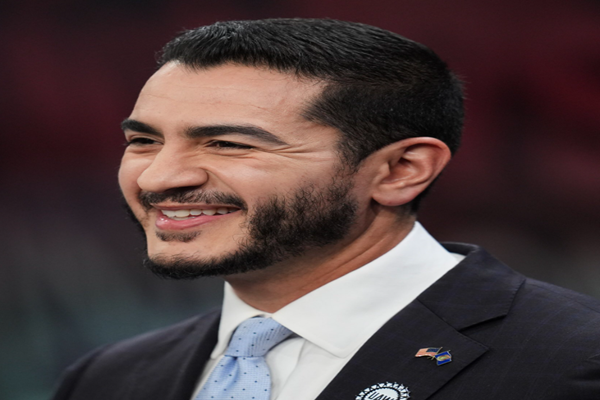
Democratic nominee and son of Egyptian immigrants Abdul El-Sayed has won Michigan’s Senate election, becoming the first Muslim American elected to the US Senate.
El-Sayed, 42, defeated Republican nominee and former congressman Mike Rogers, securing 51.9% of the vote with 85% of ballots counted, according to HeraldSun.
Born and raised in the Detroit suburbs, El-Sayed is the son of parents who immigrated from Alexandria, Egypt. He attended the University of Michigan, where he played on the lacrosse team, before earning a medical degree from Columbia University and a doctorate from the University of Oxford. He worked with several public health institutions in Michigan before entering the Senate race.
He has been married to psychiatrist Sarah Jukaku since 2006, and they have two daughters.
El-Sayed’s Muslim faith became a target of Islamophobic attacks during the campaign. In August, Republican Senator Tommy Tuberville of Alabama called him a “terrorist”, while other Republican leaders described him as a “radical Islamist” and “jihadist sympathizer”. In late October, President Donald Trump also called El-Sayed a “jihadist”.
Read Also: US Senate Approves $70bn Funding for ICE, Border Patrol
The senator-elect has said he is not guided by any particular ideology, telling journalist Roland Martin in July, “I’m a scientist, not a socialist.” Unlike some other young progressives in the Democratic Party, El-Sayed rejects the democratic socialist label. He told CBS in August that he believes in capitalism.
Criticism of US foreign policy, particularly Washington’s support for Israel, featured prominently in his campaign.
Following a bitter Democratic primary contest against Representative Haley Stevens, El-Sayed faced an unexpected development in the general election when Stevens endorsed Rogers on Sunday, just two days before Election Day.
Michigan has the second-largest Arab American population in the United States, after California, with the Arab American Institute estimating that more than 392,000 Arab Americans live in the state.
The state was also home to more than 206,000 Muslim American voters in 2020, according to civic organisation Emgage. Local media reports indicate that Michigan has approximately 7.4 million registered voters, meaning Muslim Americans could account for roughly 3% of the electorate.
Pro-Palestine, Israel critic
Alongside domestic issues, El-Sayed made opposition to US support for Israel a central part of his campaign, pledging to end American military assistance to the country and impose an arms embargo covering both offensive and defensive weapons.
He has repeatedly described Israel as an apartheid state that has committed genocide against Palestinians, allegations Israel denies.
The senator-elect has also criticised Hamas, telling journalist Jim Acosta in August that he condemns the Palestinian group and that it has committed “war crimes”.
Asked by CBS journalist Ross Douthat on Sunday whether he supports Israel’s right to exist, El-Sayed replied, “yes, if there is a shared understanding” of a two-state solution.
The issue became a major point of disagreement during his Democratic primary contest against Stevens. The division continued after El-Sayed won the August primary, with Stevens publicly criticising his remarks on Israel and the campaign’s handling of concerns about antisemitism.
Iran war opposition
El-Sayed has called for an immediate end to the US war with Iran and a return to diplomacy to prevent Tehran from pursuing nuclear weapons.
His campaign platform cites the 2015 nuclear deal with Iran as a model for resolving the issue, arguing that military intervention is neither effective nor justified.
In an October campaign advert targeting Republican voters, El-Sayed said he wanted to “stop wasting our tax dollars on overseas wars.”
When an Iranian-American student asked him in September to stand with anti-government protesters in Iran and condemn the Islamic Republic, El-Sayed said he supported “democratic movements” but opposed “regime change” abroad.
He added that “it is the responsibility of the people of Iran to decide what their leadership should look like.”
Other MENA positions
El-Sayed has also criticised US aid to other countries in the Middle East, telling reporters in late October, “I don’t think we should be funding foreign militaries generally. That’s Israel. It’s also Egypt. It’s also Saudi Arabia and Qatar and UAE.”
Egypt receives approximately $1.3 billion in annual US military assistance, an arrangement established following the North African country’s 1979 peace treaty with Israel.
Saudi Arabia, Qatar and the United Arab Emirates do not receive US military assistance but remain major buyers of American weapons.
El-Sayed has also condemned US military aid to Azerbaijan, stressing the importance of Armenian security and self-determination. His position earned him an endorsement from the Armenian National Committee of America.
However, he supports US assistance to Ukraine, which has received more than $68 billion in American security aid since Russia’s invasion in 2022, according to a June Congressional Research Service report.
El-Sayed has denied having any connection to the Muslim Brotherhood, rejecting allegations made by Republicans.
In an October interview with Fox News, he said he “will support a terror designation for any organization that is engaged in or committed to political violence” when asked about the Trump administration’s January terrorist designations of Muslim Brotherhood affiliates in Egypt, Jordan and Lebanon.
On Syria, El-Sayed told Al Jazeera Arabic in October that he supports the removal of sanctions imposed during the Assad regime, which the Trump administration lifted last year.