BY SPECIAL CORRESPONDENT
.
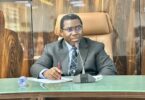
A Nigerian lawyer and a political scientist with research interests in political economy, governance, public policy, geopolitical risk, democratic institutions, electoral politics and anti-corruption policy, Okey Gideon Agbo has commenced the Public Private partnership approach of Governor Peter Mbah to develop Enugu State but has stressed the need for accountability and explanations.
.
Agbo stated this while addressing a World Press Conference on the “Mbah Administration in Enugu State : A Social-Political And Economic Critique of Development’ held in Enugu on Saturday.
.
He stressed that several Mbah-era projects deserve rigorous independent cost-benefit assessment.
.
Using the Enugu Air as an example, he said there was need to ask questions on passenger volumes; operating costs; subsidy requirements;aircraft ownership/lease obligations;, profitability, among others.
.
He added that there is an important difference between physical development and social development.
.
Agbo further stated that a state can have excellent roads, beautiful schools, modern terminals, smart surveillance, conference centres and still experience unemployment, youth underemployment, poverty, inequality, rural deprivation, poor household purchasing power.
.
” Therefore the ultimate socioeconomic question for the Mbah administration is:
What proportion of the value created by these projects is actually reaching ordinary households in Enugu state?
.
“For example, a new road is socially transformative if a farmer’s income increases. A smart school is transformative if children learn better. A hospital is transformative if maternal and infant mortality decline. A farm estate is transformative if farmers become prosperous. A transport terminal is transformative if transport costs decline.
.
“The Mbah administration should neither be evaluated simply through government publicity nor dismissed through political opposition rhetoric. There are documented large-scale investments under the administration, and there are also legitimate questions concerning cost, implementation, quality, accessibility, institutional capacity and sustainability. The Smart Green Schools programme illustrates the broader problem perfectly.
.
“The Mbah administration has adopted an extraordinarily capital-intensive model of development whose ultimate justification must rest not on the visibility or number of projects, but on independently demonstrable improvements in human welfare, productivity, institutional capacity and long-term fiscal sustainability.
.
“That is the appropriate standard for judging any government in a democratic society. What measurable public value has been created for every naira spent? Ultimately, the historical judgment of the Mbah administration will probably not be determined by the number of commissioning ceremonies held between 2023 and 2027.
.
“It will be determined by whether the infrastructure survives, whether institutions become stronger, whether public finances remain sustainable, whether human capital improves, whether businesses become more productive, whether poverty falls, whether inequality is reduced and whether the people of Enugu possess a stronger economy after the administration than they inherited before it.
.
.
“To what extent is the enormous deployment of public resources into infrastructure producing sustainable improvements in the economic and social welfare of the people of Enugu State?he stated.
.
Speaking further, Agbo claimed that the Mbah administration’s repeated promises of economic transformation have become a collection of political tarradiddles.
.
“The government’s endless rhetoric about economic prosperity amounts to political twaddle when millions of citizens continue to struggle with poverty.”Government propaganda: “Citizens must learn to distinguish genuine developmental achievements from the hogwash of government propagandists.”Electoral promises: “The electorate should not be persuaded by the poppycock of this administration that makes extravagant promises without credible implementation plan. Nigerians must reject the political twaddle of candidates who promise miraculous transformations without presenting credible economic policies Public accountability:
.
“A government that substitutes transparency and accountability with twaddles risks, losing public confidence. The administration’s explanation for its extravagant expenditure is nothing more than bureaucratic balderdash designed to divert public attention from legitimate questions of accountability.”
.
The tragedy of this administration and its contemporary governance is not merely the proliferation of political tarradiddles but the institutionalization of boondoggles through which enormous public resources are expended on projects whose economic justification and social benefits remain questionableFsurther unfortunate incidence in Enugu currently is the increasing substitution of visionary leadership with political twaddle, the presentation of tarradiddles as public policy, and the glorification of expensive boondoggles as monumental developmental achievements.” He conclude.
.
Full Text of The Press Conference
.
THE MBAH ADMINISTRATION IN ENUGU STATE: A SOCIO-POLITICAL AND ECONOMIC CRITIQUE OF DEVELOPMENTALISM.
.
A critical appraisal of the politics, economic policies, social consequences and governance implications of Governor Peter Ndubuisi Mbah’s administration
.
1. Introduction: Development or Developmental Spectacle?
.
Governor Peter Ndubuisi Mbah’s administration has introduced a markedly different style of governance into Enugu State. Since assuming office in 2023, the administration has pursued an extraordinarily ambitious programmes of roads, schools, healthcare facilities, water infrastructure, transport terminals, housing, agriculture, security technology, aviation and urban development. The administration’s own figures indicate the scale of the ambition. Its 2026 budget is approximately 1.617 trillion, of which about 1.296 trillion-80 percent is allocated to capital expenditure. Education receives approximately 32.27 percent of the budget. There is therefore little doubt that the Mbah administration represents a departure from the traditionally conservative expenditure pattern of many of his predecessors in the state or Nigerian subnational governments. The more important question, however, is not simply:
.
“How many projects has the government constructed?”
.
“Are these projects producing proportionate, sustainable and broadly distributed improvements in the welfare, productive capacity and institutional quality of Ndi Enugu?”
.
This distinction is fundamental.
.
A government can construct hundreds of impressive physical structures and still leave unanswered questions about value for money, sustainability, prioritization, accessibility, maintenance, procurement, employment creation, poverty reduction and institutional development. This is where the incumbent administration deserves rigorous socio-economic interrogation.
.
2. The Smart Green Schools: Ambitious Reform or Expensive Developmental Experiment?
.
The Smart Green Schools programme is arguably the intellectual and political centrepiece of the Mbah administration. The administration proposes 260 Smart Green Schools across the state’s 260 wards, with digital classrooms, laboratories, solar energy and modern educational infrastructure. The government has justified the programme as an investment in human capital and technological competitiveness. That argument has considerable merit. But the programme raises several questions that deserve serious public examination.
..
A. The opportunity-cost question
.
Available reporting indicates that Enugu allocated approximately N266.7 billion to the Smart School initiative in 2025, including N100 billion for 200 integrated smart schools and approximately 146 billion for equipping 260 ward smart schools. For 2026, approximately N198 billion was allocated to continue the programme. These are enormous sums. The relevant question therefore becomes:
.
What alternative educational and social interventions could have been funded with the same resources?
.
For example:
.
Teacher recruitment, teacher training, university scholarships, vocational education, school feeding, rehabilitation of existing schools, special-needs education, libraries, textbooks, rural teacher accommodation, early-childhood education, digital connectivity.
.
This is not an argument against modern schools. It is an argument for cost-benefit analysis. If billions are spent on buildings but the educational system continues to suffer from inadequate teachers and weak learning outcomes, the state may have modernized the hardware without adequately modernizing the human system.
.
3. The “Mega-Project Governance” Problem
.
The administration has embarked simultaneously on:
.
Smart Green Schools, 260 healthcare centres, roads, transport terminals, Enugu Air, International Conference Centre, Hotel Presidential, agricultural estates, Smart City, housing, water infrastructure, security technology, hospitals, sports infrastructure.
.
The administration itself has acknowledged that managing a programme of this magnitude creates institutional-capacity challenges. This is an important admission. The fundamental question is:
.
Can the institutional machinery of a Nigerian state government efficiently plan, procure, supervise, certify, operate and maintain projects on this scale simultaneously?
.
The danger is project proliferation.
.
Too many projects can produce:
.
Fragmentation, weak supervision. cost escalation, delays, maintenance problems, abandoned assets.
.
4. The Economic Question: Has Infrastructure Produced Broad-Based Prosperity?
.
The administration reports a dramatie increase in internally generated revenue. Enugu’s IGR reportedly rose from approximately N26.8 billion in 2022 to N37.4 billion in 2023, №180.5 billion in 2024 and 406.7 billion in 2025. according to the Enugu State Internal Revenue Service. That is significant but IGR growth must not automatically be equated with economic growth. Though. I am not an economist but common sense and reality on ground in Enugu state reveals how citizens struggle with hardship. A sophisticated revenue system can increase government revenue without necessarily increasing:
.
Household disposable income, private-sector employment, manufacturing output, agricultural productivity, exports, wages, household wealth.
.
The real test is therefore:
.
Has government revenue growth translated into citizen income growth?
.
That requires independent data, one may argue but the factual truth is capital NO. Even at the risk of describing it an opposition rhetorics.
.
5. The Non-Tax Revenue Question
.
The composition of the reported 2025 IGR deserves particular attention. According to the state’s figures:
.
tax revenue = approximately 12.6%;
.
non-tax revenue = approximately 87.4%.
.
This deserves serious economic analysis. A productive economy ordinarily benefits from a growing taxable economic base, even though, I am not an economist, I knew such elementary economic matrix as a lawyer and a political scientist. If government revenue increasingly depends upon: fees, charges, land transactions, government assets, licences, concessions, administrative revenues, then policymakers must ensure that revenue mobilization does not become a burden on citizens and businesses as the case in Enugu state presently under Governor Mbah’s administration. The administration has rejected allegations that it is overtaxing residents and says some charges were actually reduced. The proper solution is therefore not political rhetoric but transparent revenue data.
.
6. The “Boondoggle” Question
.
The term boondoggle should not be applied merely because a project is expensive. Economically, a project becomes vulnerable to that criticism where:
.
its cost is disproportionate to its measurable public benefit, its opportunity cost is excessive, or its long-term operating burden outweighs its socioeconomic value.
.
Using that standard, several Mbah-era projects deserve rigorous independent cost-benefit assessment.
.
Examples include:
.
Enugu Air
Questions should include:
.
passenger volumes;
.
operating costs;
.
subsidy requirements;
.
aircraft ownership/lease obligations;
.
profitability:
.
economic multiplier,
.
public-private risk allocation.
.
International Conference Centre
.
Questions:
.
utilisation rate;
.
annual operating cost;
.
revenue;
.
maintenance;
.
Smart City
.
economic spillover.
.
Questions:
.
infrastructure cost:
.
land acquisition;
.
projected sales;
.
actual sales;
.
distributional consequences.
.
260 Farm Estates
.
public revenue:
.
Questions:
.
land availability:
.
actual cultivation:
.
farmer participation:
.
yields:
.
processing capacity:
.
market access
.
employment:
.
revenue.
.
Smart Green Schools
.
Questions:
.
cost per school;
.
cost per pupil;
learning outcomes;
.
teacher numbers;
.
maintenance cost;
.
accessibility;
.
technology lifecycle.
.
This is the appropriate way to investigate alleged “boondoggles”: not through political slogans, but through measurable public-value analysis.
.
7. The Social Question: Development Without Sufficient Social Inclusion?
.
There is an important difference between physical development and social development.
.
A state can have: Excellent roads, beautiful schools, modern terminals, smart surveillance, conference centres; and still experience: Unemployment, youth underemployment, poverty, inequality, rural deprivation, poor household purchasing power. Therefore the ultimate socioeconomic question for the Mbah administration is:
.
What proportion of the value created by these projects is actually reaching ordinary households in Enugu state?
.
For example, a new road is socially transformative if a farmer’s income increases. A smart school is transformative if children learn better. A hospital is transformative if maternal and infant mortality decline. A farm estate is transformative if farmers become prosperous. A transport terminal is transformative if transport costs decline.
.
8. Conclusion: Beyond the Politics of Applause and Condemnation
.
The Mbah administration should neither be evaluated simply through government publicity nor dismissed through political opposition rhetoric. There are documented large-scale investments under the administration, and there are also legitimate questions concerning cost, implementation, quality, accessibility, institutional capacity and sustainability. The Smart Green Schools programme illustrates the broader problem perfectly.
.
Its objective-modernising public education-is defensible. Its scale is impressive. Its financial be established by the number of buildings constructed. commitment is enormous. Its potential benefits are substantial. But its success cannot ultimately
.
The real examination begins when the cameras disappear.
Can the children read better? Can they calculate better?
.
Can they code? Can rural children actually reach the schools? Are teachers adequately trained and paid? Do the computers work two years later? Who maintains the solar systems? What happens when batteries fail? What is the cost per pupil? What learning outcomes have improved? How much did each school actually cost? What was the opportunity cost?
.
These are the questions that should define the serious political-economic debate about the Mbah administration. A more intellectually defensible criticism is:
.
The Mbah administration has adopted an extraordinarily capital-intensive model of development whose ultimate justification must rest not on the visibility or number of projects, but on independently demonstrable improvements in human welfare, productivity, institutional capacity and long-term fiscal sustainability.
.
The people of Enugu should consequentiy demand the next level of accountability:
.
Not merely what has been built-but what has been achieved. Not merely how much has been spent-but what value has been created. Not merely how modern the infrastructure looks but whether ordinary Ndi Enugu are materially better off because of it.
.
That is the appropriate standard for judging any government in a democratic society. What measurable public value has been created for every naira spent? Ultimately, the historical judgment of the Mbah administration will probably not be determined by the number of commissioning ceremonies held between 2023 and 2027.
.
It will be determined by whether the infrastructure survives, whether institutions become stronger, whether public finances remain sustainable, whether human capital improves, whether businesses become more productive, whether poverty falls, whether inequality is reduced and whether the people of Enugu possess a stronger economy after the administration than they inherited before it.
.
The central thesis of this paper is therefore simple:
.
Mega-projects can be instruments of development, but they are not development itself. Development occurs when public investment is converted into sustainable improvements in human welfare, productivity, institutional capacity and economic opportunity. Such a development strategy deserves neither automatic applause nor automatic condemnation.
.
It deserves political-economic interrogation. The fundamental question is:
.
To what extent is the enormous deployment of public resources into infrastructure producing sustainable improvements in the economic and social welfare of the people of Enugu State?
.
About the Author
.
Okey Gideon Agbo is a Nigerian lawyer and a political scientist with research interests in political economy, governance, public policy, geopolitical risk, democratic institutions, electoral politics and anti-corruption policy. His work examines the intersection between law, politics, institutions and socioeconomic development in Nigeria.