
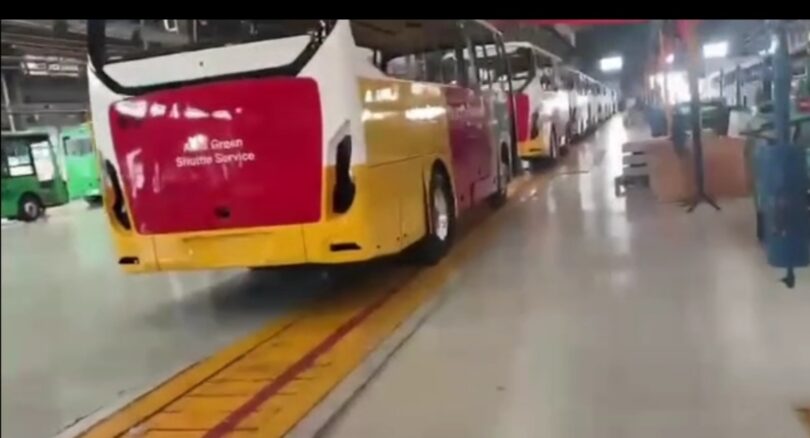
Abia State’s Green Shuttle Bus fleet is set to increase from 40 to 70 by the end of October 2026, with 30 additional buses, comprising 15 intracity and 15 intercity vehicles, ready to expand transportation capacity, improve commuter mobility and strengthen connectivity across the state.
According to Dr Ebere Uzoukwa, SSA to the Governor on Public Affairs, the development marks another significant step in the commitment of His Excellency, Dr. Alex Chioma Otti, OFR, the Executive Governor of Abia State, to build an efficient, accessible and reliable public transportation system that responds to the everyday needs of residents.
The additional buses will strengthen services within major urban centres while expanding connectivity for commuters travelling between towns and cities. With a larger fleet, the Green Shuttle Bus Scheme is expected to improve vehicle availability, ease pressure on existing services and provide more commuting options for workers, traders, students, business owners and other residents.
Beyond improving mobility, the expansion has important economic implications. An efficient public transportation system reduces the difficulties associated with daily commuting, supports commercial activities, facilitates access to workplaces and markets, and helps residents move around with greater convenience. For a state whose economic growth depends significantly on commerce, enterprise and the movement of people and goods, investments in public transportation remain essential.
The planned increase to 70 buses also reflects the Otti administration’s broader commitment to modernising Abia’s infrastructure and public services. By strengthening the Green Shuttle Bus Scheme, the government is working towards a transport system that connects communities, supports productivity and improves the overall commuting experience of Ndi Abia.
As the additional 30 buses prepare to join the fleet by the end of October, the expansion reinforces the administration’s determination to make public transportation more dependable, accessible and responsive to the growing mobility needs of the state.