
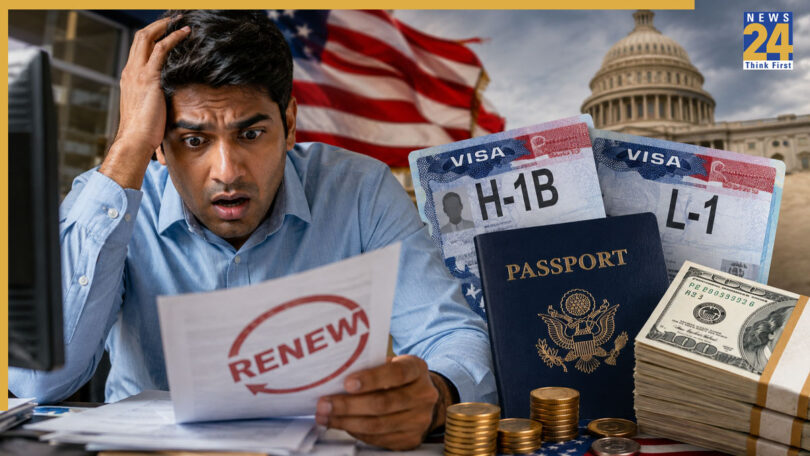
Foreign professionals working in the US on H-1B and L-1 visas may soon have to pay more to continue working in the country. The Trump administration has proposed charging an additional fee when these visas are renewed. At present, this fee is collected only for new H-1B or L-1 visa applications or when an H-1B holder changes employers. If approved, the proposal could significantly increase costs for employers, especially those that hire large numbers of Indian professionals.
What Is the New Proposal?
The US Department of Homeland Security (DHS) wants to expand the 9/11 Response and Biometric Entry-Exit Fee to include visa renewal applications. This means employees who continue working for the same company and apply to extend their H-1B or L-1 visa may also have to pay the additional fee. According to DHS, the proposal is intended to implement Public Law 114-113 and make the existing rules clearer.
Which Companies Will Be Affected?
The proposal will mainly affect companies with 50 or more employees in the US, where at least half of the workforce is employed on H-1B or L-1 visas. These companies currently pay an additional $4,000 for every new H-1B visa and $4,500 for every new L-1 visa. If the proposal becomes law, the same fees will also apply every time these visas are renewed.
Why Indian Professionals Could Be Hit the Most
Indian professionals are expected to be the most affected because they account for the largest share of H-1B visa renewals. According to USCIS data for FY2025, 406,348 H-1B petitions were approved, including 291,542 renewals. Of these, 226,359 renewals were granted to Indian professionals, meaning nearly 78% of all H-1B renewal approvals involved Indian workers. As a result, companies employing large numbers of Indians could see a significant rise in visa-related costs.
Big Tech Companies May Also Face Higher Costs
Several major technology and IT companies that rely heavily on H-1B workers could also be affected. According to the National Foundation for American Policy (NFAP), companies with the highest number of approved H-1B renewals in FY2025 include Amazon, Tata Consultancy Services (TCS), Microsoft, Meta, Apple and Google. Companies that use L-1 visas to transfer managers and specialists to the US may also have to spend more if the proposal is approved.
When Could the Rule Take Effect?
The proposal was first introduced in June 2024 and has now been included in the Trump administration’s 2026 regulatory agenda. The US government is expected to take a final decision on the proposal in the coming weeks.
Legal Challenge Continues
The issue has also reached the courts. Last month, a US appeals court refused to block a Trump administration policy related to higher fees for new H-1B visas after a lower court had struck it down. At the same time, the proposal to charge additional fees on H-1B and L-1 visa renewals is under review. If approved, it will increase costs for employers and could directly affect thousands of Indian professionals working in the United States.
First published on: Aug 04, 2026 10:16 PM IST
Get Breaking News First and Latest Updates from India and around the world
on News24. Follow News24 on Facebook, Twitter.
End of Article
Related Story


