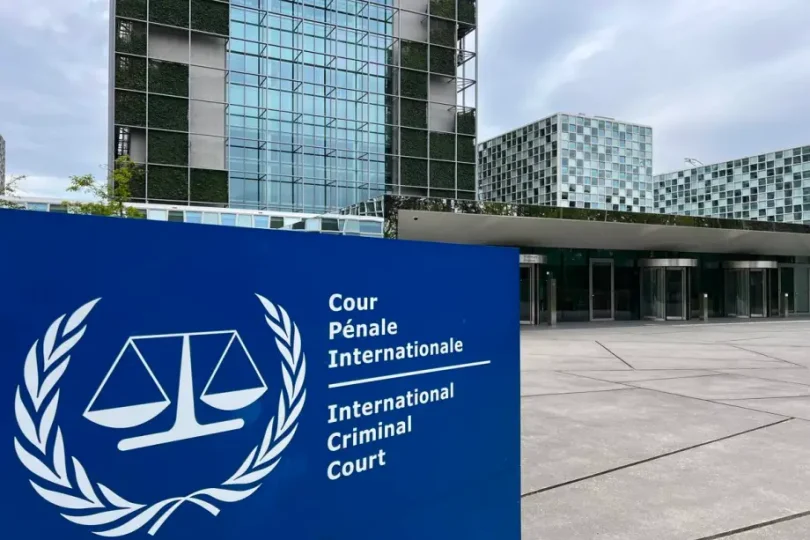
on 6 May 2026, Spanish Prime Minister Pedro Sánchez’s called for the European Union to activate its Blocking Statute in response to U.S. sanctions against the International Criminal Court (ICC). This call is not merely a diplomatic gesture; rather, it constitutes a legal mechanism that may be employed to shield the ICC from U.S. sanctions and to uphold the rule of law. It may also be regarded as a genuine test of Europe’s credibility as a defender of international law.
Sánchez called for sanctioning those who uphold international justice threatens “the entire human rights system,” and Europe “cannot stand idly by” in the face of such pressure.”
Slovenia has joined the call of Prime Minister Pedro Sánchez urging the European Union to shield the ICC from sanctions, uphold the rule of law, and strengthen the global system of justice in response to grave crimes.
The Slovenian Prime Minister, Robert Golob, stated on his X account as follows: “Europe’s response so far has not matched the gravity of the situation. We need to act now because fundamental European values cannot carry a price tag. The independence of international courts is non-negotiable,”
In 2025, the United States imposed sanctions on the ICC officials—including judges and prosecutors—in response to investigations related to the situation in Palestine and the ICC’s arrest warrants against Benjamin Netanyahu and his former Minister of Defense, Yoav Gallant. These measures include asset freezes, visa bans, and restrictions tied to the U.S.-dominated global financial system—effects that extend far beyond American territory. The U.S. sanctions have extended to encompass Palestinian NGOs, civil society organizations (CSOs), and human rights actors that have played a vital role in documenting alleged crimes by Israel and collecting witness testimony for submission to the ICC.
When a powerful state such the US imposes coercive measures against officials of the ICC—including travel bans and asset freezes—such actions may produce a chilling effect on domestic actors, who may fear legal, financial, or reputational consequences for cooperating with the Court.
In this context, the adoption of a “blocking statute” serves as a countermeasure designed to neutralize that effect by rendering compliance with such foreign sanctions unlawful under domestic law. More specifically, a blocking statute prohibits individuals, corporations, public and private institutions, as well as NGOs within the jurisdiction of the enacting state from adhering to or giving effect to foreign sanctions targeting the ICC.
READ: Slovenia joins Spain in urging EU to protect independence of ICC, UN on Gaza
The EU Blocking Statute constitutes a domestic legislative mechanism through which states seek to counter and nullify the extraterritorial effects of foreign sanctions. Council Regulation (EC) No 2271/96—commonly referred to as the EU Blocking Statute—represents the most prominent example of such an instrument. Although initially enacted in response to United States sanctions targeting Cuba and Iran, the legal framework it establishes offers a valuable precedent for safeguarding cooperation with the ICC, particularly in circumstances where investigators, Court personnel, civil society actors, or states are subjected to politically driven restrictive measures.
By doing so, it preserves the autonomy of the domestic legal order and shields affected actors from external coercion. Furthermore, such legislative instruments reinforce states’ obligations of cooperation under the Rome Statute, while safeguarding the operational capacity of CSOs to document alleged international crimes and submit evidence to the Court.
A blocking statute may operate to nullify or deny legal recognition to foreign penalties within the domestic legal system, thereby preventing their enforcement and limiting their extraterritorial reach.
This legal framework ensures the continuity of cooperation, secures financial transactions linked to ICC functions, and affords protection to witnesses, CSOs, and experts who might otherwise be deterred by the threat of economic reprisals. In this manner, the Blocking Statute enhances the institutional resilience of the ICC by enabling domestic actors to maintain cooperation without exposure to external punitive measures.
Its relevance is especially pronounced in the context of the Situation in Palestine, particularly in the aftermath of US sanctions targeting the Court, its personnel, and members of the judiciary. By contrast, a Blocking Statute provides a protective legal shield, ensuring the continued collection of evidence, documentation of alleged crimes, and the effective functioning of civil society actors.
As a result, it contributes to preserving the independence of the Court, supports ongoing efforts to end decades of Israel’s impunity, safeguards the rights of Palestinians, and seeks to deliver justice for victims while holding Israeli perpetrators accountable. Moreover, it facilitates the uninterrupted progression of investigations and upholds accountability efforts—including those relating to Palestine—despite geopolitical attempts to impede the administration of justice. In addition, states may complement the Blocking Statute with further protective measures, such as the establishment of licensing regimes that permit limited derogations while diplomatic solutions are pursued, the provision of diplomatic and political support for ICC activities, and the extension of legal assistance or financial backing to sanctioned officials and cooperating partners.
OPINION: Zohran Mamdani vs. Benjamin Netanyahu: Could a local arrest of Israel’s PM in New York be legally possible under international law?
The views expressed in this article belong to the author and do not necessarily reflect the editorial policy of Middle East Monitor.