From Ndubuisi Orji, Abuja
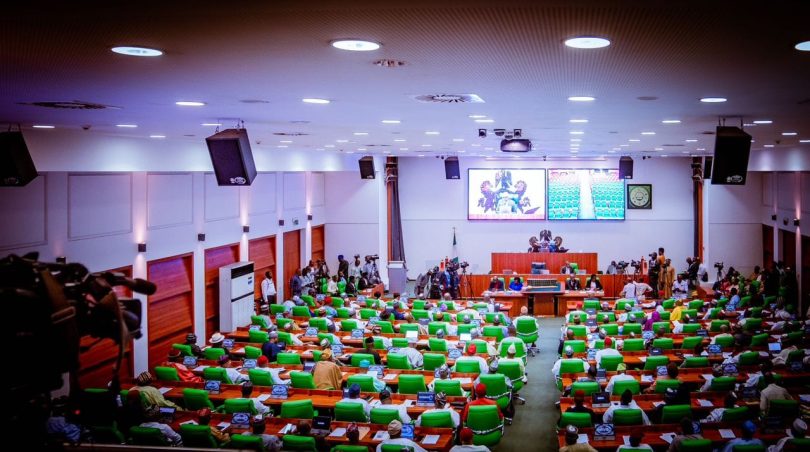
The House of Representatives has resolved to investigate debts allegedly owed the Federal Government by state and non-state actors within and outside the country.
Consequently, the House set up a committee headed by Chairman, Committee on Foreign Affairs, Oduwole Oke, to undertake the probe and report back to the House in four weeks for further legislative actions.
This followed the adoption of a motion by Salisu Majigiri Yusuf and five others, calling on the House to investigate debts allegedly owed the Federal Government by state and non -state actors, agencies and parastatals within and outside Nigeria, at plenary yesterday.
In his lead debate, Yusuf informed the House that the Federal Government is owed huge sums of money by state and non-state actors. He argued that failure to recover the debts would worsen the government’s financial situation.
“As of September 30, 2025, Nigeria’s total public debt surged to N153.29 trillion, driven by increased domestic borrowing and currency depreciation, the debt portfolio composed of over 53 percent domestic debt and roughly 47 percent external with debt servicing consuming 47.85 percent of the government’s revenue in the first nine months of 2025.
“Post COVID–19, most countries around the world, including Nigeria, had recourse to borrow and deploy other monetary policy tools to deal with economic challenges. For example, quantitative easing and others. Some of these tools have been effectively and pragmatically deployed by the current administration, a notable effect is the stable and strong position of the Naira over the last 15 months.”
The lawmaker contended that while the Federal Government had been diligent in servicing its debts, not much effort is made towards debt recovery, so as to shore up the government’s finances.
“The Federal Government of Nigeria is owed huge sums of money within and outside the country, including judgment debt. These sums are held by state and non-state actors, ministries, departments and agencies of government,” he stated.
He added that “failure to recover the debts will worsen the government’s revenue challenges and encourage continued retention of the funds, negatively impacting the economy.”
Similarly, the House also resolved to set up an ad-hoc committee to probe the rising cost of building materials in the country.
The House also mandated the Federal Ministries of Housing and Urban Development, Industry, Trade and Investment and Federal Competition and Consumer Protection Commission (FCCPC), to identify factors contributing to the rising cost of building materials, despite the local availability of raw materials.
This followed the adoption of a motion by the lawmaker from Bayelsa State, Oforji Oboku, drawing the attention of the House to the exorbitant cost of building materials, including cement, steel, timber and granite among others.
Oboku, in the motion, expressed concern that “the price of a 50kg bag of cement has risen sharply from about N7,500 in late 2025 to between N11,500 and N12,100 in 2026, representing an increase of approximately 50 to 60 percent within a short period.”
The lawmaker noted that “over a longer period, the price of cement in Nigeria has increased by more than 300 percent since 2019, rising from about N2,400/N3,000 to as high as N11,500 and N12,100 per bag.”
He expressed worry that the country’s housing crisis has worsened, noting that the rising cost of building materials was worsening access to affordable housing and leading to abandonment of construction projects, as well as loss of jobs across the construction value chain.
According to him, “Despite local sourcing of key raw materials, Nigerians continue to face disproportionately high construction costs, suggesting inefficiencies, market distortions or possible exploitation within the value chain as this trend is exacerbating the housing deficit and placing additional economic pressure on citizens, especially low and middle-income earners.”