
From Isaac Anumihe, Abuja
Federal Government has replaced the current multiple tax systems in Nigeria with 4 per cent development levy in the new tax regime expected to take effect from January 1, 2026.
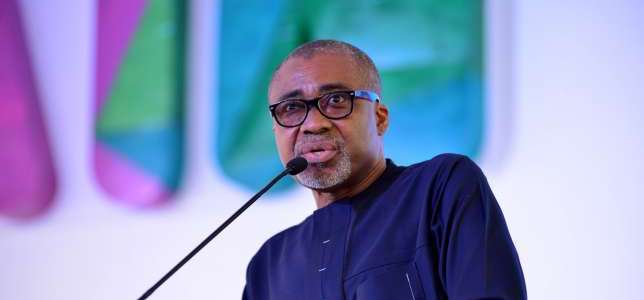
Speaking at the opening of the 54th induction of 1,460 new members of Chartered Institute of Taxation (CITN) in Abuja, at the weekend, Senator Enyinnaya Abaribe, stated that the reforms, not only aim to create a simpler, fairer and more competitive tax system for all Nigerians, they encourage small and medium scale enterprises (SMEs), to grow without harassment.
“From raising the personal income tax free threshold to 800,000, to introducing a 4 per cent development levy that replaces multiple taxes, such that our small and medium scale enterprises, which, by the way, are the real sectors in Aba, Onitsha and Kano, can grow without harassment. These reforms aim to create a simpler, fairer and more competitive tax system for all Nigerians” he said.
Abaribe who was represented by Senator Sunday Katung, stated that with the new tax regime, the expectation is that it will widen the revenue base of government and that will translate to better roads, better schools, better hospitals and a better life for the Nigerian people.
“That is the social contract because revenue without impact is extortion. As people often say, I don’t mind paying taxes. It’s just that I expect the same efficiency in accountability.
“But let me be clear, a good law is not enough. A law is only as good as the people who implement it. And that’s where you come in.
“The CITN has a duty beyond issuing certificates. As chartered tax practitioners, you must be the conscience of our fiscal system. Your role is clear” he said.
In his remarks, the 17th president of CITN, Mr Innocent Ohagwa made it mandatory for tax professionals to support the federal government’s tax reforms.
“Let this also serve as a clarion call to all CITN members. We must all support these reforms, not just in words, but in practice. Guide your clients and employers with great competence and integrity. Let your work reflect the values of this institute and the trust that society places in us.
“Today, Nigeria and indeed CITN stand at another important threshold in that journey with the enactment of the tax reform laws which reflected decades of the institute’s advocacy and professional insights.
“Section 33(1) of the Nigeria Tax Administration Act, 2025 provides that “a taxpayer may either represent itself or be represented by a tax agent accredited by the relevant tax authority.” Furthermore, Section 147 defines a tax agent as “any person acknowledged and duly certified by a professional body in Nigeria to represent the taxable person”. This directly touches on the mandate of the CITN under its enabling Act.
“There is, perhaps, no better time to be a tax professional than now. Across the country, individuals, businesses and institutions are seeking guidance. They are seeking clarity in the midst of change. They are looking to professionals who, not only understand the law but can interpret it with clarity and apply it with integrity. That responsibility now rests, in part, on your shoulders” he said.
Against the backdrop of the new tax administration, Ohagwa stated that technical competence is now necessary for recertification of members.
“In light of these developments, the institute has raised the bar of competence and ethical standards and every member, particularly our practitioners must rise to meet it. Technical competence is now non-negotiable for recertification. Ethical conduct has become the bedrock of trust. Professionalism is the new benchmark for relevance. And each of you, by choosing this path, has committed to uphold these values at the highest standards” he said.
Also, addressing the over 1,460 inductees, the registrar and chief executive of the institute, Mrs Afolake Oso, said that the induction would expose them (inductees) to the business community as a body of professionals with expertise in the field of taxation.
Besides, it presents them with the instrument of office with which to earn a living and contribute meaningfully to the development of taxation in Nigeria and across the world and announces them to the world as professional tax advisers, administrators, teachers, and experts, legally empowered as such.