
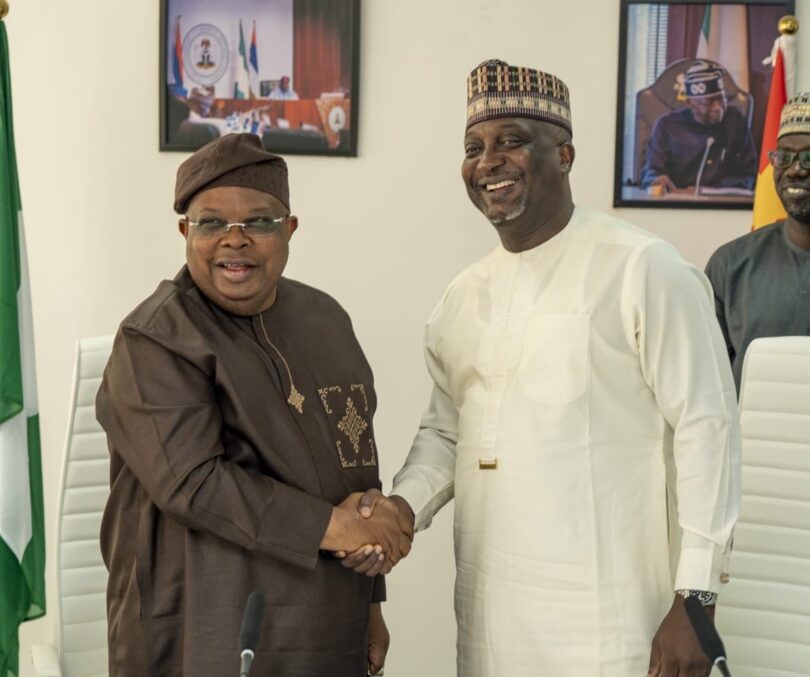
The appointment of Nigeria’s new Minister of Power, Joseph Tegbe, comes at a critical juncture for the nation’s energy sector—one often misunderstood as a simple equation of oil, gas and generation capacity. In reality, the deeper constraint lies in a far less discussed domain: metallurgy. This perspective was highlighted……
The appointment of Nigeria’s new Minister of Power, Joseph Tegbe, comes at a critical juncture for the nation’s energy sector—one often misunderstood as a simple equation of oil, gas and generation capacity.
In reality, the deeper constraint lies in a far less discussed domain: metallurgy.
This perspective was highlighted by Muhammed Dahiru, a close associate of the minister, who offered strategic advice on his X formerly Twitter handle as Tegbe assumes office.
Dahiru noted that global supply chains for advanced gas turbines—the backbone of many thermal power plants—are currently under severe strain.
https://x.com/Mohsally/status/2050174865374679128?s=20
According to him, leading manufacturers such as General Electric, Siemens and Mitsubishi are fully booked until at least 2029, with new orders unlikely to be delivered before 2030.
Costs have surged significantly, with turbine prices nearly tripling in recent years.
He explained that at the core of the challenge are turbine blades made from single-crystal nickel superalloys, engineered through highly specialised vacuum furnace processes that can take up to 90 weeks.
These components, costing roughly $600,000 per set, are produced by only a handful of companies worldwide, with even major industrial nations struggling to replicate the required precision.
Against this backdrop, Dahiru urged the minister to adopt a pragmatic and strategic approach focused on immediate and sustainable gains.
He advised that priority should be given to the rehabilitation of idle power plants, many of which remain underutilised due to maintenance challenges rather than lack of capacity.
Restoring these facilities, he said, would deliver additional megawatts to the grid without the need for new turbine procurement.
Dahiru also stressed the urgency of securing long-lead spare parts and maintenance contracts, warning that global supply delays could worsen plant downtime if not addressed proactively.
On energy diversification, he called for an aggressive scale-up of renewable energy, particularly solar, noting Nigeria’s comparative advantage in solar resources and the opportunity to reduce reliance on the national grid.
He further identified persistent transmission and gas supply bottlenecks as critical issues requiring immediate attention, emphasising that generation gains would remain limited without efficient power evacuation and consistent gas supply.
In the long term, Dahiru underscored the importance of building local technical capacity alongside fostering strategic global partnerships to strengthen Nigeria’s energy resilience.
As the new minister settles into office, Dahiru’s intervention underscores a broader message: Nigeria’s power challenges are as much about systems, supply chains and technical capabilities as they are about generation.
Addressing these structural realities, he suggested, will be key to delivering stable and reliable electricity to Nigerians.