
1 / 6
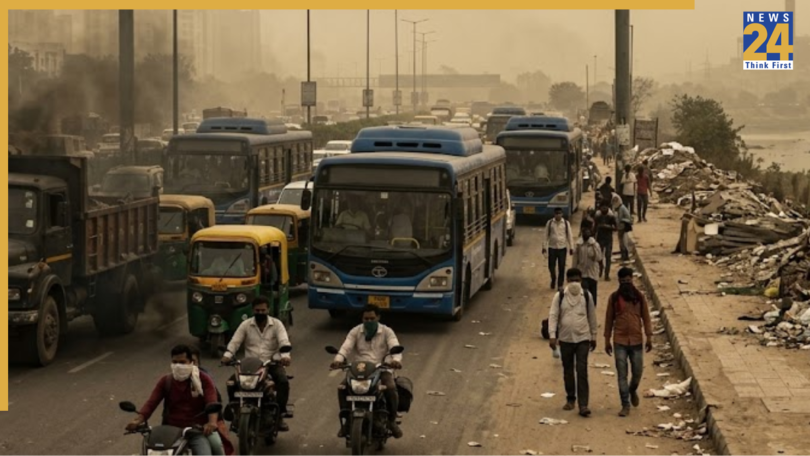
According to the 8th World Air Quality Report, Pakistan is the most polluted country in the world, followed by Bangladesh and Tajikistan, while India ranks sixth. The 2025 report, published by IQAir, is based on data collected from monitoring stations across 9,446 cities in 143 countries, regions, and territories.
Global Air Quality Status

2 / 6
According to IQAir, only 13 countries and territories met the WHO guideline of keeping PM2.5 levels below 5 micrograms per cubic meter in 2025, up from 7 in 2024. However, 130 out of 143 monitored regions still failed to meet the standard, and only 14% of cities globally met the guideline, down from 17% the previous year.
According to IQAir, only 13 countries and territories met the WHO guideline of keeping PM2.5 levels below 5 micrograms per cubic meter in 2025, up from 7 in 2024. However, 130 out of 143 monitored regions still failed to meet the standard, and only 14% of cities globally met the guideline, down from 17% the previous year.

3 / 6
Pakistan ranked as the most polluted country, followed by Bangladesh and Tajikistan. Chad, which was the most polluted in 2024, dropped to fourth place, though this may be due to missing data. The world’s most polluted city in 2025 was Loni in India, followed by Hotan in China’s Xinjiang region. The top 25 most polluted cities were all located in India, Pakistan, and China.
Data Gaps and Monitoring Challenges

4 / 6
The United States shut down a global air quality monitoring program in March due to budget issues. This led to major data gaps, and countries like Burundi, Turkmenistan, and Togo were excluded from the 2025 report due to lack of information.
Improvements in Some Countries

5 / 6
Some countries showed improvement in air quality. Laos, Cambodia, and Indonesia recorded significant drops in PM2.5 levels, mainly due to wetter and windier La Niña conditions. Mongolia also saw a 31% reduction in pollution levels. Overall, 75 countries reported better air quality compared to the previous year.
Countries Meeting WHO Standards

6 / 6
A few countries managed to meet the WHO air quality standards in 2025, including Australia, Iceland, Estonia, and Panama. However, factors like Canadian wildfires contributed to rising pollution levels in regions such as the United States and even parts of Europe.