
3 min readUpdated: Apr 30, 2026 09:11 AM IST
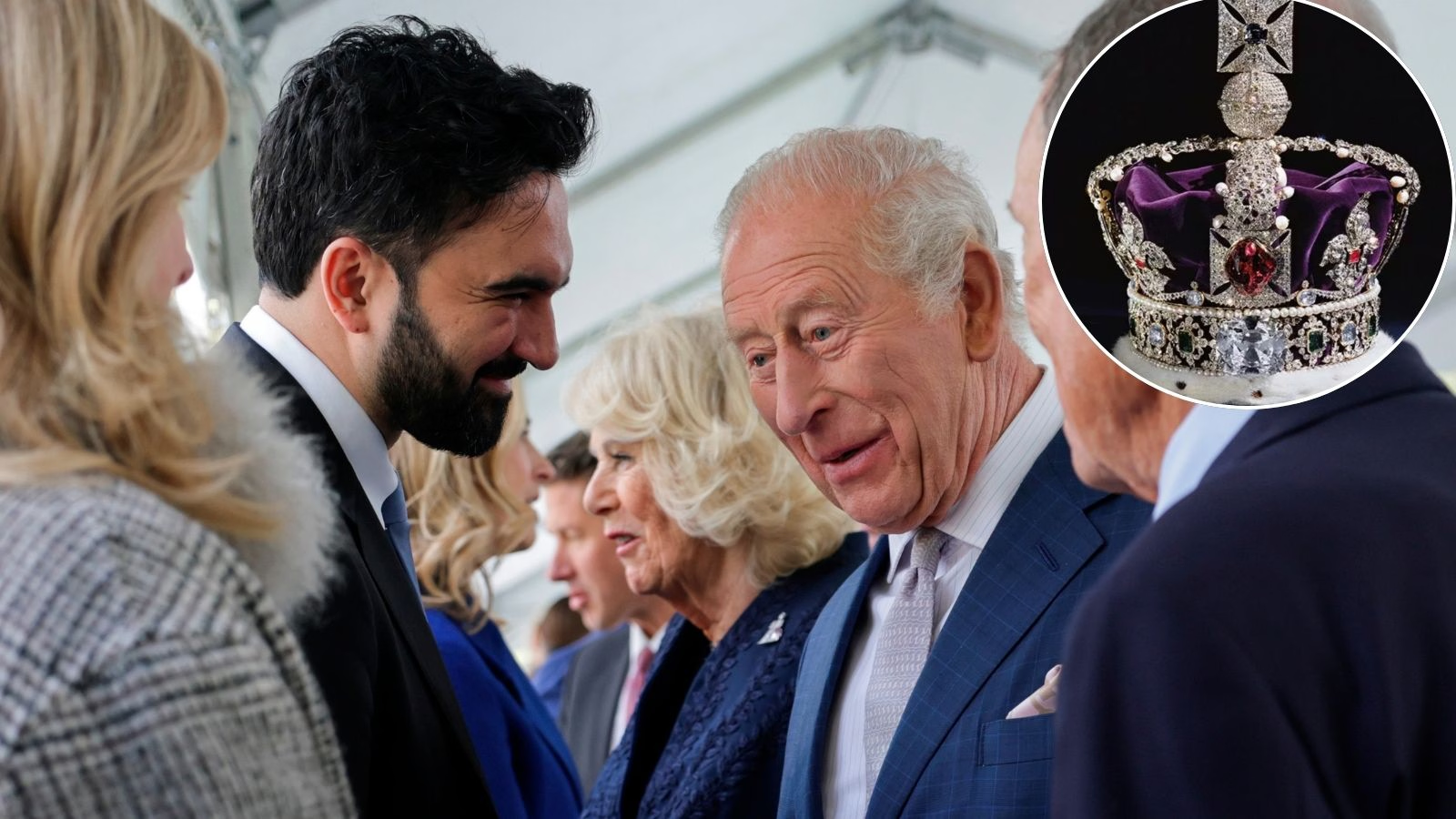
New York City Mayor Zohran Mamdani on Wednesday said he would urge Britain’s King Charles to return the Koh-i-Noor diamond to India, making the remarks during the monarch’s ongoing visit to the United States. “If I were to speak to the king separately from that [the event King Charles was attending], I would probably encourage him to return the Koh-i-Noor Diamond,” Mamdani said at a press conference held hours before a ceremony marking the victims of the September 11, 2001, attacks.
The remark is particularly significant given Mamdani’s Indian origin (his mother is Indian filmmaker Mira Nair) and his platform as the leader of one of the world’s most prominent cities.
The King and Queen Camilla are currently in the United States on a four-day visit, partly to commemorate the 25th anniversary of the September 11 attacks.
#WATCH | “If I were to speak to the King separately from that, I would probably encourage him to return the Kohinoor diamond,” says New York Mayor Zohran Mamdani on meeting King Charles III during the wreath-laying ceremony at the 9/11 memorial in New York.
(Source: Mayor Zohran… pic.twitter.com/EExmI1ypqA
— ANI (@ANI) April 29, 2026
King Charles later interacted with Mamdani during the commemorative event. Buckingham Palace declined to comment on the matter, as per news agency Reuters. Mamdani’s office, too, did not respond to requests seeking clarification on whether the issue was raised during their interaction.
India has repeatedly sought the return of the 105-carat diamond from Britain. The diamond was presented to Queen Victoria in 1850 after the East India Company annexed Punjab in 1849. The transfer was arranged by Britain’s then colonial governor-general after the gem was taken from a deposed Indian ruler Maharaja Duleep Singh.
King Charles on Wednesday paid tribute to the victims of the 9/11 attacks by laying a floral bouquet at the memorial built at the site where the twin towers of the World Trade Center once stood.
India’s stand on Koh-i-Noor
India in 2016 described the Koh-i-Noor as a “valued piece of art with strong roots in our nation’s history”. For many Indians, Britain’s possession of the diamond remains a reminder of colonial-era exploitation. Pandit Jawaharlal Nehru had said, “To exploit our good relations with some country to obtain free gifts from it of valuable articles does not seem to be desirable. On the other hand, it does seem to be desirable that foreign museums should have Indian objects of art.”
According to the Historic Royal Palaces charity, the Koh-i-Noor has passed through the hands of Mughal emperors, Iranian shahs, Afghan emirs and Sikh maharajas over the centuries.
Story continues below this ad
It was mined in India’s Kollur Mine and passed through the hands of several rulers over centuries. It became part of the British Crown Jewels in 1849 following the British annexation of Punjab. Koh-i-Noor is counted among is one of the largest cut diamonds in the world. It currently sits on public display as part of the British Crown Jewels in the Jewel House of the Tower of London.